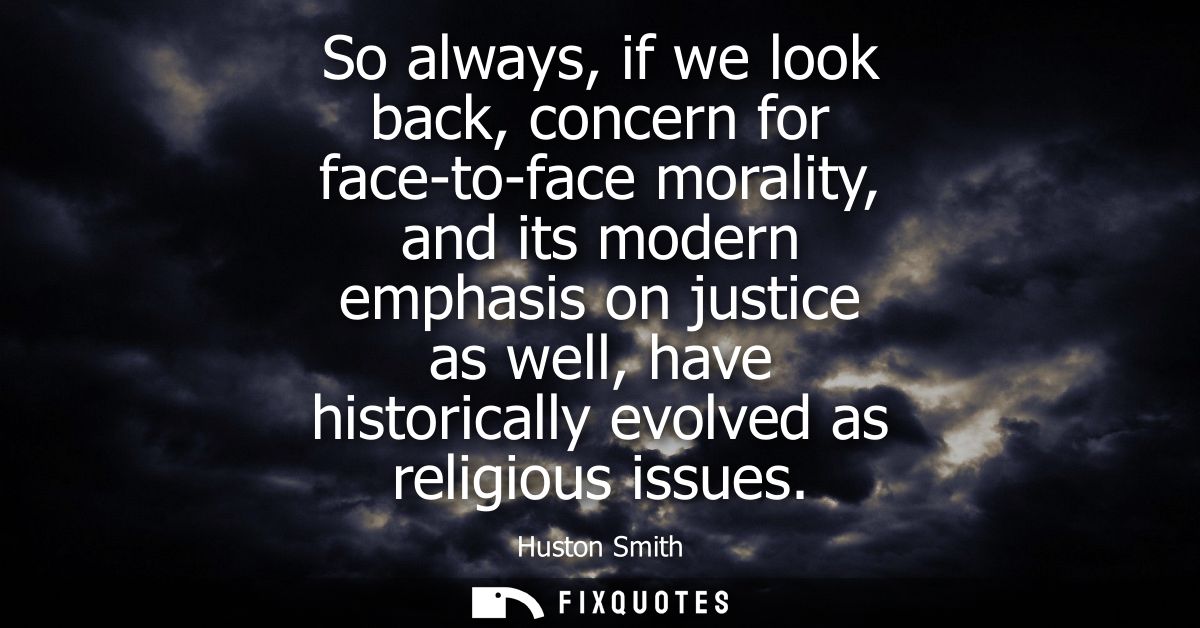
"So always, if we look back, concern for face-to-face morality, and its modern emphasis on justice as well, have historically evolved as religious issues"
About this Quote
Huston Smith compresses a long history into a blunt reminder: the everyday ethics of honesty, kindness, and fidelity between neighbors, along with modern society’s drive for fairness and reform, did not arise in a vacuum. They took shape within religious worlds. Face-to-face morality refers to the intimate realm of conscience and conduct, the duties that govern speech, hospitality, and care. Across cultures, these norms were taught, sanctified, and enforced by rites, myths, and commandments that bound communities to transcendent meanings. Confucian li, Buddhist compassion, the Torah’s ordinances, the Sermon on the Mount, and the Quranic call to mercy all formed character before they formed codes.
Smith also points to justice, which modernity often treats as a secular project of institutions, rights, and laws. Yet the language of justice entered public life through religious sources that criticized power and comforted the vulnerable. The Hebrew prophets denounced exploitation and demanded care for widow, orphan, and stranger. Islamic zakat obligated wealth to serve social balance. Christian and later natural-law traditions argued that authority itself is answerable to higher moral standards. Even as Enlightenment thinkers reframed ethics in rational terms, their concepts of dignity, conscience, and equality bear the imprint of earlier sacred visions.
The claim is historical, not exclusivist. People can be ethical without belief, and secular law can pursue fairness without theological argument. Still, the genealogy matters. Modern moral imagination, including the very instinct to universalize concern beyond tribe or clan, was cultivated in religious soil. Recognizing this lineage clarifies why moral appeals often draw on narratives of ultimate worth and why purely procedural frameworks can feel thin. Smith invites a fuller memory: when we speak of justice in courts and streets and of honesty at the dinner table, we are echoing patterns first carried by prayers, liturgies, and stories that taught people how to stand face to face with one another and with the sacred.
Smith also points to justice, which modernity often treats as a secular project of institutions, rights, and laws. Yet the language of justice entered public life through religious sources that criticized power and comforted the vulnerable. The Hebrew prophets denounced exploitation and demanded care for widow, orphan, and stranger. Islamic zakat obligated wealth to serve social balance. Christian and later natural-law traditions argued that authority itself is answerable to higher moral standards. Even as Enlightenment thinkers reframed ethics in rational terms, their concepts of dignity, conscience, and equality bear the imprint of earlier sacred visions.
The claim is historical, not exclusivist. People can be ethical without belief, and secular law can pursue fairness without theological argument. Still, the genealogy matters. Modern moral imagination, including the very instinct to universalize concern beyond tribe or clan, was cultivated in religious soil. Recognizing this lineage clarifies why moral appeals often draw on narratives of ultimate worth and why purely procedural frameworks can feel thin. Smith invites a fuller memory: when we speak of justice in courts and streets and of honesty at the dinner table, we are echoing patterns first carried by prayers, liturgies, and stories that taught people how to stand face to face with one another and with the sacred.
Quote Details
| Topic | Ethics & Morality |
|---|
More Quotes by Huston
Add to List