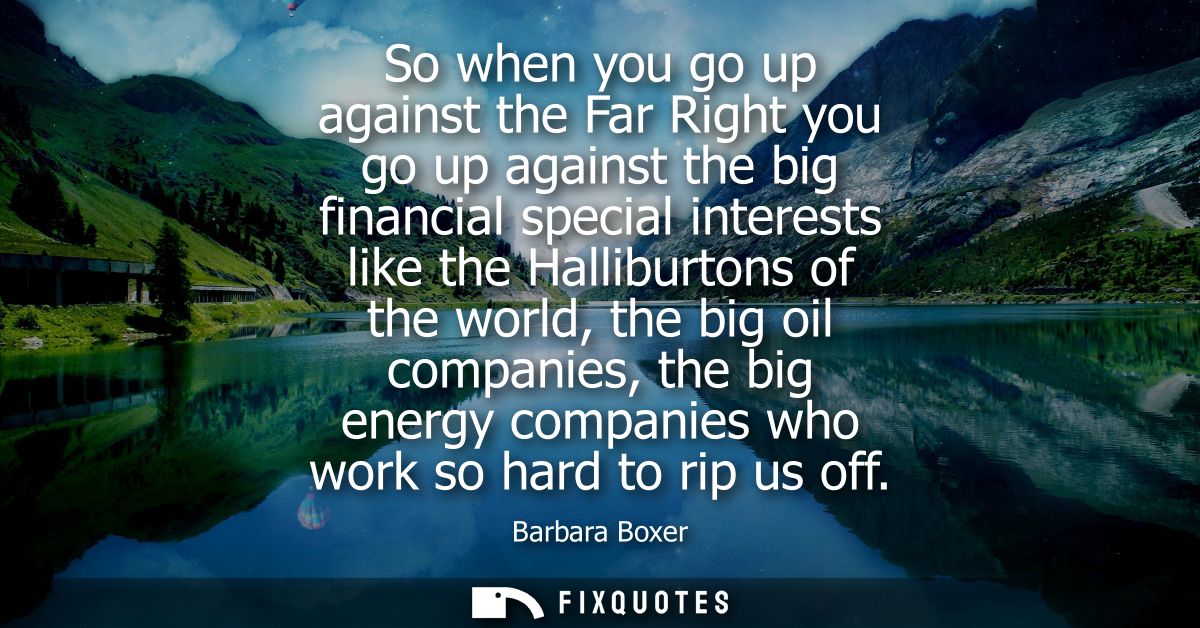
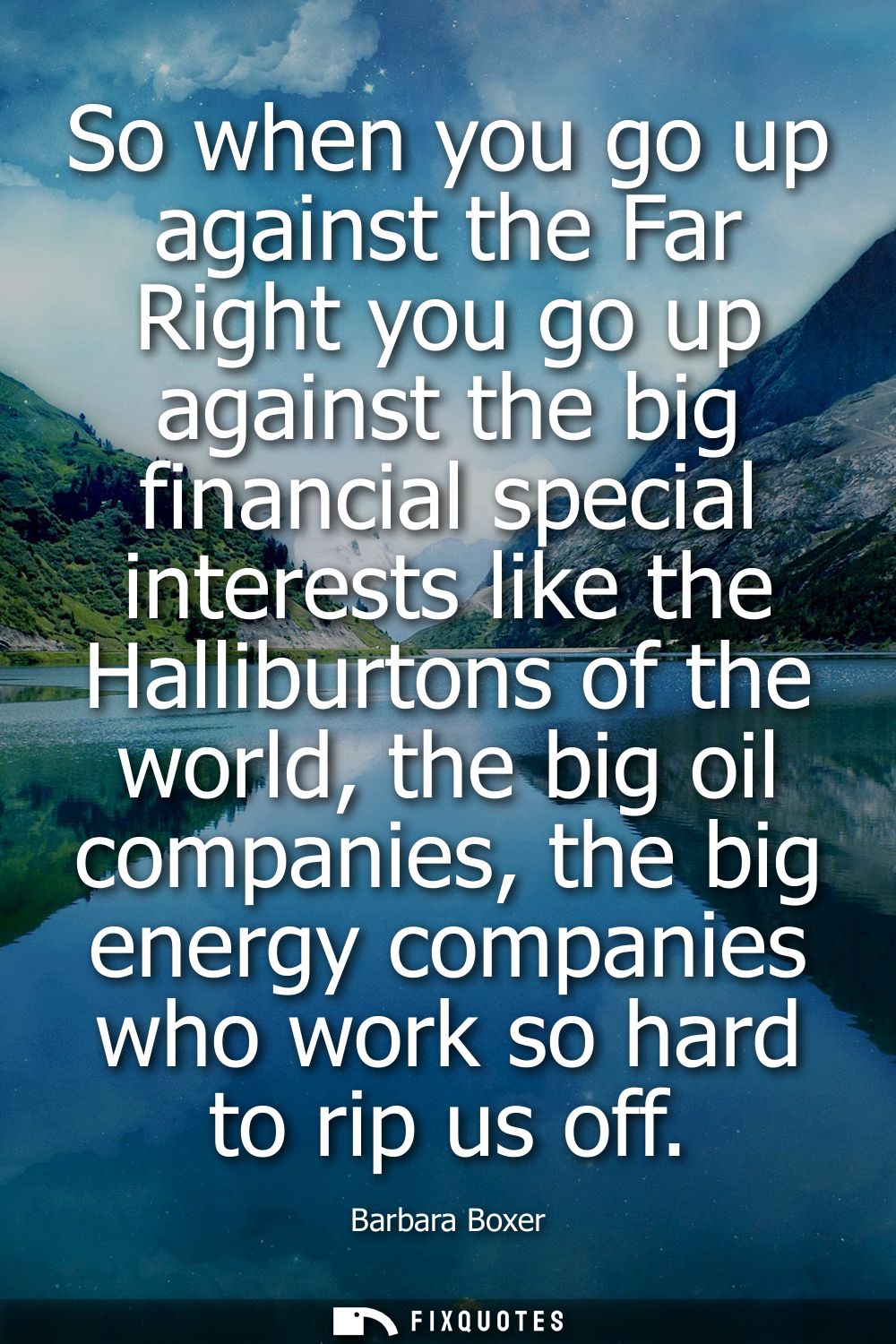
"So when you go up against the Far Right, you go up against the big financial special interests like the Halliburtons of the world, the big oil companies, the big energy companies, who work so hard to rip us off"
About this Quote
The repetition of “big” does deliberate work. It’s not elegance; it’s emphasis-by-blunt-force, a populist drumbeat meant to make the opposition feel physically larger and harder to defeat, which in turn flatters the listener’s courage for resisting. “Special interests” is the bridge phrase that lets her fuse culture-war antagonists with economic grievance. You don’t have to care about carbon policy to resent being “ripped off.”
The subtext is transactional politics: the Far Right isn’t just wrong, it’s funded. That framing shifts the fight from persuasion to exposure. It also preemptively explains why reform is so difficult: not because the public isn’t ready, but because powerful actors “work so hard” to keep the system tilted. Boxer’s intent is mobilization through indignation, turning complex energy policy and campaign finance into a simple moral story with a clear cast and a clear injury: “us” versus the companies that profit when “we” lose.
Quote Details
| Topic | Justice |
|---|---|
| Source | Help us find the source |
| Cite |
Citation Formats
APA Style (7th ed.)
Boxer, Barbara. (2026, February 16). So when you go up against the Far Right, you go up against the big financial special interests like the Halliburtons of the world, the big oil companies, the big energy companies, who work so hard to rip us off. FixQuotes. https://fixquotes.com/quotes/so-when-you-go-up-against-the-far-right-you-go-up-138707/
Chicago Style
Boxer, Barbara. "So when you go up against the Far Right, you go up against the big financial special interests like the Halliburtons of the world, the big oil companies, the big energy companies, who work so hard to rip us off." FixQuotes. February 16, 2026. https://fixquotes.com/quotes/so-when-you-go-up-against-the-far-right-you-go-up-138707/.
MLA Style (9th ed.)
"So when you go up against the Far Right, you go up against the big financial special interests like the Halliburtons of the world, the big oil companies, the big energy companies, who work so hard to rip us off." FixQuotes, 16 Feb. 2026, https://fixquotes.com/quotes/so-when-you-go-up-against-the-far-right-you-go-up-138707/. Accessed 28 Mar. 2026.