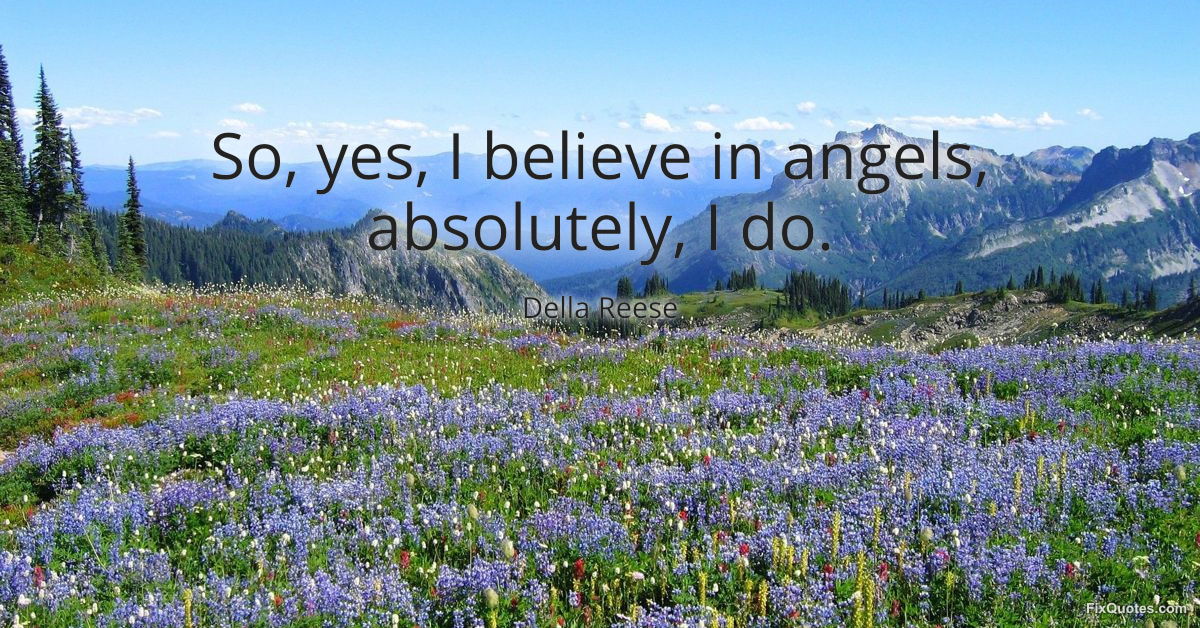
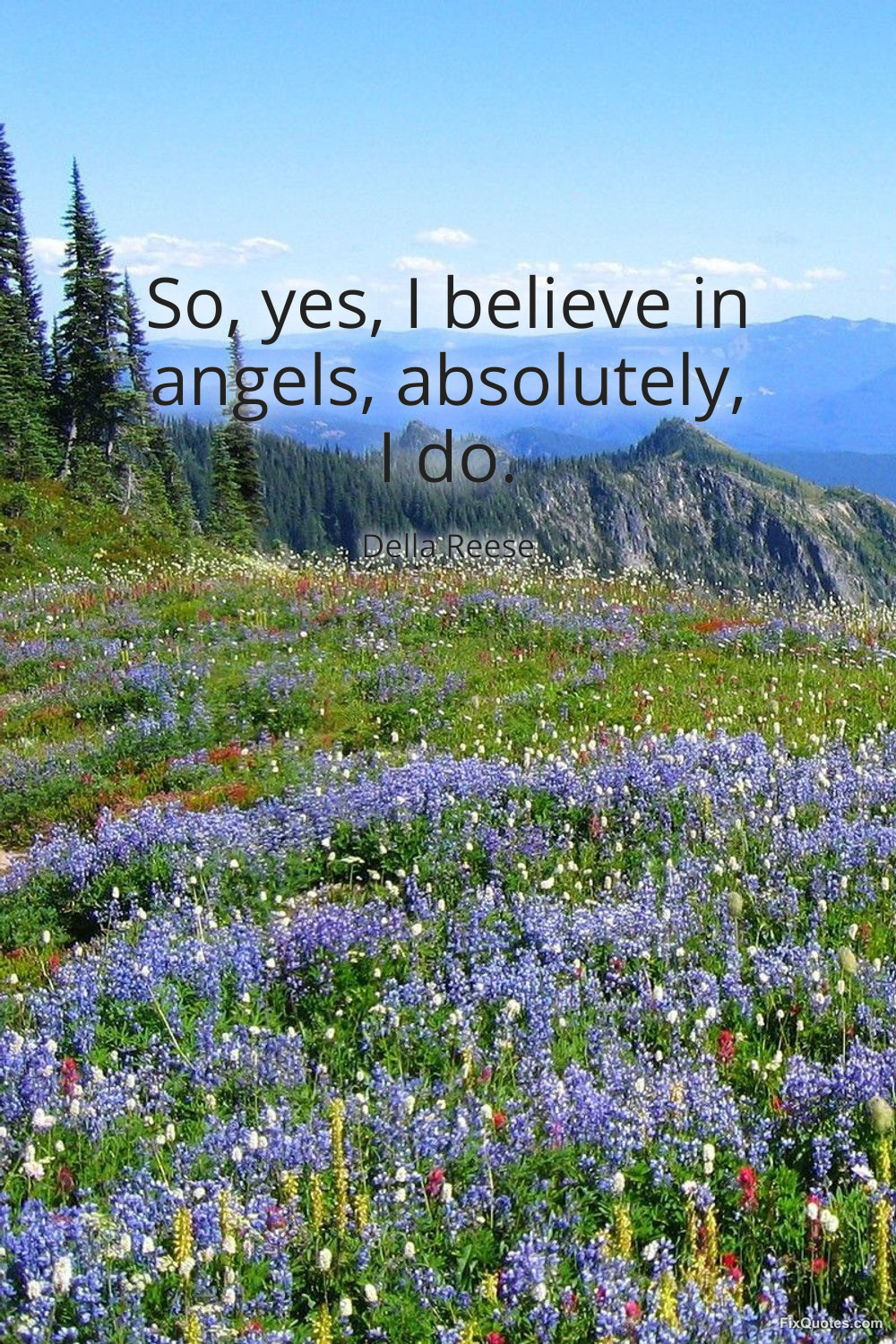
"So, yes, I believe in angels, absolutely, I do"
About this Quote
Della Reese’s “So, yes, I believe in angels, absolutely, I do” lands with the force of a performer choosing sincerity over cool. The line isn’t dressed up as metaphor or coy spirituality; it’s a triple-locked affirmation, built on conversational beats that feel like she’s answering a skeptical interviewer and refusing to be nudged into irony. “So” signals pushback, a tiny verbal shoulder-check. “Yes” concedes the question existed, then flips it into certainty. “Absolutely” isn’t argument; it’s vibe, a demand that you stop treating belief like a guilty pleasure. And the final “I do” is old-school gospel cadence: a testimony, not a thesis.
Reese’s context matters. She was a vocalist steeped in church tradition, and later a TV figure whose public persona braided warmth, authority, and a kind of maternal steadiness. In late-20th-century pop culture, “angels” were both devotional and kitsch: greeting-card sentiment, New Age comfort, tabloid spectacle. Reese’s phrasing refuses the wink that usually accompanies supernatural talk in mainstream entertainment. She’s reclaiming angels as lived experience rather than aesthetic accessory.
The subtext is also strategic: belief as boundary-setting. She doesn’t invite debate; she models conviction as a form of self-possession. Coming from a Black woman who navigated segregated stages and image-policed television, that insistence reads as more than piety. It’s a declaration that her inner life isn’t up for cross-examination, and that tenderness and certainty can coexist without apology.
Reese’s context matters. She was a vocalist steeped in church tradition, and later a TV figure whose public persona braided warmth, authority, and a kind of maternal steadiness. In late-20th-century pop culture, “angels” were both devotional and kitsch: greeting-card sentiment, New Age comfort, tabloid spectacle. Reese’s phrasing refuses the wink that usually accompanies supernatural talk in mainstream entertainment. She’s reclaiming angels as lived experience rather than aesthetic accessory.
The subtext is also strategic: belief as boundary-setting. She doesn’t invite debate; she models conviction as a form of self-possession. Coming from a Black woman who navigated segregated stages and image-policed television, that insistence reads as more than piety. It’s a declaration that her inner life isn’t up for cross-examination, and that tenderness and certainty can coexist without apology.
Quote Details
| Topic | Faith |
|---|---|
| Source | Help us find the source |
| Cite |
Citation Formats
APA Style (7th ed.)
Reese, Della. (2026, January 17). So, yes, I believe in angels, absolutely, I do. FixQuotes. https://fixquotes.com/quotes/so-yes-i-believe-in-angels-absolutely-i-do-49673/
Chicago Style
Reese, Della. "So, yes, I believe in angels, absolutely, I do." FixQuotes. January 17, 2026. https://fixquotes.com/quotes/so-yes-i-believe-in-angels-absolutely-i-do-49673/.
MLA Style (9th ed.)
"So, yes, I believe in angels, absolutely, I do." FixQuotes, 17 Jan. 2026, https://fixquotes.com/quotes/so-yes-i-believe-in-angels-absolutely-i-do-49673/. Accessed 1 Apr. 2026.
More Quotes by Della
Add to List