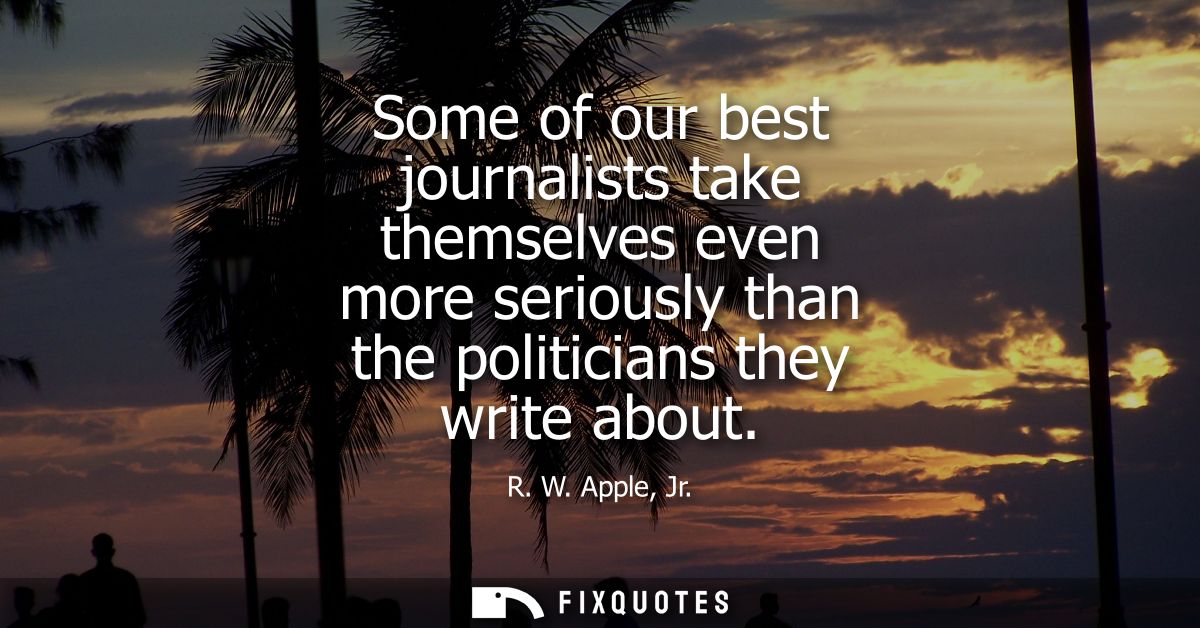
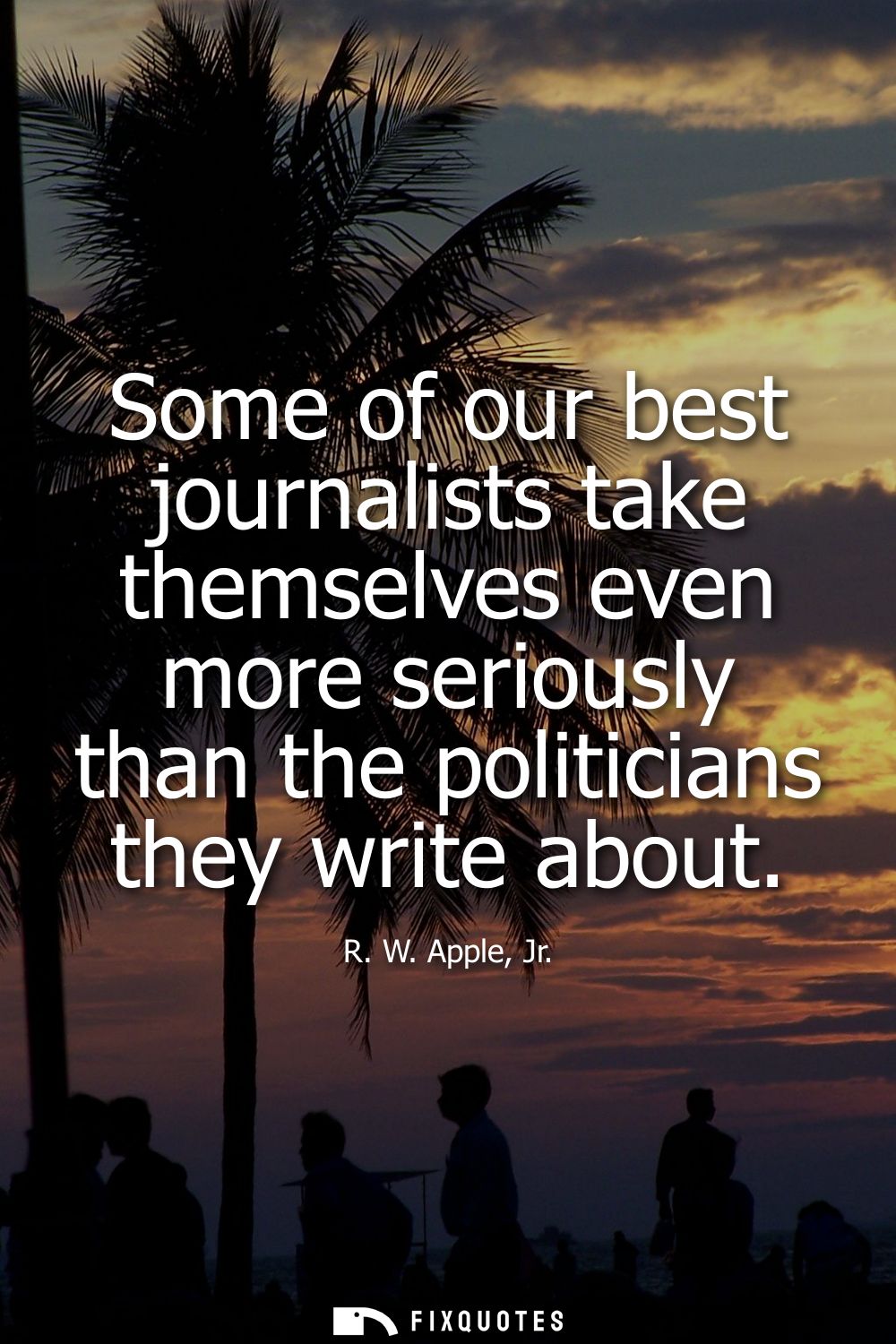
"Some of our best journalists take themselves even more seriously than the politicians they write about"
About this Quote
The intent is corrective, aimed inward. Apple spent decades reporting from the nerve centers of power, in an era when the prestige of institutional journalism still felt solid but its rituals were hardening into orthodoxy. The subtext: seriousness is not the same as rigor. A reporter can perform gravity - the solemn tone, the insider lexicon, the self-myth of watchdog heroism - while missing what matters, or worse, confusing proximity to power with accountability.
The quote also reads as an early warning about a feedback loop: politicians posture for coverage; journalists posture for relevance; both benefit from the theater of high stakes. When journalists out-solemn the officials they cover, they risk laundering political self-importance into “history,” making every tactical squabble sound like destiny. That’s how the press can become an unwitting co-author of the narrative it claims to interrogate.
Apple’s cynicism is measured, not sneering. He isn’t arguing for flippancy; he’s arguing for proportion. The best journalism, he implies, is confident enough to be unseduced by its own role - and brave enough to admit it can be part of the problem.
Quote Details
| Topic | Sarcastic |
|---|---|
| Source | Help us find the source |
| Cite |
Citation Formats
APA Style (7th ed.)
Jr., R. W. Apple,. (2026, January 16). Some of our best journalists take themselves even more seriously than the politicians they write about. FixQuotes. https://fixquotes.com/quotes/some-of-our-best-journalists-take-themselves-even-120760/
Chicago Style
Jr., R. W. Apple,. "Some of our best journalists take themselves even more seriously than the politicians they write about." FixQuotes. January 16, 2026. https://fixquotes.com/quotes/some-of-our-best-journalists-take-themselves-even-120760/.
MLA Style (9th ed.)
"Some of our best journalists take themselves even more seriously than the politicians they write about." FixQuotes, 16 Jan. 2026, https://fixquotes.com/quotes/some-of-our-best-journalists-take-themselves-even-120760/. Accessed 14 Feb. 2026.