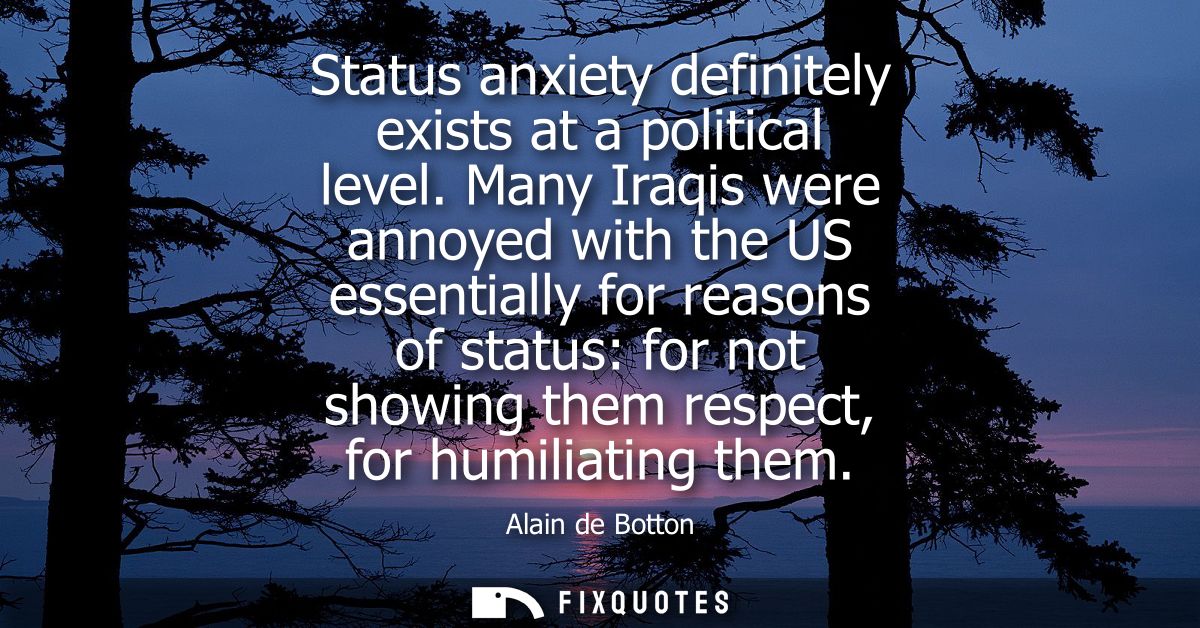
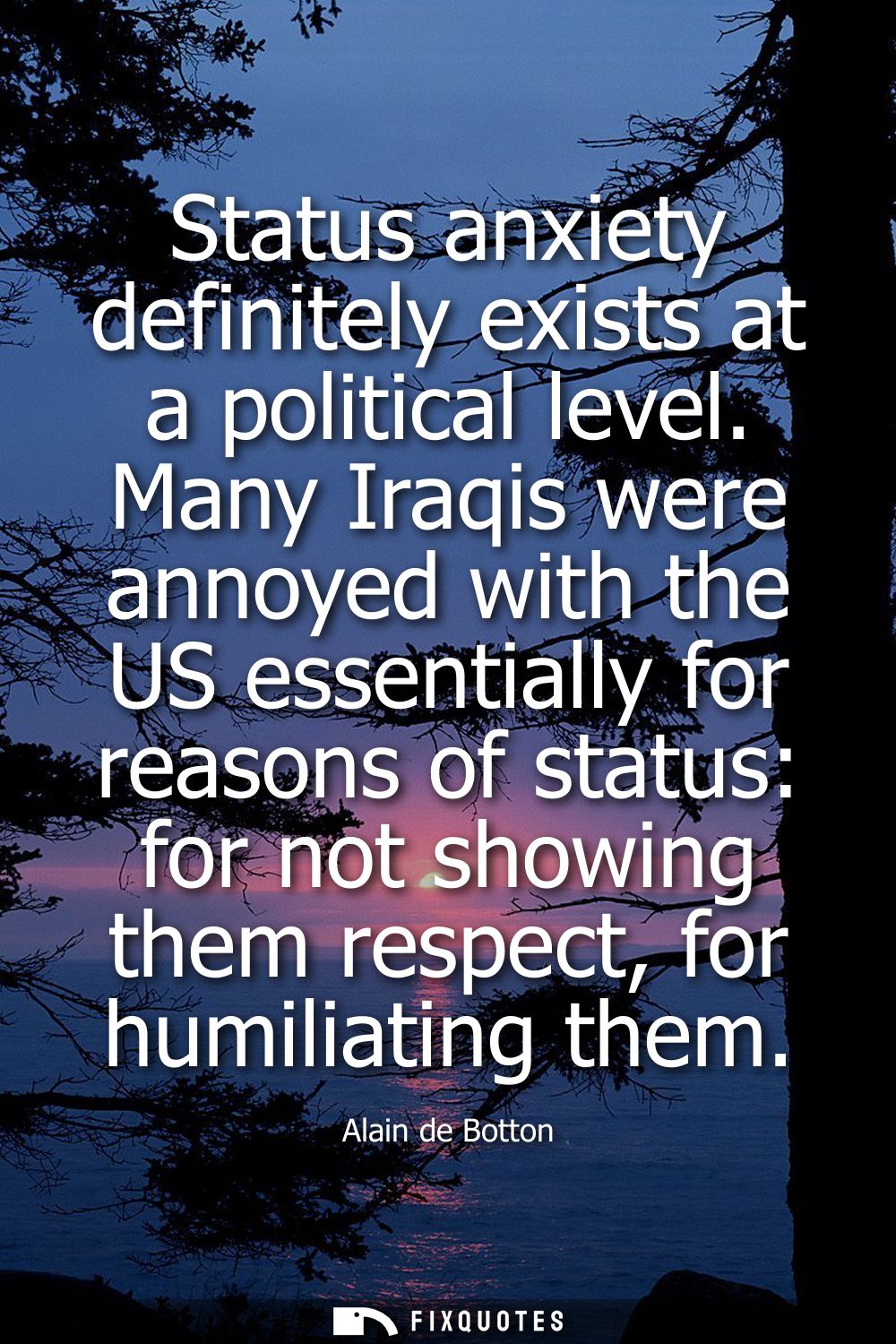
"Status anxiety definitely exists at a political level. Many Iraqis were annoyed with the US essentially for reasons of status: for not showing them respect, for humiliating them"
About this Quote
De Botton’s move here is to drag geopolitics down from the lofty shelf of “interests” and “security” and put it back where a lot of conflict actually lives: in the bruised psyche of status. The sentence is almost disarmingly plain, but it carries a sharp rebuke. If you insist that wars are only about resources or ideology, you miss how often the match is struck by something smaller and more intimate: the feeling of being looked down on.
“Annoyed” is doing quiet work. It’s an everyday word for what, in Iraq, could curdle into rage and resistance. De Botton isn’t denying material devastation; he’s spotlighting the emotional logic that can turn occupation into humiliation. “Respect” and “humiliating” aren’t rhetorical flourishes, they’re political facts in his framework: status is a currency, and refusing to pay it is experienced as theft.
The subtext is also aimed at Western self-mythology. America often narrates its role abroad as managerial, technocratic, even benevolent. De Botton suggests that the real injury may have been social and symbolic: the checkpoints, the raids, the photo-ops, the tone of command. Those gestures broadcast hierarchy, and hierarchy breeds backlash.
Context matters: post-2003 Iraq wasn’t just a country being “helped” or “stabilized.” It was a society asked to absorb a global spectacle of dominance. De Botton’s intent is to argue that ignoring status dynamics isn’t merely insensitive; it’s strategically illiterate. You can’t win hearts and minds while stepping on dignity.
“Annoyed” is doing quiet work. It’s an everyday word for what, in Iraq, could curdle into rage and resistance. De Botton isn’t denying material devastation; he’s spotlighting the emotional logic that can turn occupation into humiliation. “Respect” and “humiliating” aren’t rhetorical flourishes, they’re political facts in his framework: status is a currency, and refusing to pay it is experienced as theft.
The subtext is also aimed at Western self-mythology. America often narrates its role abroad as managerial, technocratic, even benevolent. De Botton suggests that the real injury may have been social and symbolic: the checkpoints, the raids, the photo-ops, the tone of command. Those gestures broadcast hierarchy, and hierarchy breeds backlash.
Context matters: post-2003 Iraq wasn’t just a country being “helped” or “stabilized.” It was a society asked to absorb a global spectacle of dominance. De Botton’s intent is to argue that ignoring status dynamics isn’t merely insensitive; it’s strategically illiterate. You can’t win hearts and minds while stepping on dignity.
Quote Details
| Topic | War |
|---|
More Quotes by Alain
Add to List