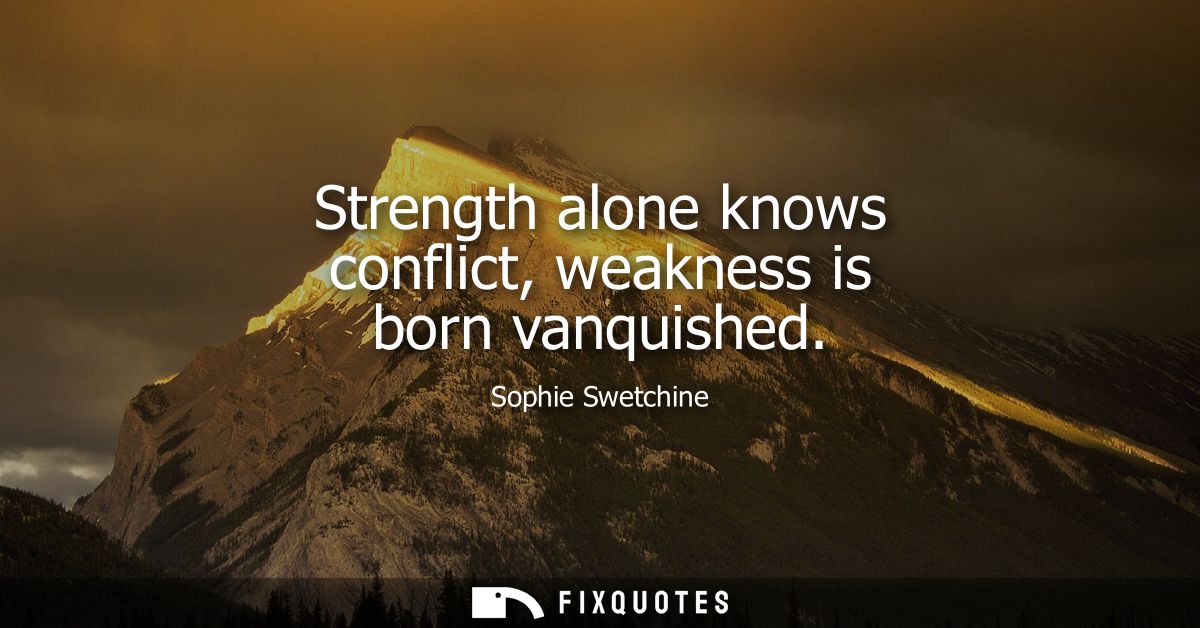
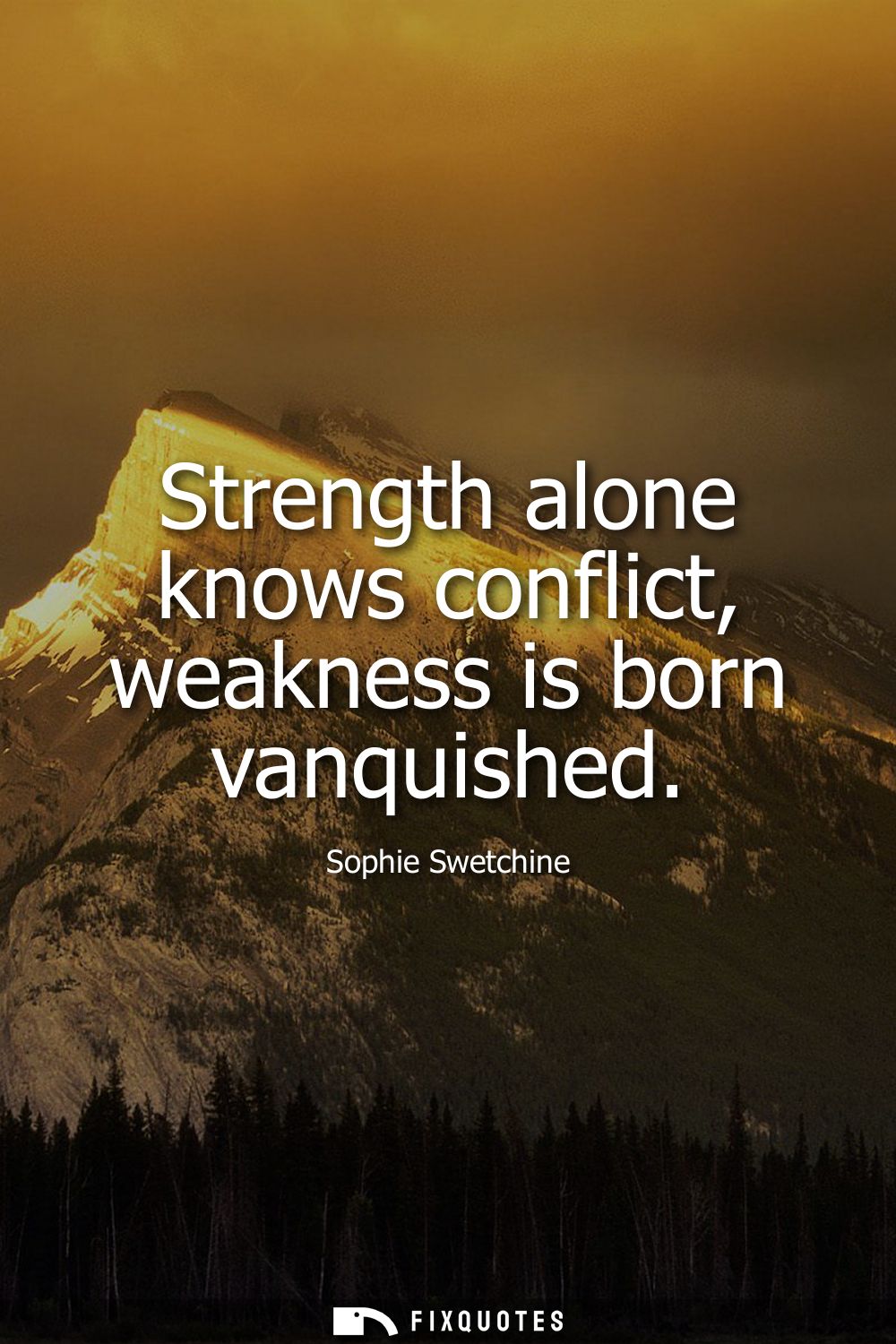
"Strength alone knows conflict, weakness is born vanquished"
About this Quote
“Strength alone knows conflict” is a deliberately counterintuitive flex: it reframes struggle not as evidence of frailty but as proof you’re strong enough to have a fight in the first place. Swetchine’s line has the snap of a moral aphorism, but its real work is psychological. Conflict, she implies, is a privilege of agency. If you have power, you meet resistance; you can push, negotiate, risk loss. If you’re weak, the world doesn’t bother to wrestle with you. It simply decides for you.
The second clause, “weakness is born vanquished,” lands with a kind of chilly fatalism. “Born” turns defeat into an origin story, not a temporary setback. That’s not just harsh; it’s strategic. It’s meant to shame passivity and self-pity by making them look less like innocence and more like surrender before the contest even begins. The subtext is moral and social: in a rigid hierarchy, weakness isn’t romantic; it’s invisible, pre-empted, handled.
Context matters. Swetchine, a Russian-born salonniere who became a Catholic moralist in Paris, wrote in a century where revolutions, restorations, and social ranks made “strength” a loaded word. For women and outsiders, strength often had to be cultivated indirectly: through intellect, spiritual discipline, conversation, influence. This aphorism reads like guidance for navigating power without admitting you want it: don’t fear conflict as a sign you’ve failed; fear the quieter catastrophe of never becoming someone worth opposing.
The second clause, “weakness is born vanquished,” lands with a kind of chilly fatalism. “Born” turns defeat into an origin story, not a temporary setback. That’s not just harsh; it’s strategic. It’s meant to shame passivity and self-pity by making them look less like innocence and more like surrender before the contest even begins. The subtext is moral and social: in a rigid hierarchy, weakness isn’t romantic; it’s invisible, pre-empted, handled.
Context matters. Swetchine, a Russian-born salonniere who became a Catholic moralist in Paris, wrote in a century where revolutions, restorations, and social ranks made “strength” a loaded word. For women and outsiders, strength often had to be cultivated indirectly: through intellect, spiritual discipline, conversation, influence. This aphorism reads like guidance for navigating power without admitting you want it: don’t fear conflict as a sign you’ve failed; fear the quieter catastrophe of never becoming someone worth opposing.
Quote Details
| Topic | Wisdom |
|---|---|
| Source | Help us find the source |
| Cite |
Citation Formats
APA Style (7th ed.)
Swetchine, Sophie. (2026, January 15). Strength alone knows conflict, weakness is born vanquished. FixQuotes. https://fixquotes.com/quotes/strength-alone-knows-conflict-weakness-is-born-157312/
Chicago Style
Swetchine, Sophie. "Strength alone knows conflict, weakness is born vanquished." FixQuotes. January 15, 2026. https://fixquotes.com/quotes/strength-alone-knows-conflict-weakness-is-born-157312/.
MLA Style (9th ed.)
"Strength alone knows conflict, weakness is born vanquished." FixQuotes, 15 Jan. 2026, https://fixquotes.com/quotes/strength-alone-knows-conflict-weakness-is-born-157312/. Accessed 27 Mar. 2026.
More Quotes by Sophie
Add to List