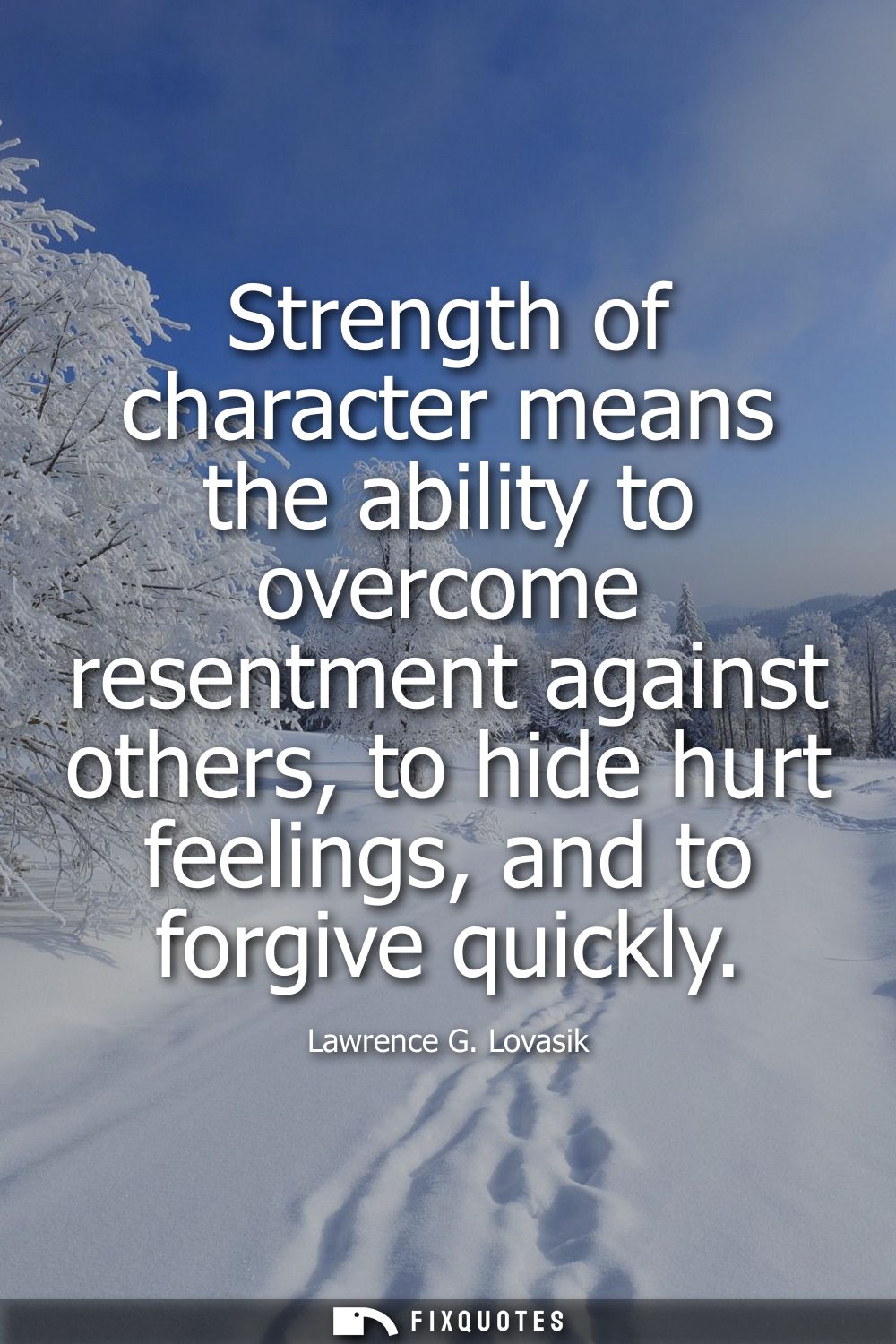
"Strength of character means the ability to overcome resentment against others, to hide hurt feelings, and to forgive quickly"
About this Quote
Lovasik smuggles a countercultural idea into the language of virtue: strength is not dominance, but restraint. In a world that often treats outrage as proof of moral seriousness, he flips the script. The “strong” person, in his framing, is the one who can absorb a blow without turning it into a lifelong identity project.
The intent is pastoral and practical. As a clergyman, Lovasik is less interested in winning arguments than in keeping a community intact. Resentment fractures congregations, families, and friendships; it turns private injury into public rot. So “overcome resentment” isn’t a self-help bromide so much as a survival strategy for relationships where you don’t get to rage-quit and start over.
The subtext is thornier: “hide hurt feelings” reads like a suspicious line in an era that prizes emotional candor. Yet within a Christian moral imagination, that concealment isn’t denial; it’s a discipline. The point isn’t to pretend you weren’t wounded, but to refuse the impulse to weaponize pain, to make your hurt the currency that buys you control. It’s also a quiet critique of the ego: your injury may be real, but it doesn’t deserve to steer the room.
“Forgive quickly” lands as the capstone and the challenge. Quick forgiveness is not amnesia or excusing harm; it’s a refusal to let injury become a long-term occupation. Lovasik’s ethic bets that character is measured less by what you feel and more by what you refuse to do with those feelings.
The intent is pastoral and practical. As a clergyman, Lovasik is less interested in winning arguments than in keeping a community intact. Resentment fractures congregations, families, and friendships; it turns private injury into public rot. So “overcome resentment” isn’t a self-help bromide so much as a survival strategy for relationships where you don’t get to rage-quit and start over.
The subtext is thornier: “hide hurt feelings” reads like a suspicious line in an era that prizes emotional candor. Yet within a Christian moral imagination, that concealment isn’t denial; it’s a discipline. The point isn’t to pretend you weren’t wounded, but to refuse the impulse to weaponize pain, to make your hurt the currency that buys you control. It’s also a quiet critique of the ego: your injury may be real, but it doesn’t deserve to steer the room.
“Forgive quickly” lands as the capstone and the challenge. Quick forgiveness is not amnesia or excusing harm; it’s a refusal to let injury become a long-term occupation. Lovasik’s ethic bets that character is measured less by what you feel and more by what you refuse to do with those feelings.
Quote Details
| Topic | Forgiveness |
|---|---|
| Source | Help us find the source |
More Quotes by Lawrence
Add to List