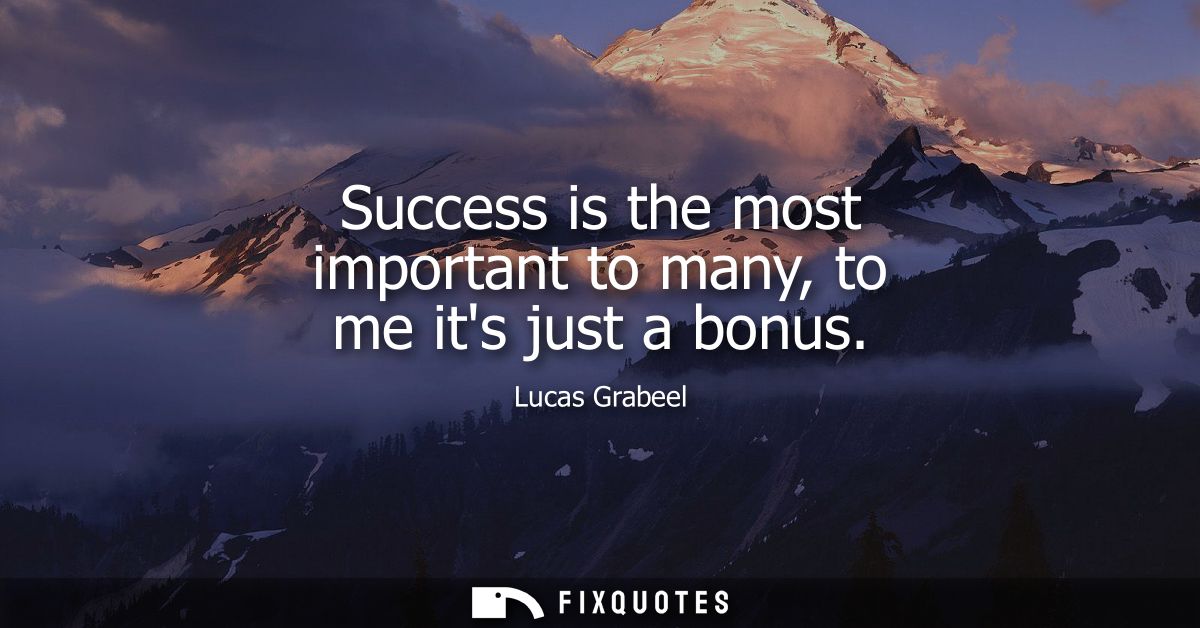
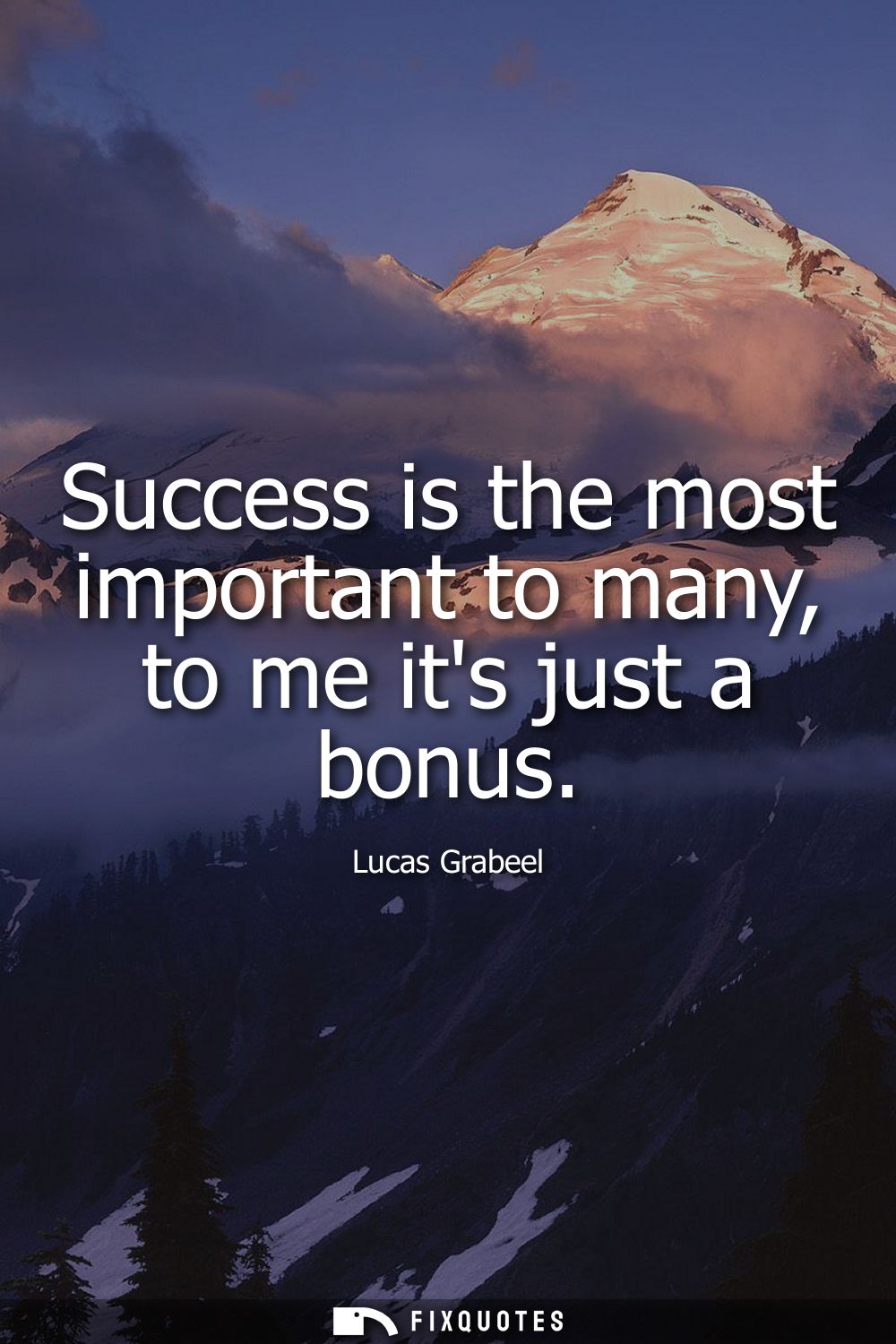
"Success is the most important to many, to me it's just a bonus"
About this Quote
Grabeel’s line lands like a gentle shoulder-check to the algorithmic religion of winning. Coming from an actor who grew up in the High School Musical era - a machine that mass-produces “breakouts” and then measures your worth by whether you stay broken out - “success” isn’t an abstract virtue. It’s a scoreboard that refreshes every day: box office, followers, casting heat, the whisper network of who’s “up.”
The phrasing is doing quiet work. “To many” sets the cultural baseline: ambition as social default, hustle as moral identity. Then he flips it with “to me,” shrinking the ego and widening the frame. He’s not denying success; he’s demoting it. Calling it “just a bonus” is the key move: success becomes a byproduct, not a purpose. That’s a psychological self-defense mechanism in an industry where the outcome is famously uncontrollable. You can nail the audition and still lose the role to timing, optics, or a star’s cousin.
The subtext is also reputational. Actors are expected to want it badly, but punished for seeming desperate. This line threads that needle: it signals seriousness without hunger, gratitude without neediness. It reads like someone choosing process over prize - craft, community, and sanity over clout.
Culturally, it’s a small protest against a status economy that turns people into brands. “Bonus” suggests a life with an axis that isn’t external validation. That’s not anti-ambition; it’s ambition with a firewall.
The phrasing is doing quiet work. “To many” sets the cultural baseline: ambition as social default, hustle as moral identity. Then he flips it with “to me,” shrinking the ego and widening the frame. He’s not denying success; he’s demoting it. Calling it “just a bonus” is the key move: success becomes a byproduct, not a purpose. That’s a psychological self-defense mechanism in an industry where the outcome is famously uncontrollable. You can nail the audition and still lose the role to timing, optics, or a star’s cousin.
The subtext is also reputational. Actors are expected to want it badly, but punished for seeming desperate. This line threads that needle: it signals seriousness without hunger, gratitude without neediness. It reads like someone choosing process over prize - craft, community, and sanity over clout.
Culturally, it’s a small protest against a status economy that turns people into brands. “Bonus” suggests a life with an axis that isn’t external validation. That’s not anti-ambition; it’s ambition with a firewall.
Quote Details
| Topic | Success |
|---|---|
| Source | Help us find the source |
| Cite |
Citation Formats
APA Style (7th ed.)
Grabeel, Lucas. (2026, January 15). Success is the most important to many, to me it's just a bonus. FixQuotes. https://fixquotes.com/quotes/success-is-the-most-important-to-many-to-me-its-153779/
Chicago Style
Grabeel, Lucas. "Success is the most important to many, to me it's just a bonus." FixQuotes. January 15, 2026. https://fixquotes.com/quotes/success-is-the-most-important-to-many-to-me-its-153779/.
MLA Style (9th ed.)
"Success is the most important to many, to me it's just a bonus." FixQuotes, 15 Jan. 2026, https://fixquotes.com/quotes/success-is-the-most-important-to-many-to-me-its-153779/. Accessed 14 Mar. 2026.
More Quotes by Lucas
Add to List