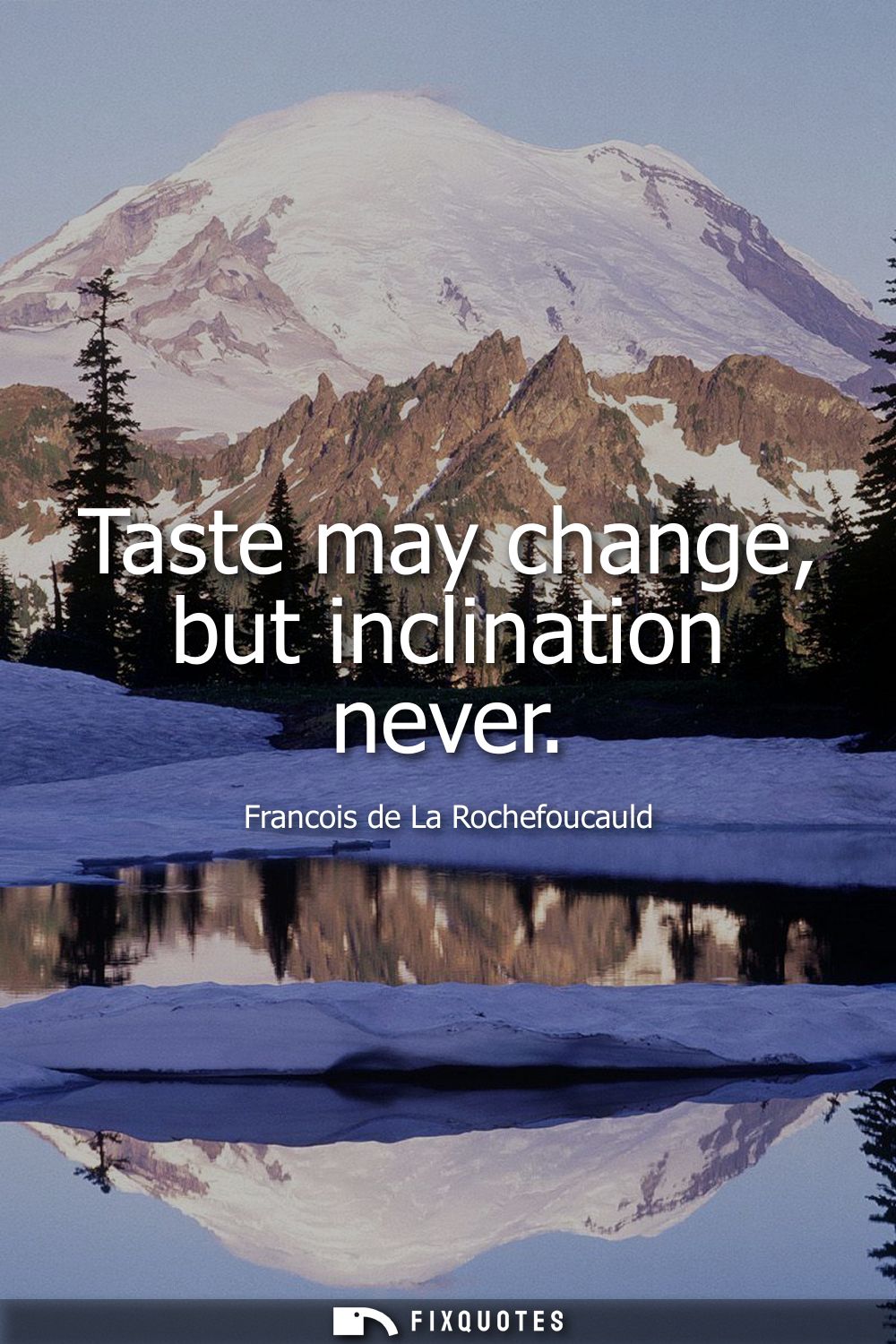
"Taste may change, but inclination never"
About this Quote
Aphorisms like this one don’t comfort; they corner you. When La Rochefoucauld says, “Taste may change, but inclination never,” he splits the self into two layers: the varnish of preference and the grain of desire. Taste is what we learn to perform - the books we pretend to love, the politics we adopt, the manners that keep us employable. Inclination is the stubborn impulse underneath, the recurring appetite that keeps reasserting itself no matter how refined the costume.
The line works because it’s a polite insult. It flatters your capacity for self-improvement (“taste” can evolve), then quietly denies the modern fantasy of total reinvention. Behind the elegance sits a jaded anthropology: people do not become new creatures; they become better at editing their public selves. If the quote feels unnervingly contemporary, that’s the point. It’s a scalpel aimed at the narratives we build about growth, especially among elites who treat cultural sophistication as moral progress.
Context matters: La Rochefoucauld wrote from within the high-pressure theater of the French court, where status depended on reading motives as much as etiquette. In that world, fashion changed weekly, alliances shifted daily, and sincerity was a liability. “Inclination” names what survives the churn: ambition, vanity, jealousy, hunger for approval. Taste can be curated; inclination keeps its appointments. The cynicism isn’t gratuitous - it’s empirical, a survival skill dressed up as wisdom.
The line works because it’s a polite insult. It flatters your capacity for self-improvement (“taste” can evolve), then quietly denies the modern fantasy of total reinvention. Behind the elegance sits a jaded anthropology: people do not become new creatures; they become better at editing their public selves. If the quote feels unnervingly contemporary, that’s the point. It’s a scalpel aimed at the narratives we build about growth, especially among elites who treat cultural sophistication as moral progress.
Context matters: La Rochefoucauld wrote from within the high-pressure theater of the French court, where status depended on reading motives as much as etiquette. In that world, fashion changed weekly, alliances shifted daily, and sincerity was a liability. “Inclination” names what survives the churn: ambition, vanity, jealousy, hunger for approval. Taste can be curated; inclination keeps its appointments. The cynicism isn’t gratuitous - it’s empirical, a survival skill dressed up as wisdom.
Quote Details
| Topic | Wisdom |
|---|---|
| Source | Help us find the source |
| Cite |
Citation Formats
APA Style (7th ed.)
Rochefoucauld, Francois de La. (2026, January 18). Taste may change, but inclination never. FixQuotes. https://fixquotes.com/quotes/taste-may-change-but-inclination-never-13127/
Chicago Style
Rochefoucauld, Francois de La. "Taste may change, but inclination never." FixQuotes. January 18, 2026. https://fixquotes.com/quotes/taste-may-change-but-inclination-never-13127/.
MLA Style (9th ed.)
"Taste may change, but inclination never." FixQuotes, 18 Jan. 2026, https://fixquotes.com/quotes/taste-may-change-but-inclination-never-13127/. Accessed 13 Feb. 2026.
More Quotes by Francois
Add to List