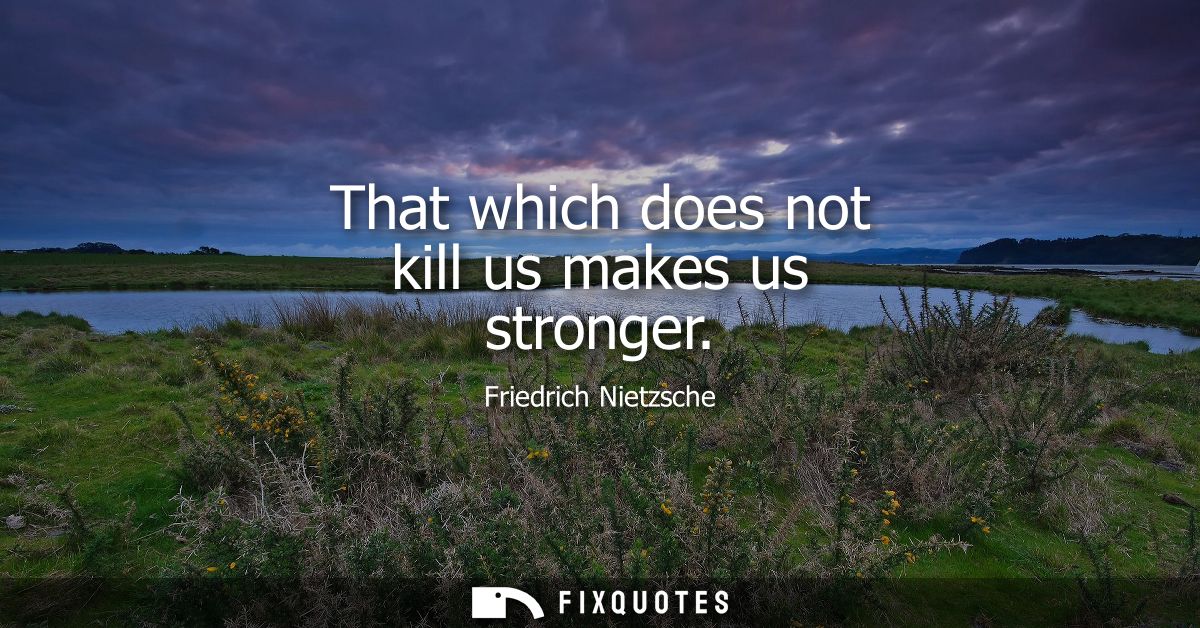
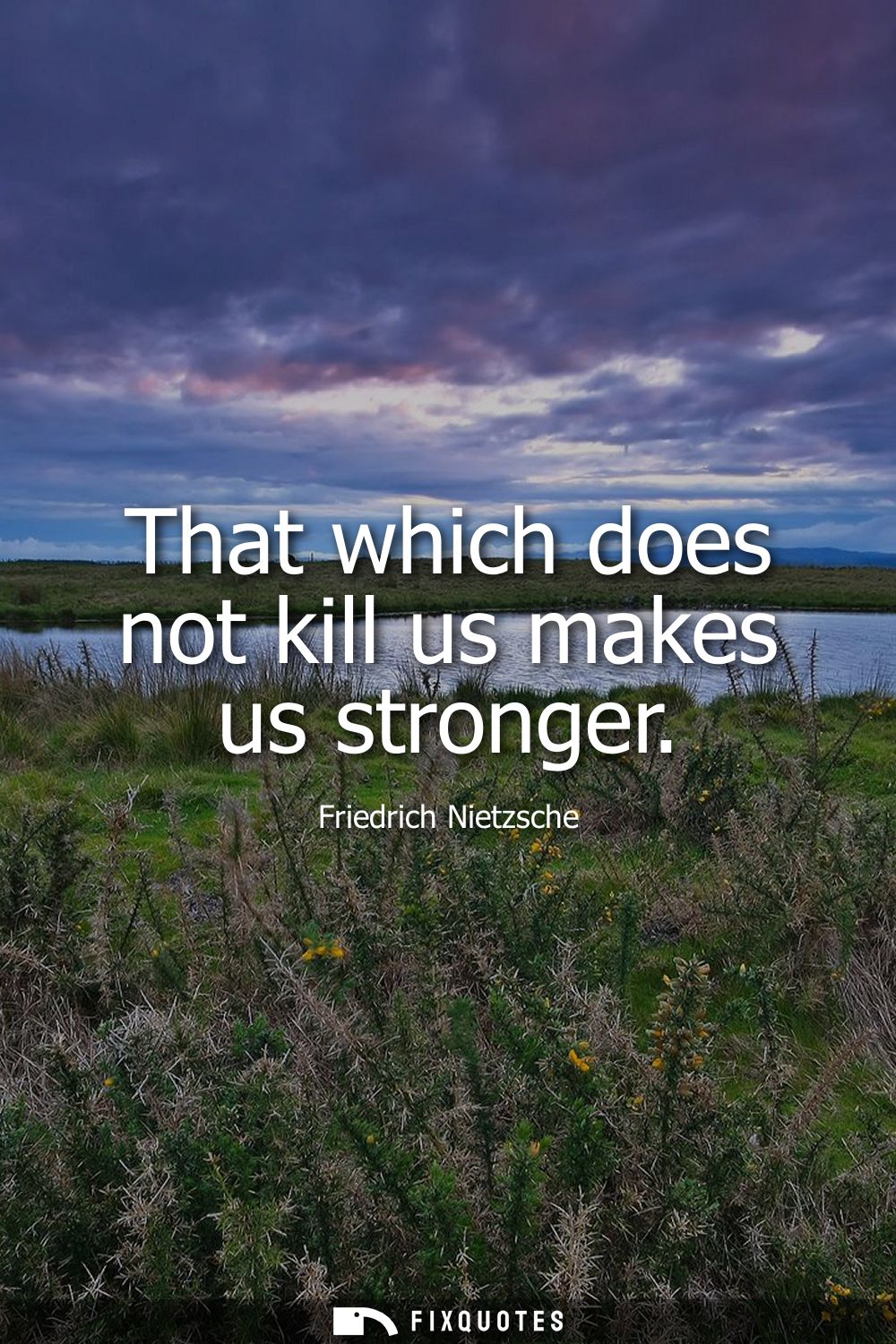
"That which does not kill us makes us stronger"
About this Quote
Pain is not ennobling by nature; Nietzsche’s provocation is that it can be made useful. The line’s staying power comes from how mercilessly it shifts responsibility: suffering is not a moral scandal the universe owes you compensation for, it’s raw material. If you’re broken by it, that’s evidence of fragility, not cosmic injustice. If you metabolize it, you’ve converted damage into capacity. It’s an almost brutal refusal of consolation, dressed up as a motivational slogan.
The intent sits inside Nietzsche’s larger project: dismantling comfort-based moralities that treat vulnerability as virtue and hardship as proof of wrongdoing. In Twilight of the Idols, where the aphorism appears, he’s taking a hammer to what he sees as Europe’s sickly idealization of meekness and pity. Strength, for Nietzsche, isn’t mere endurance or stoic gritting of teeth; it’s the power to interpret experience in a way that enlarges your agency. The subtext is psychological: trauma can either harden into resentment (his dreaded ressentiment) or be transfigured into a fiercer selfhood.
The irony is that the line now circulates as a benign self-help platitude, often stripped of its menace. Nietzsche isn’t promising that suffering will pay dividends automatically; he’s implying a selective process. Some things do kill you, many things do maim, and plenty of people aren’t “made stronger” so much as made numb. The aphorism lands because it flatters our desire to narrate survival as triumph, while quietly daring us to earn that story.
The intent sits inside Nietzsche’s larger project: dismantling comfort-based moralities that treat vulnerability as virtue and hardship as proof of wrongdoing. In Twilight of the Idols, where the aphorism appears, he’s taking a hammer to what he sees as Europe’s sickly idealization of meekness and pity. Strength, for Nietzsche, isn’t mere endurance or stoic gritting of teeth; it’s the power to interpret experience in a way that enlarges your agency. The subtext is psychological: trauma can either harden into resentment (his dreaded ressentiment) or be transfigured into a fiercer selfhood.
The irony is that the line now circulates as a benign self-help platitude, often stripped of its menace. Nietzsche isn’t promising that suffering will pay dividends automatically; he’s implying a selective process. Some things do kill you, many things do maim, and plenty of people aren’t “made stronger” so much as made numb. The aphorism lands because it flatters our desire to narrate survival as triumph, while quietly daring us to earn that story.
Quote Details
| Topic | Resilience |
|---|---|
| Source | Friedrich Nietzsche, Twilight of the Idols (Gotzen-Dammerung), 'Maxims and Arrows' (Sprueche und Pfeile), aphorism 8 — original German: 'Was mich nicht umbringt, macht mich staerker.' Common English translation: 'That which does not kill us makes us stronger.' |
| Cite |
Citation Formats
APA Style (7th ed.)
Nietzsche, Friedrich. (2026, January 18). That which does not kill us makes us stronger. FixQuotes. https://fixquotes.com/quotes/that-which-does-not-kill-us-makes-us-stronger-289/
Chicago Style
Nietzsche, Friedrich. "That which does not kill us makes us stronger." FixQuotes. January 18, 2026. https://fixquotes.com/quotes/that-which-does-not-kill-us-makes-us-stronger-289/.
MLA Style (9th ed.)
"That which does not kill us makes us stronger." FixQuotes, 18 Jan. 2026, https://fixquotes.com/quotes/that-which-does-not-kill-us-makes-us-stronger-289/. Accessed 2 Apr. 2026.
More Quotes by Friedrich
Add to List