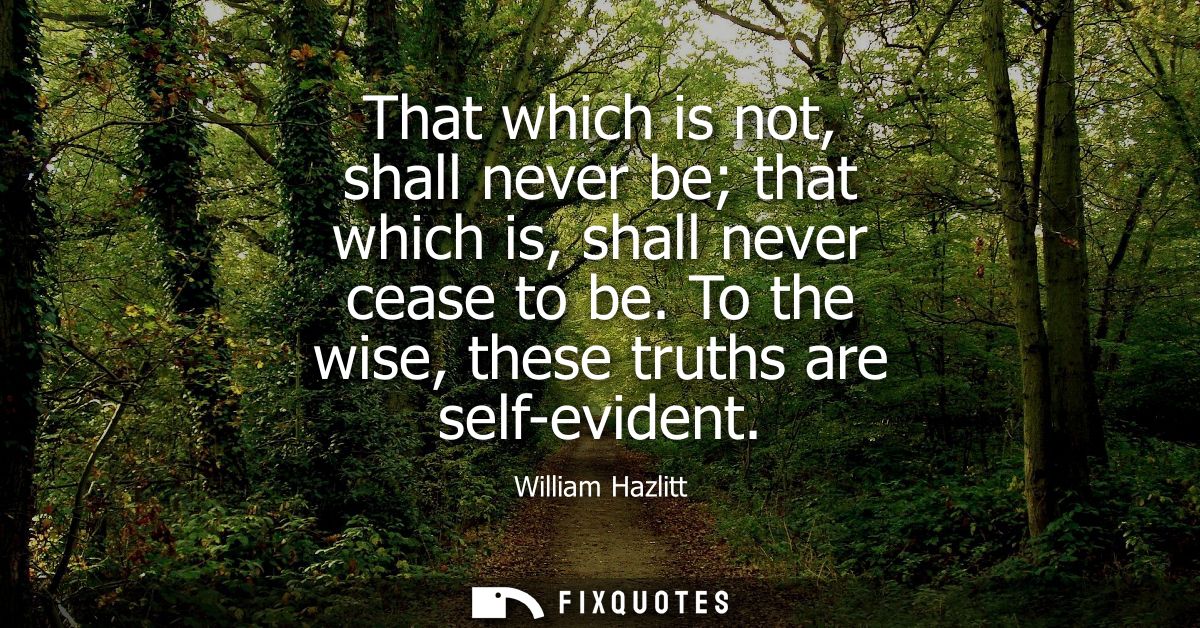
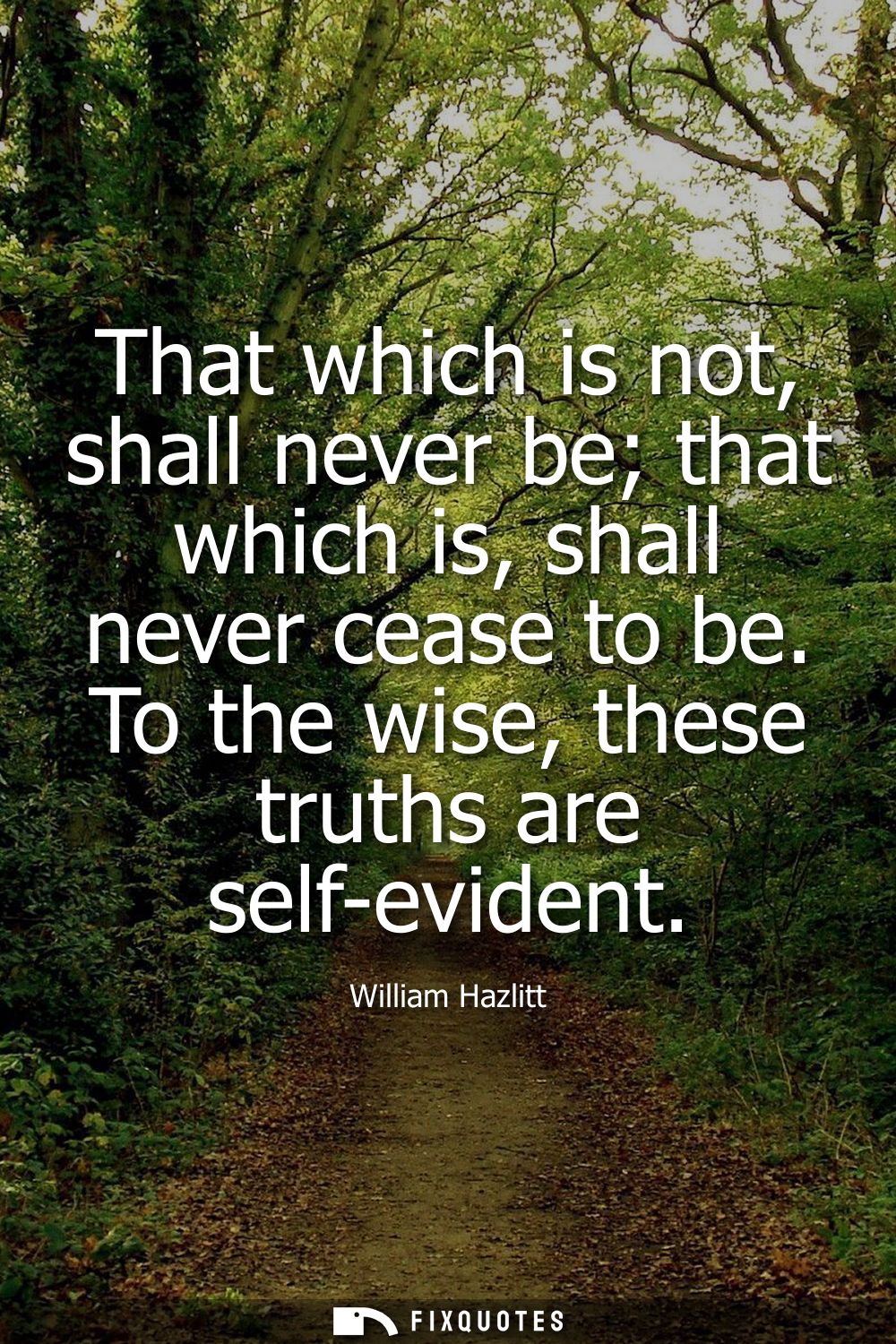
"That which is not, shall never be; that which is, shall never cease to be. To the wise, these truths are self-evident"
About this Quote
The subtext is impatience with fashionable delusion - political, moral, aesthetic. In an era of revolutions, utopian schemes, and grand theories of human perfectibility, Hazlitt leans into the hard edge of reality. He’s skeptical of the culture’s appetite for “becoming” narratives, the idea that history can be willed into a new shape by optimism or ideology. What is absent isn’t a promise waiting to arrive; it may simply be impossible. What is present - character, appetite, conflict, power - doesn’t politely dissolve because a thinker wants it to.
“To the wise, these truths are self-evident” is where Hazlitt’s critic’s snobbery flashes. He’s not inviting debate; he’s drawing a line between those who can bear plain facts and those who need comforting fictions. The move flatters “the wise,” sure, but it also dares the reader: if you resist this, you’re confessing you’d rather be seduced than instructed. Hazlitt’s intent isn’t serenity; it’s a cold bath.
Quote Details
| Topic | Truth |
|---|---|
| Source | Help us find the source |
| Cite |
Citation Formats
APA Style (7th ed.)
Hazlitt, William. (2026, January 15). That which is not, shall never be; that which is, shall never cease to be. To the wise, these truths are self-evident. FixQuotes. https://fixquotes.com/quotes/that-which-is-not-shall-never-be-that-which-is-99912/
Chicago Style
Hazlitt, William. "That which is not, shall never be; that which is, shall never cease to be. To the wise, these truths are self-evident." FixQuotes. January 15, 2026. https://fixquotes.com/quotes/that-which-is-not-shall-never-be-that-which-is-99912/.
MLA Style (9th ed.)
"That which is not, shall never be; that which is, shall never cease to be. To the wise, these truths are self-evident." FixQuotes, 15 Jan. 2026, https://fixquotes.com/quotes/that-which-is-not-shall-never-be-that-which-is-99912/. Accessed 22 Mar. 2026.