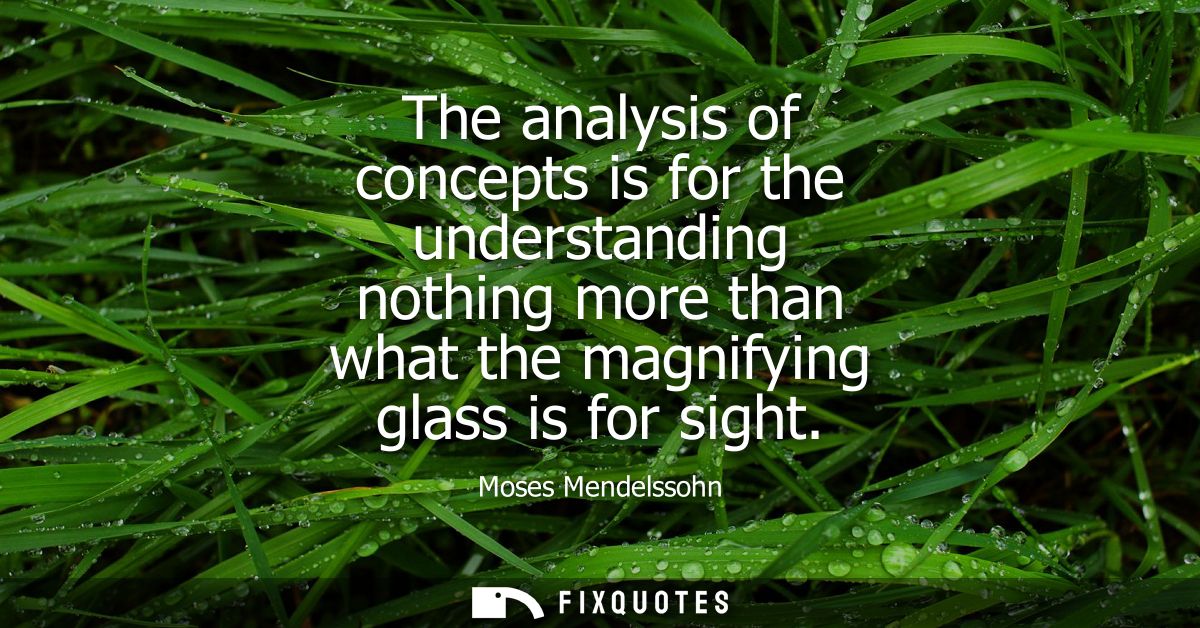
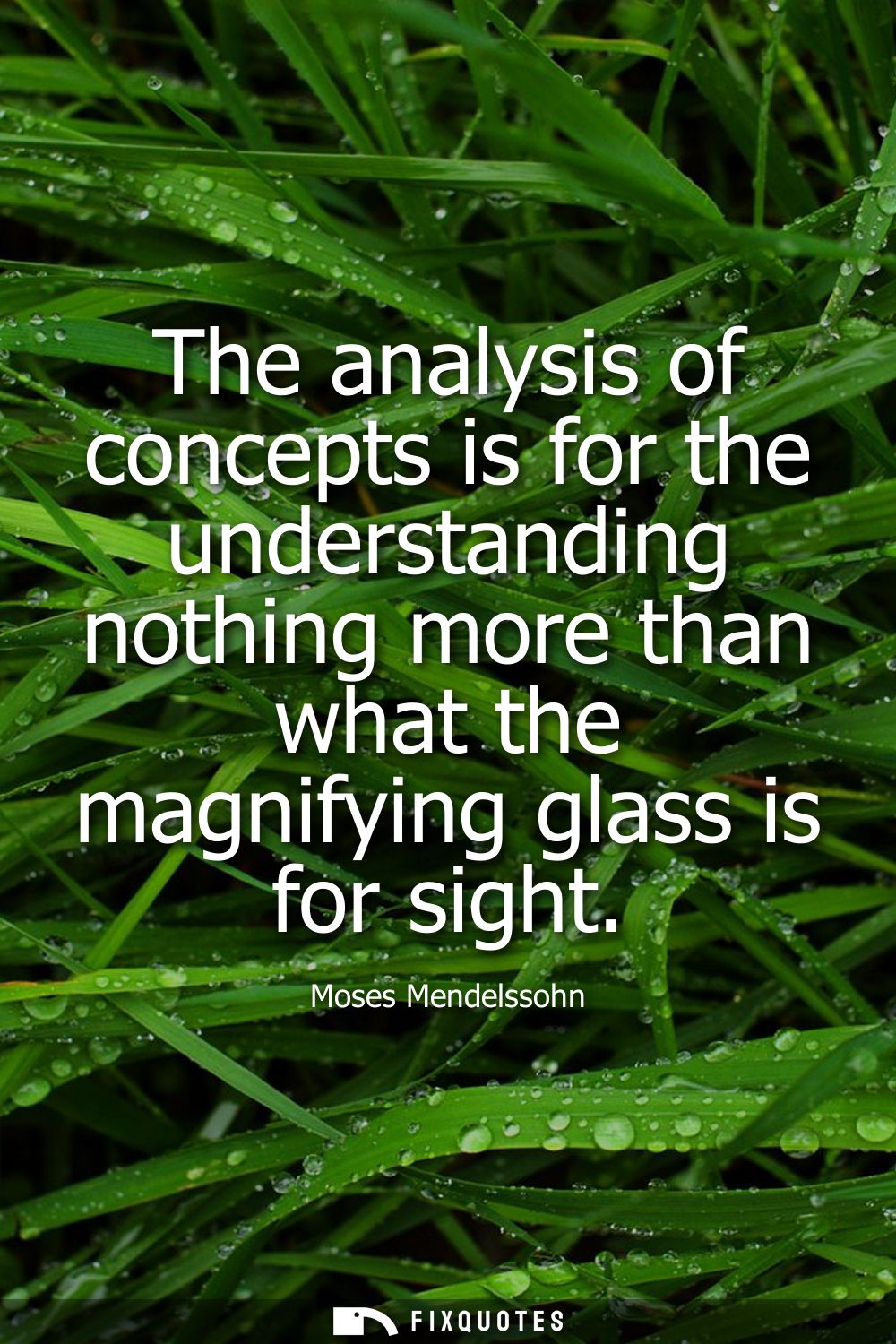
"The analysis of concepts is for the understanding, nothing more than what the magnifying glass is for sight"
About this Quote
The subtext is a warning against mistaking precision for profundity. A magnifying glass can seduce you into thinking you’re seeing “more” when you’re really just seeing “closer” - and closer isn’t always better. Over-magnify and you lose the object; you trade the living scene for a patch of texture. Mendelssohn is signaling suspicion of a certain scholastic temptation: getting so absorbed in definitions and distinctions that philosophy becomes a virtuoso performance with diminishing returns.
Context matters. As a Jewish thinker navigating German rationalism, Mendelssohn had to defend reason’s authority without letting it flatten religion, ethics, or lived experience into mere terminology. His broader project (visible in Jerusalem and his popularizing work) tries to reconcile rigorous critique with civic and spiritual pluralism. This line quietly stakes out that middle position: analyze concepts to polish the lenses of thought, not to pretend you’ve invented sight itself.
Quote Details
| Topic | Reason & Logic |
|---|---|
| Source | Help us find the source |
| Cite |
Citation Formats
APA Style (7th ed.)
Mendelssohn, Moses. (2026, February 16). The analysis of concepts is for the understanding, nothing more than what the magnifying glass is for sight. FixQuotes. https://fixquotes.com/quotes/the-analysis-of-concepts-is-for-the-understanding-143265/
Chicago Style
Mendelssohn, Moses. "The analysis of concepts is for the understanding, nothing more than what the magnifying glass is for sight." FixQuotes. February 16, 2026. https://fixquotes.com/quotes/the-analysis-of-concepts-is-for-the-understanding-143265/.
MLA Style (9th ed.)
"The analysis of concepts is for the understanding, nothing more than what the magnifying glass is for sight." FixQuotes, 16 Feb. 2026, https://fixquotes.com/quotes/the-analysis-of-concepts-is-for-the-understanding-143265/. Accessed 4 Mar. 2026.