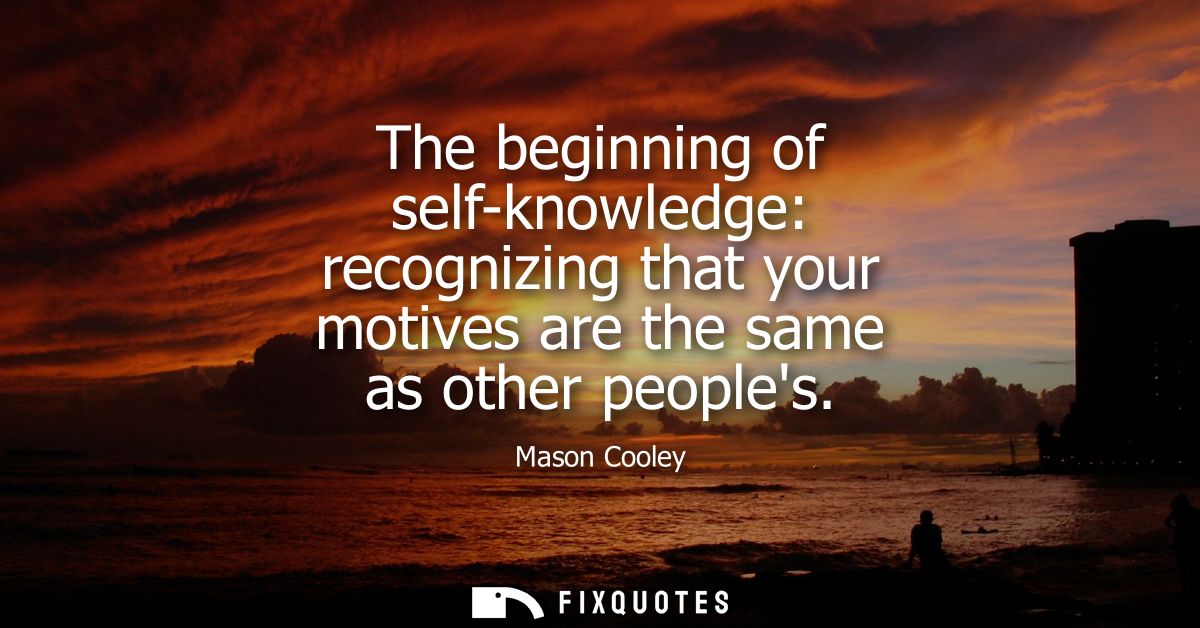
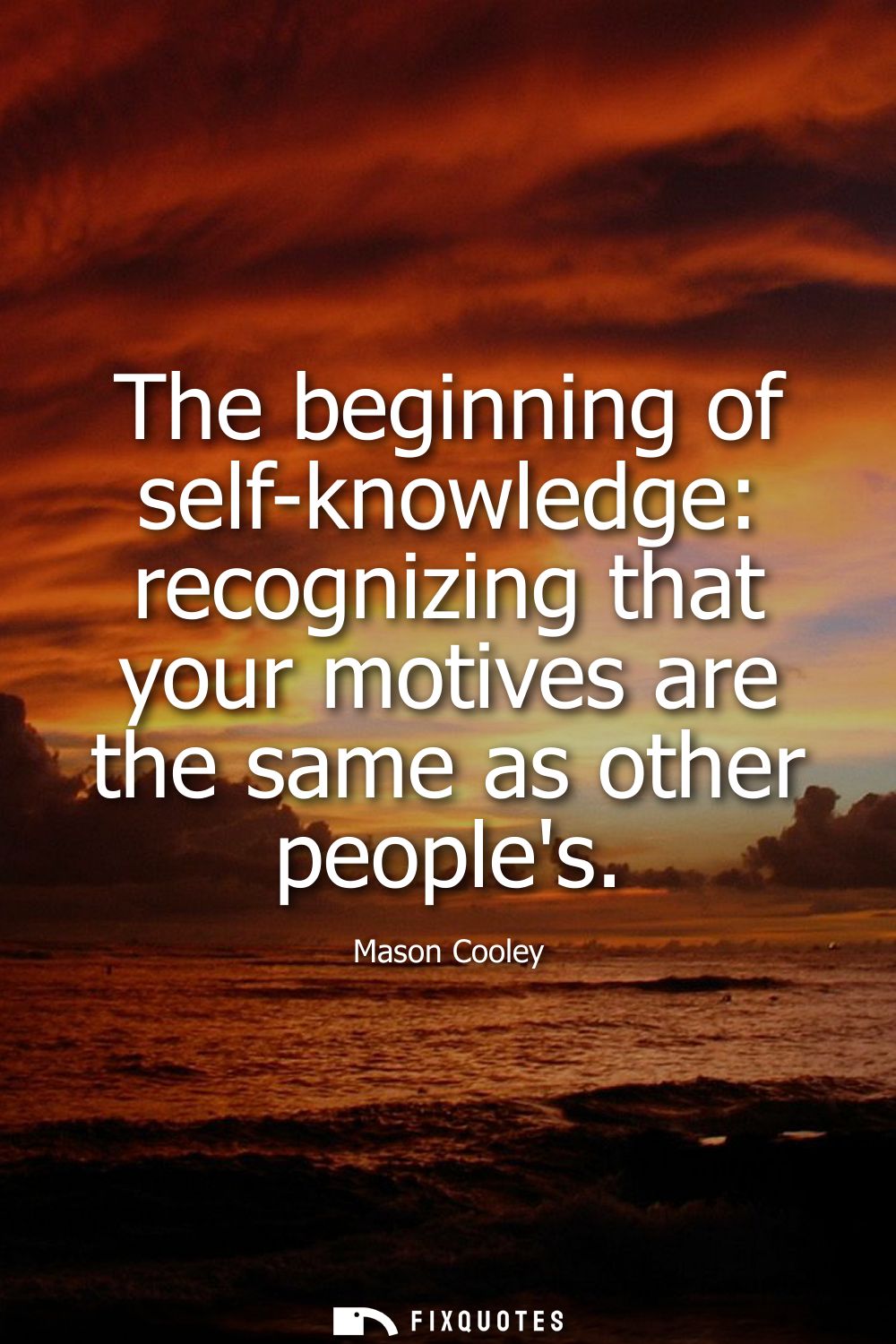
"The beginning of self-knowledge: recognizing that your motives are the same as other people's"
About this Quote
The subtext is a critique of moral exceptionalism. People often treat motives as an alibi: my anger is principled, yours is petty; my ambition is a calling, yours is greed. Cooley drags those distinctions into the light. If your motives are “the same,” your private narrative loses its special pleading, and you’re forced to confront how easily you rationalize, how eagerly you self-edit. It’s a harsh kind of empathy: you understand others better by admitting you run on similar fuel.
Context matters here: Cooley’s aphoristic style belongs to a late-20th-century American skepticism about self-help earnestness and therapeutic grandiosity. His intent isn’t to flatten human difference but to locate the baseline where honesty can begin. Recognizing sameness is not cynicism; it’s a diagnostic. Once you stop pretending you’re immune to the usual incentives, you can finally see what you’re actually doing - and why.
Quote Details
| Topic | Wisdom |
|---|---|
| Source | Help us find the source |
| Cite |
Citation Formats
APA Style (7th ed.)
Cooley, Mason. (2026, January 16). The beginning of self-knowledge: recognizing that your motives are the same as other people's. FixQuotes. https://fixquotes.com/quotes/the-beginning-of-self-knowledge-recognizing-that-115312/
Chicago Style
Cooley, Mason. "The beginning of self-knowledge: recognizing that your motives are the same as other people's." FixQuotes. January 16, 2026. https://fixquotes.com/quotes/the-beginning-of-self-knowledge-recognizing-that-115312/.
MLA Style (9th ed.)
"The beginning of self-knowledge: recognizing that your motives are the same as other people's." FixQuotes, 16 Jan. 2026, https://fixquotes.com/quotes/the-beginning-of-self-knowledge-recognizing-that-115312/. Accessed 27 Mar. 2026.