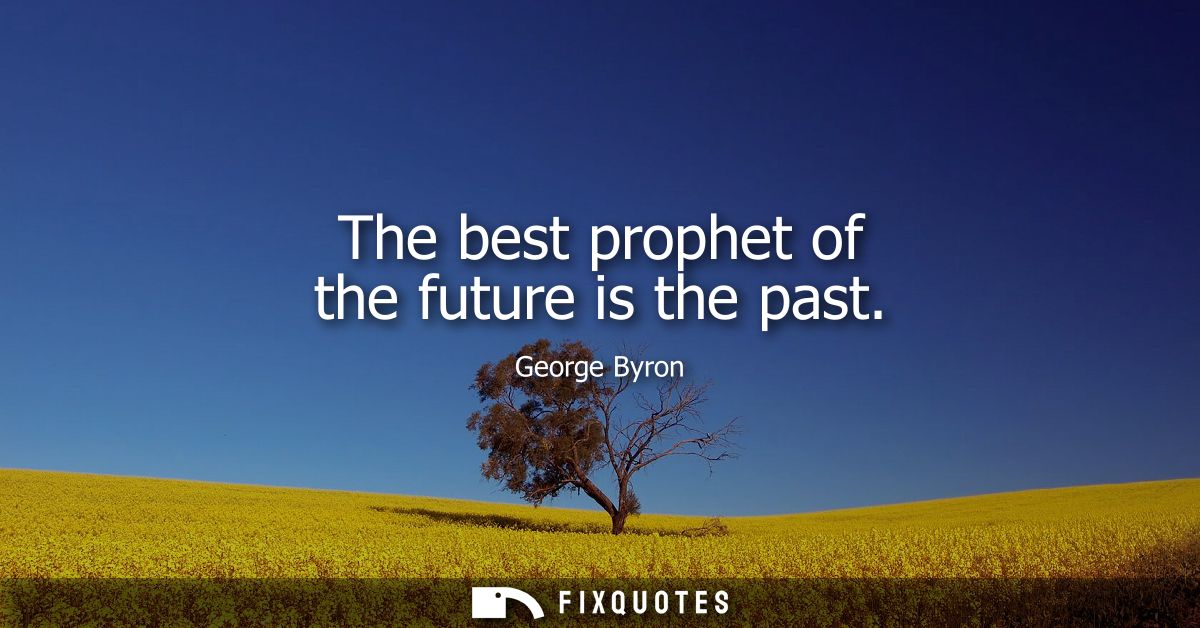
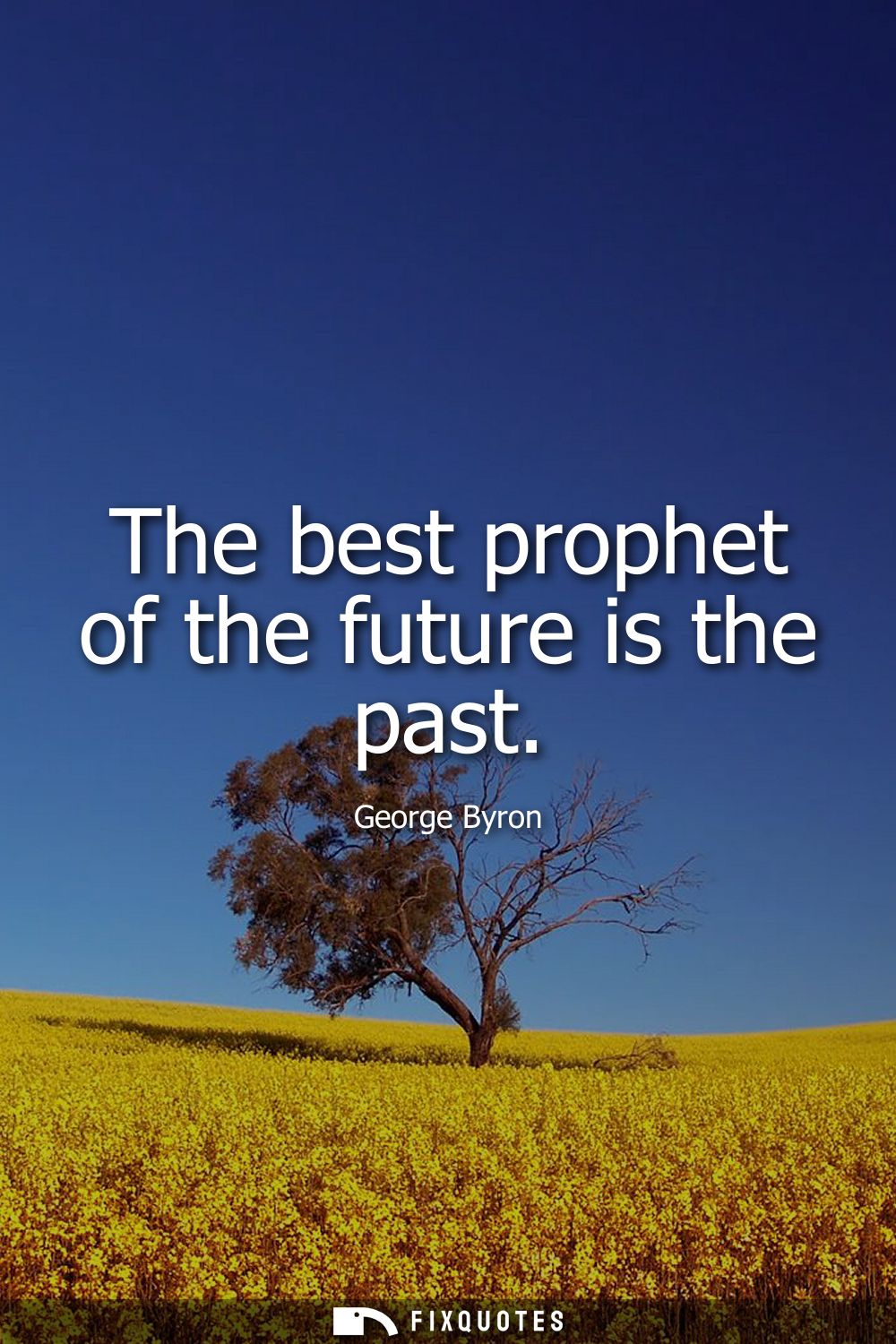
"The best prophet of the future is the past"
About this Quote
Byron’s line flatters progress-minded readers while quietly sabotaging them. Calling the past a “prophet” sounds almost mystical, but the mechanism is brutally unsentimental: history predicts because people repeat themselves, especially when they swear they won’t. It’s a neat Romantic paradox. Byron, the poster poet for intensity and rebellion, turns around and insists that tomorrow is already rehearsed. The wit is in the compression: instead of venerating heroic visions of the future, he hands authority to what’s already happened, as if imagination itself needs an audit.
The subtext is less “study history” and more “stop pretending you’re exempt.” “Best” is doing sharp work here, implying there are other prophets - ideology, optimism, novelty - but they’re unreliable, easily seduced by the mood of the moment. The past, by contrast, is a ledger: patterns of desire, power, greed, fear, and self-deception written in ink. Byron’s cynicism is not dour; it’s prophylactic. He’s offering a way to puncture hype, whether it’s political promises or fashionable moral posturing.
Context matters. Byron lived through the aftershocks of the French Revolution and the Napoleonic era, when Europe learned how quickly lofty rhetoric can curdle into empire, terror, and backlash. The line reads like a post-revolutionary immune response: skepticism dressed as aphorism. It works because it shifts time from a romance plot (the future as redemption) to a rerun (the future as recurrence), and dares you to notice the script before you applaud the next “new” act.
The subtext is less “study history” and more “stop pretending you’re exempt.” “Best” is doing sharp work here, implying there are other prophets - ideology, optimism, novelty - but they’re unreliable, easily seduced by the mood of the moment. The past, by contrast, is a ledger: patterns of desire, power, greed, fear, and self-deception written in ink. Byron’s cynicism is not dour; it’s prophylactic. He’s offering a way to puncture hype, whether it’s political promises or fashionable moral posturing.
Context matters. Byron lived through the aftershocks of the French Revolution and the Napoleonic era, when Europe learned how quickly lofty rhetoric can curdle into empire, terror, and backlash. The line reads like a post-revolutionary immune response: skepticism dressed as aphorism. It works because it shifts time from a romance plot (the future as redemption) to a rerun (the future as recurrence), and dares you to notice the script before you applaud the next “new” act.
Quote Details
| Topic | Wisdom |
|---|---|
| Source | Later attribution: Civilization's Quotations (Richard Alan Krieger, 2002) modern compilationISBN: 9780875861531 · ID: zNQGk_fDYUIC
Evidence:
... The best prophet of the future is the past . " Lord Byron “ The past is never , never dead . It's not even past . " William Faulkner “ The past is certain ; that which is to come is obscure . " Pittacus Baruch “ Not heaven itself upon ... |
| Cite |
Citation Formats
APA Style (7th ed.)
Byron, Lord. (2026, February 17). The best prophet of the future is the past. FixQuotes. https://fixquotes.com/quotes/the-best-prophet-of-the-future-is-the-past-13037/
Chicago Style
Byron, Lord. "The best prophet of the future is the past." FixQuotes. February 17, 2026. https://fixquotes.com/quotes/the-best-prophet-of-the-future-is-the-past-13037/.
MLA Style (9th ed.)
"The best prophet of the future is the past." FixQuotes, 17 Feb. 2026, https://fixquotes.com/quotes/the-best-prophet-of-the-future-is-the-past-13037/. Accessed 1 Apr. 2026.
More Quotes by Lord
Add to List