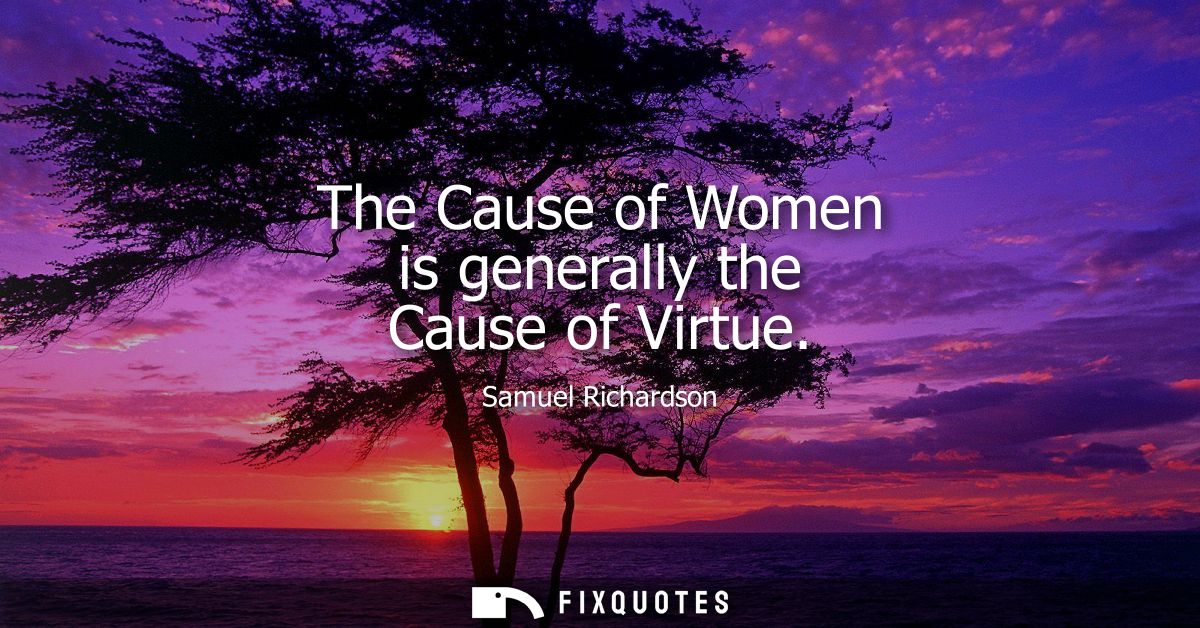
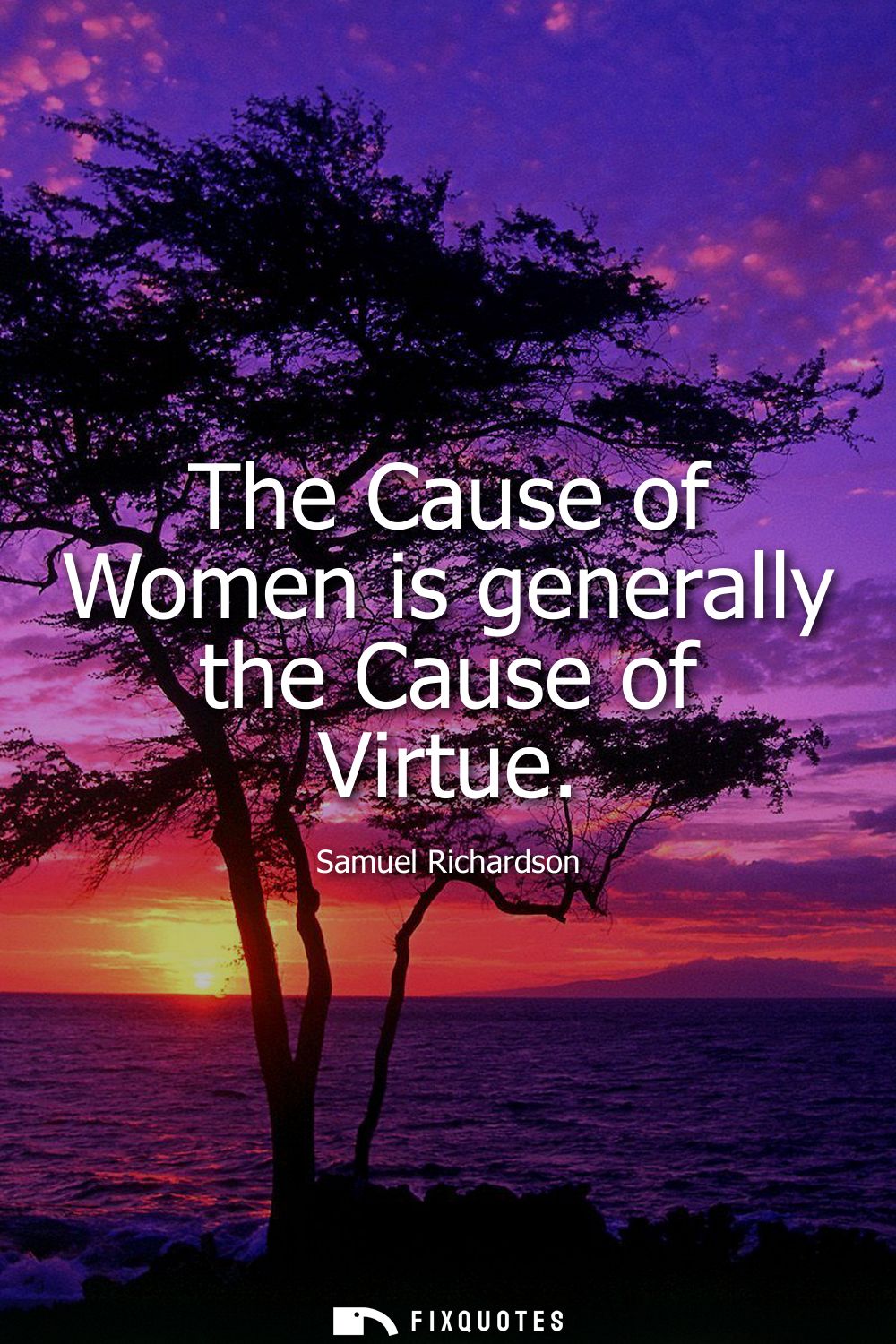
"The Cause of Women is generally the Cause of Virtue"
About this Quote
Richardson’s line is a velvet-gloved power move: it flatters women while quietly recruiting them into an ideological job. “The Cause of Women” sounds like a rights claim, even a proto-feminist banner, but he yokes it to “Virtue,” a word that in 18th-century Britain carried a heavy freight of sexual restraint, moral reputation, and social order. The sentence doesn’t just defend women; it defines what kind of defense is acceptable. Support women, yes, but primarily as guardians of public morality.
The intent makes sense coming from the novelist who built bestsellers out of besieged heroines and moral endurance (Pamela, Clarissa). Richardson’s fiction turned female suffering into a moral spectacle and a cultural argument: if society mistreats women, it’s not merely cruel; it endangers the ethical fabric everyone depends on. That’s the subtextual bargain: women gain attention, sympathy, even moral authority, but at the cost of being cast as the nation’s conscience. It’s empowerment with strings attached.
“Generally” is doing sly work, too. It’s a hedge that sounds reasonable while smuggling in a norm: women’s interests align with “virtue” most of the time, implying that when women push against prevailing standards, they may be straying from the “cause” itself. In an era obsessed with reputation, inheritance, and the policing of sexuality, Richardson’s formulation offers reform without revolution: protect women in order to preserve the system that makes their “virtue” so perilously valuable.
The intent makes sense coming from the novelist who built bestsellers out of besieged heroines and moral endurance (Pamela, Clarissa). Richardson’s fiction turned female suffering into a moral spectacle and a cultural argument: if society mistreats women, it’s not merely cruel; it endangers the ethical fabric everyone depends on. That’s the subtextual bargain: women gain attention, sympathy, even moral authority, but at the cost of being cast as the nation’s conscience. It’s empowerment with strings attached.
“Generally” is doing sly work, too. It’s a hedge that sounds reasonable while smuggling in a norm: women’s interests align with “virtue” most of the time, implying that when women push against prevailing standards, they may be straying from the “cause” itself. In an era obsessed with reputation, inheritance, and the policing of sexuality, Richardson’s formulation offers reform without revolution: protect women in order to preserve the system that makes their “virtue” so perilously valuable.
Quote Details
| Topic | Equality |
|---|---|
| Source | Help us find the source |
| Cite |
Citation Formats
APA Style (7th ed.)
Richardson, Samuel. (2026, January 18). The Cause of Women is generally the Cause of Virtue. FixQuotes. https://fixquotes.com/quotes/the-cause-of-women-is-generally-the-cause-of-11465/
Chicago Style
Richardson, Samuel. "The Cause of Women is generally the Cause of Virtue." FixQuotes. January 18, 2026. https://fixquotes.com/quotes/the-cause-of-women-is-generally-the-cause-of-11465/.
MLA Style (9th ed.)
"The Cause of Women is generally the Cause of Virtue." FixQuotes, 18 Jan. 2026, https://fixquotes.com/quotes/the-cause-of-women-is-generally-the-cause-of-11465/. Accessed 6 Feb. 2026.
More Quotes by Samuel
Add to List