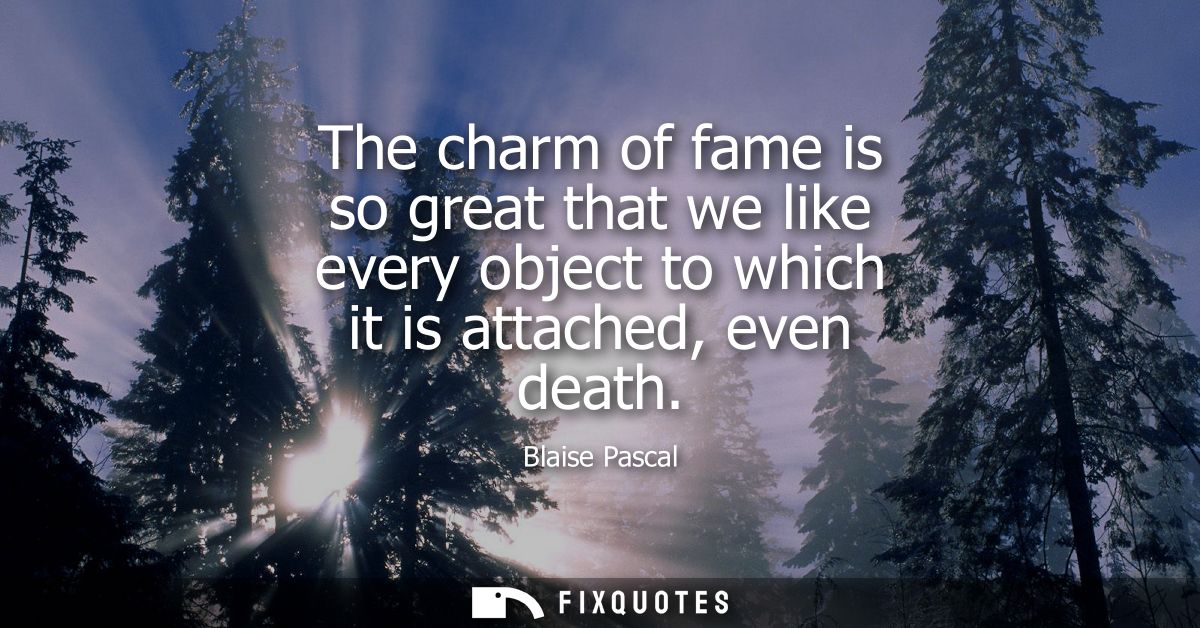
"The charm of fame is so great that we like every object to which it is attached, even death"
About this Quote
The subtext is Augustinian and unsparing. Pascal’s lifelong target is diversion: the restless human habit of chasing status, spectacle, and social proof to avoid confronting our fragility and our need for grace. In 17th-century France, that wasn’t an abstract complaint. Court culture under Louis XIII and Louis XIV treated reputation as a currency; honor, gossip, and immortalizing glory were real political forces. Pascal is watching a society where being seen matters so much that even martyrdom or a “good death” can become a branding opportunity.
The intent isn’t to sneer at accomplishment; it’s to diagnose a spiritual misalignment. Fame is parasitic: it borrows the seriousness of death and sells it back to us as meaning. Pascal’s bleak brilliance is insisting that our admiration isn’t reliable evidence of value. Sometimes it’s just the halo effect of being watched.
Quote Details
| Topic | Legacy & Remembrance |
|---|---|
| Source | Help us find the source |
| Cite |
Citation Formats
APA Style (7th ed.)
Pascal, Blaise. (2026, January 15). The charm of fame is so great that we like every object to which it is attached, even death. FixQuotes. https://fixquotes.com/quotes/the-charm-of-fame-is-so-great-that-we-like-every-5076/
Chicago Style
Pascal, Blaise. "The charm of fame is so great that we like every object to which it is attached, even death." FixQuotes. January 15, 2026. https://fixquotes.com/quotes/the-charm-of-fame-is-so-great-that-we-like-every-5076/.
MLA Style (9th ed.)
"The charm of fame is so great that we like every object to which it is attached, even death." FixQuotes, 15 Jan. 2026, https://fixquotes.com/quotes/the-charm-of-fame-is-so-great-that-we-like-every-5076/. Accessed 3 Apr. 2026.