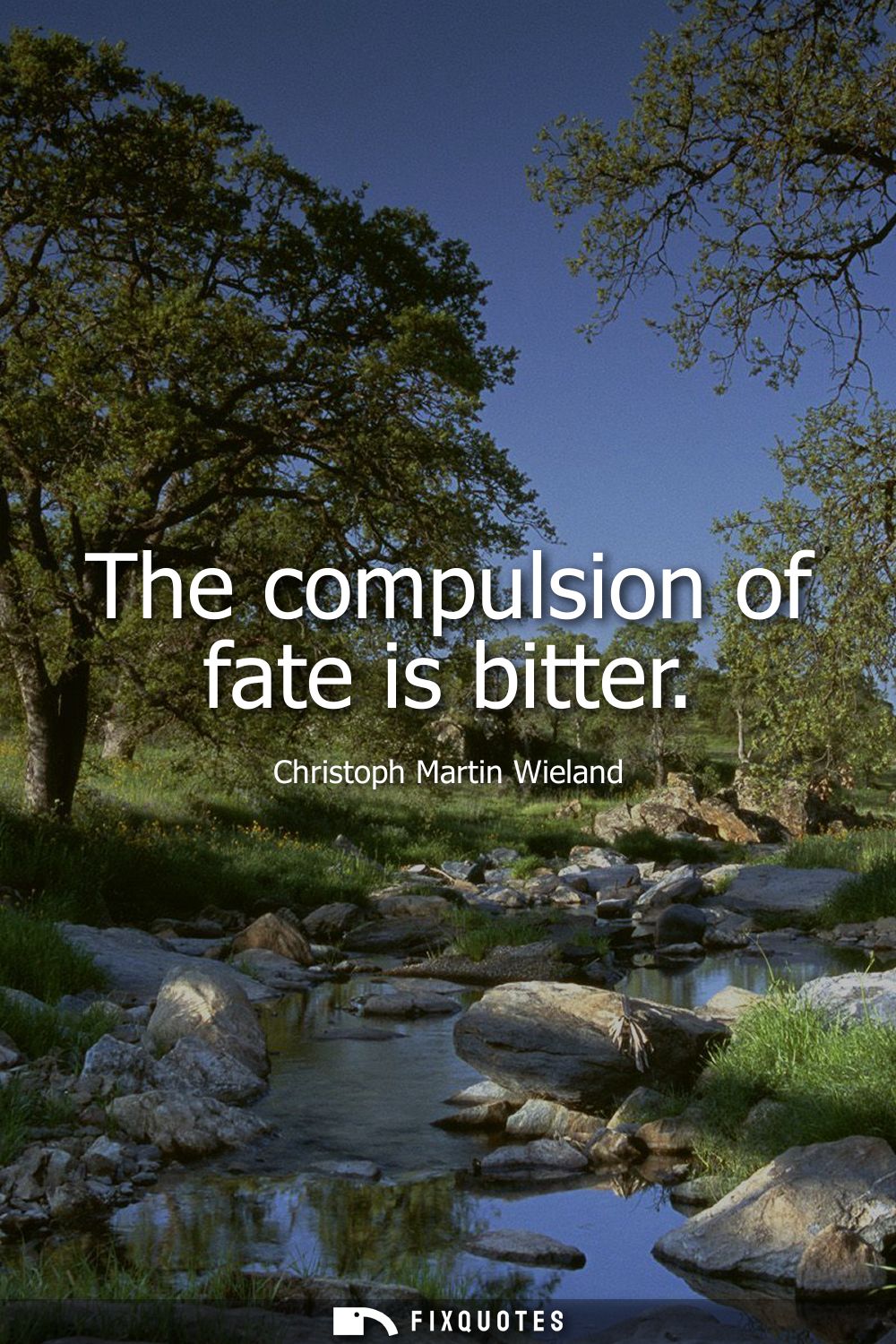
"The compulsion of fate is bitter"
About this Quote
Fate, in Wieland's hands, isn't the grand, consoling providence that smooths over suffering. It's a compulsion: a shove, an inevitability with a grip. That word choice matters. "Fate" can be romantic; "compulsion" is bodily, coercive, almost clinical. It turns destiny into a pressure exerted on the self, the kind that overrides preference and makes freedom feel like a costume you wear for other people.
The bitterness lands as more than mere sadness. Bitter is the taste of medicine and aftermath, the flavor you can't talk yourself out of. Wieland is writing out of the Enlightenment's long argument with itself: the era that champions reason and individual agency while watching Europe cycle through court intrigue, war, and social hierarchy that no private virtue can simply outthink. A poet in the German-speaking world between pietist moral seriousness and the coming Sturm und Drang, he knows the seduction of self-determination and the humiliations that puncture it.
The subtext is a quiet rebellion: if fate compels, then moralizing about character starts to sound like blaming the pushed for being moved. At the same time, the line refuses melodrama. It doesn't claim fate is evil, only bitter. That restraint is its sting. Wieland suggests the mature tragedy isn't that life has no meaning, but that meaning doesn't cancel coercion. You can understand the mechanism and still hate the taste.
The bitterness lands as more than mere sadness. Bitter is the taste of medicine and aftermath, the flavor you can't talk yourself out of. Wieland is writing out of the Enlightenment's long argument with itself: the era that champions reason and individual agency while watching Europe cycle through court intrigue, war, and social hierarchy that no private virtue can simply outthink. A poet in the German-speaking world between pietist moral seriousness and the coming Sturm und Drang, he knows the seduction of self-determination and the humiliations that puncture it.
The subtext is a quiet rebellion: if fate compels, then moralizing about character starts to sound like blaming the pushed for being moved. At the same time, the line refuses melodrama. It doesn't claim fate is evil, only bitter. That restraint is its sting. Wieland suggests the mature tragedy isn't that life has no meaning, but that meaning doesn't cancel coercion. You can understand the mechanism and still hate the taste.
Quote Details
| Topic | Free Will & Fate |
|---|---|
| Source | Help us find the source |
| Cite |
Citation Formats
APA Style (7th ed.)
Wieland, Christoph Martin. (2026, January 18). The compulsion of fate is bitter. FixQuotes. https://fixquotes.com/quotes/the-compulsion-of-fate-is-bitter-8070/
Chicago Style
Wieland, Christoph Martin. "The compulsion of fate is bitter." FixQuotes. January 18, 2026. https://fixquotes.com/quotes/the-compulsion-of-fate-is-bitter-8070/.
MLA Style (9th ed.)
"The compulsion of fate is bitter." FixQuotes, 18 Jan. 2026, https://fixquotes.com/quotes/the-compulsion-of-fate-is-bitter-8070/. Accessed 15 Feb. 2026.
More Quotes by Christoph
Add to List