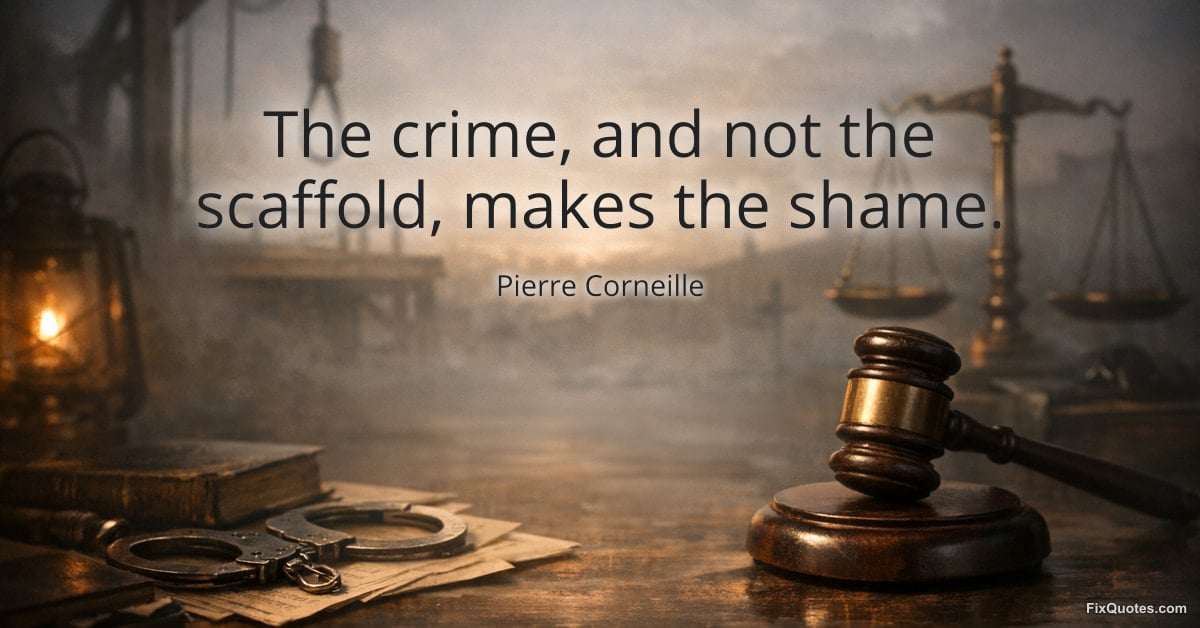
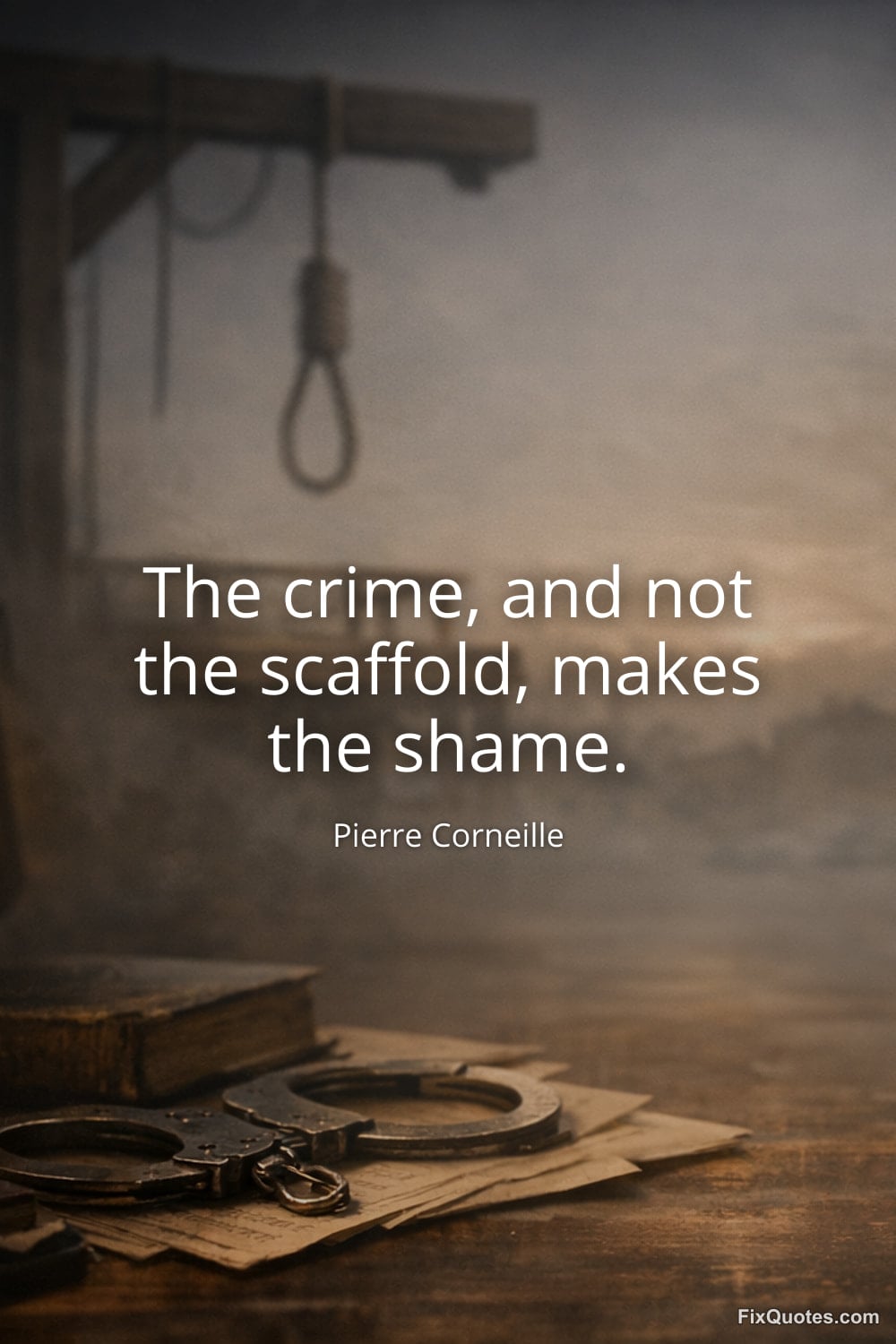
"The crime, and not the scaffold, makes the shame"
About this Quote
Corneille lands a moral gut-punch by flipping the usual spectacle of punishment on its head. The scaffold, in 17th-century France, was theater: an elevated platform where the state turned a body into an example and the crowd turned justice into entertainment. His line refuses to grant that stage its power. Shame, he insists, is not manufactured by the public ritual; it is baked into the act itself. That’s a direct challenge to a culture that often outsourced moral judgment to ceremony, rank, and reputation management.
The intent is both ethical and dramatic. As a tragedian of honor and choice, Corneille is obsessed with where responsibility lives. By separating crime from scaffold, he relocates accountability from institutions to the individual will. The subtext is quietly anti-hypocritical: a society can applaud an execution and still be morally lazy, using punishment as a shortcut to virtue. If shame depends on being caught and displayed, then the real sin is just bad luck.
It also carries a political edge. Public executions were meant to restore order by humiliating the condemned and reassuring the public that authority was intact. Corneille’s line undercuts that propaganda. It suggests the state can kill, but it can’t assign meaning; the only real verdict is the one written into the deed. In a world obsessed with appearances, Corneille demands an interior moral ledger, harsher than any platform of wood and rope.
The intent is both ethical and dramatic. As a tragedian of honor and choice, Corneille is obsessed with where responsibility lives. By separating crime from scaffold, he relocates accountability from institutions to the individual will. The subtext is quietly anti-hypocritical: a society can applaud an execution and still be morally lazy, using punishment as a shortcut to virtue. If shame depends on being caught and displayed, then the real sin is just bad luck.
It also carries a political edge. Public executions were meant to restore order by humiliating the condemned and reassuring the public that authority was intact. Corneille’s line undercuts that propaganda. It suggests the state can kill, but it can’t assign meaning; the only real verdict is the one written into the deed. In a world obsessed with appearances, Corneille demands an interior moral ledger, harsher than any platform of wood and rope.
Quote Details
| Topic | Ethics & Morality |
|---|---|
| Source | Help us find the source |
| Cite |
Citation Formats
APA Style (7th ed.)
Corneille, Pierre. (2026, February 16). The crime, and not the scaffold, makes the shame. FixQuotes. https://fixquotes.com/quotes/the-crime-and-not-the-scaffold-makes-the-shame-94438/
Chicago Style
Corneille, Pierre. "The crime, and not the scaffold, makes the shame." FixQuotes. February 16, 2026. https://fixquotes.com/quotes/the-crime-and-not-the-scaffold-makes-the-shame-94438/.
MLA Style (9th ed.)
"The crime, and not the scaffold, makes the shame." FixQuotes, 16 Feb. 2026, https://fixquotes.com/quotes/the-crime-and-not-the-scaffold-makes-the-shame-94438/. Accessed 8 Apr. 2026.
More Quotes by Pierre
Add to List