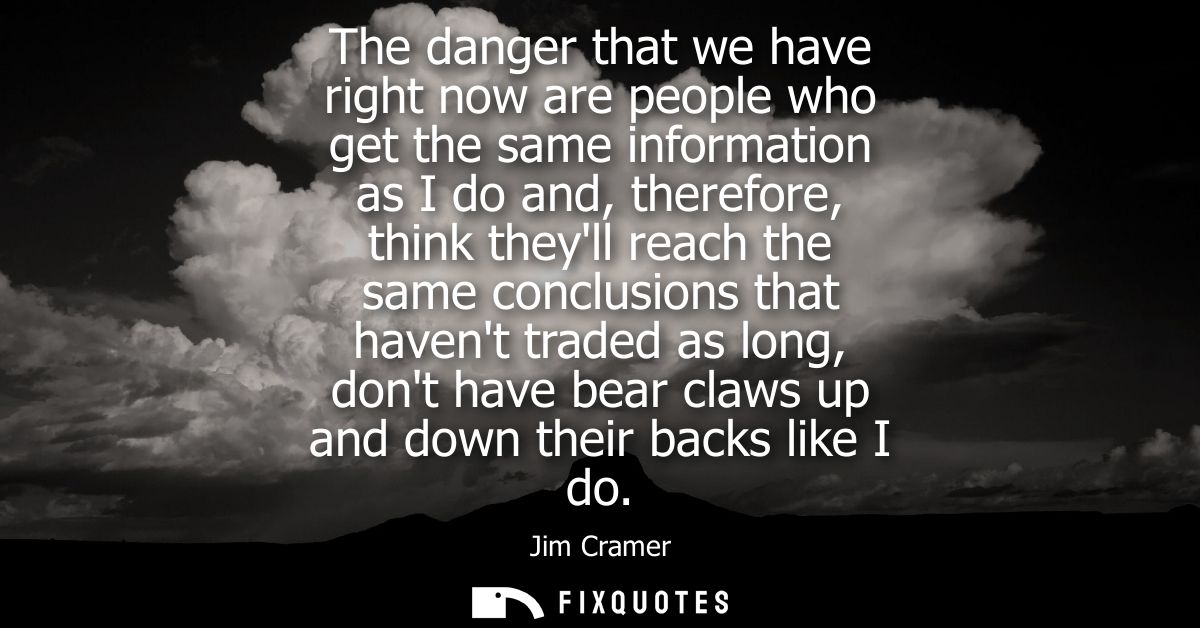
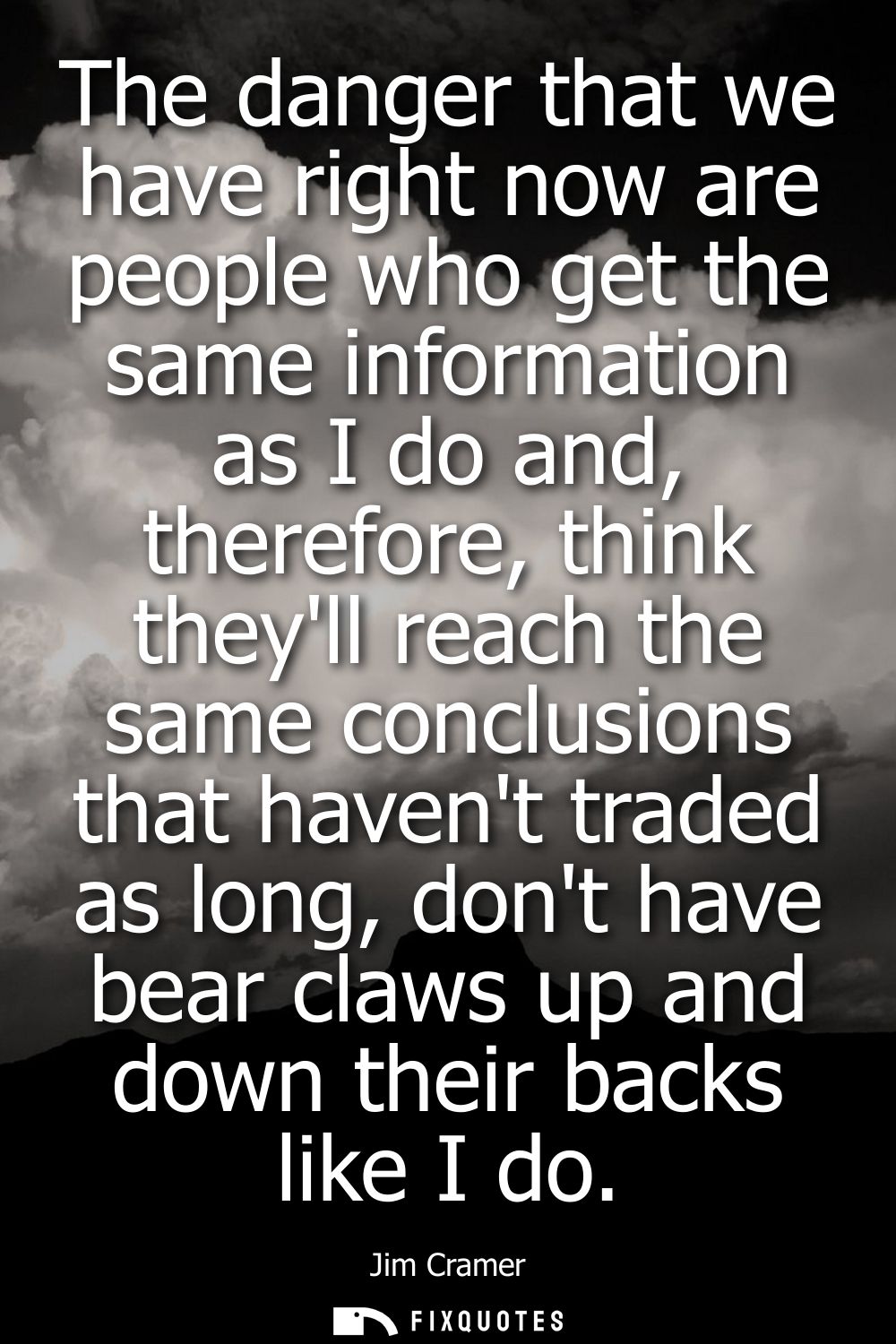
"The danger that we have right now are people who get the same information as I do and, therefore, think they'll reach the same conclusions that haven't traded as long, don't have bear claws up and down their backs like I do"
About this Quote
The specific intent is defensive and promotional at once. Defensive, because in an era of democratized data (financial news feeds, Reddit, instant charts), his edge can’t be access. So he reframes the threat: the danger isn’t bad information, it’s people with good information who overestimate what it entitles them to. Promotional, because the solution he implies is himself: follow the guy who’s been mauled before and lived to narrate it.
The subtext has a sharper edge. It’s a warning against the modern illusion that markets are an IQ test you can ace with enough inputs. Cramer is arguing that trading is closer to combat than calculus: pattern recognition under stress, emotional regulation, knowing how you behave when you’re wrong and the tape won’t forgive you. It also smuggles in gatekeeping. Experience becomes a moat, not just a lesson, and the “danger” is that newcomers might blur the hierarchy by sounding informed.
Contextually, this fits the post-2000 financial media ecosystem Cramer helped build: personality as risk management. He isn’t just interpreting markets; he’s asking you to trust the interpreter.
Quote Details
| Topic | Investment |
|---|---|
| Source | Help us find the source |
| Cite |
Citation Formats
APA Style (7th ed.)
Cramer, Jim. (2026, January 17). The danger that we have right now are people who get the same information as I do and, therefore, think they'll reach the same conclusions that haven't traded as long, don't have bear claws up and down their backs like I do. FixQuotes. https://fixquotes.com/quotes/the-danger-that-we-have-right-now-are-people-who-55416/
Chicago Style
Cramer, Jim. "The danger that we have right now are people who get the same information as I do and, therefore, think they'll reach the same conclusions that haven't traded as long, don't have bear claws up and down their backs like I do." FixQuotes. January 17, 2026. https://fixquotes.com/quotes/the-danger-that-we-have-right-now-are-people-who-55416/.
MLA Style (9th ed.)
"The danger that we have right now are people who get the same information as I do and, therefore, think they'll reach the same conclusions that haven't traded as long, don't have bear claws up and down their backs like I do." FixQuotes, 17 Jan. 2026, https://fixquotes.com/quotes/the-danger-that-we-have-right-now-are-people-who-55416/. Accessed 4 Apr. 2026.