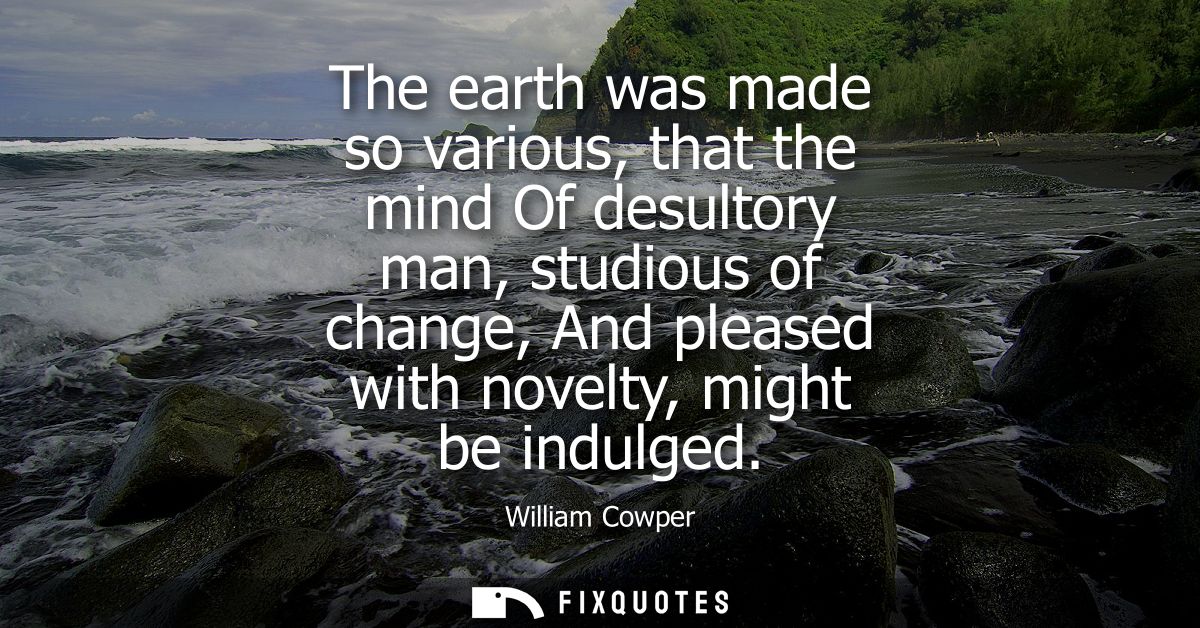
"The earth was made so various, that the mind of desultory man, studious of change, and pleased with novelty, might be indulged"
About this Quote
That move matters. It’s a theological argument disguised as a nature note: creation as deliberate abundance, not decorative excess. The phrasing “might be indulged” is doing sly work. Indulgence can sound like permission, even pampering, but it also implies supervision - a parent tolerating a child’s fidgeting, a God allowing curiosity without letting it become chaos. Cowper, often preoccupied with conscience and spiritual anxiety, finds a compromise between austerity and appetite: you can roam, but your roaming has a place within design.
There’s also an aesthetic politics here. In an age of catalogs, gardens, and expanding horizons - the Enlightenment’s hunger for classification paired with its taste for the picturesque - Cowper sanctifies the impulse to look again. Variation becomes not a distraction from meaning but one of the ways meaning is delivered: attention as a moral practice, novelty as bait for contemplation.
Quote Details
| Topic | Nature |
|---|---|
| Source | Help us find the source |
| Cite |
Citation Formats
APA Style (7th ed.)
Cowper, William. (2026, February 20). The earth was made so various, that the mind of desultory man, studious of change, and pleased with novelty, might be indulged. FixQuotes. https://fixquotes.com/quotes/the-earth-was-made-so-various-that-the-mind-of-17929/
Chicago Style
Cowper, William. "The earth was made so various, that the mind of desultory man, studious of change, and pleased with novelty, might be indulged." FixQuotes. February 20, 2026. https://fixquotes.com/quotes/the-earth-was-made-so-various-that-the-mind-of-17929/.
MLA Style (9th ed.)
"The earth was made so various, that the mind of desultory man, studious of change, and pleased with novelty, might be indulged." FixQuotes, 20 Feb. 2026, https://fixquotes.com/quotes/the-earth-was-made-so-various-that-the-mind-of-17929/. Accessed 28 Mar. 2026.