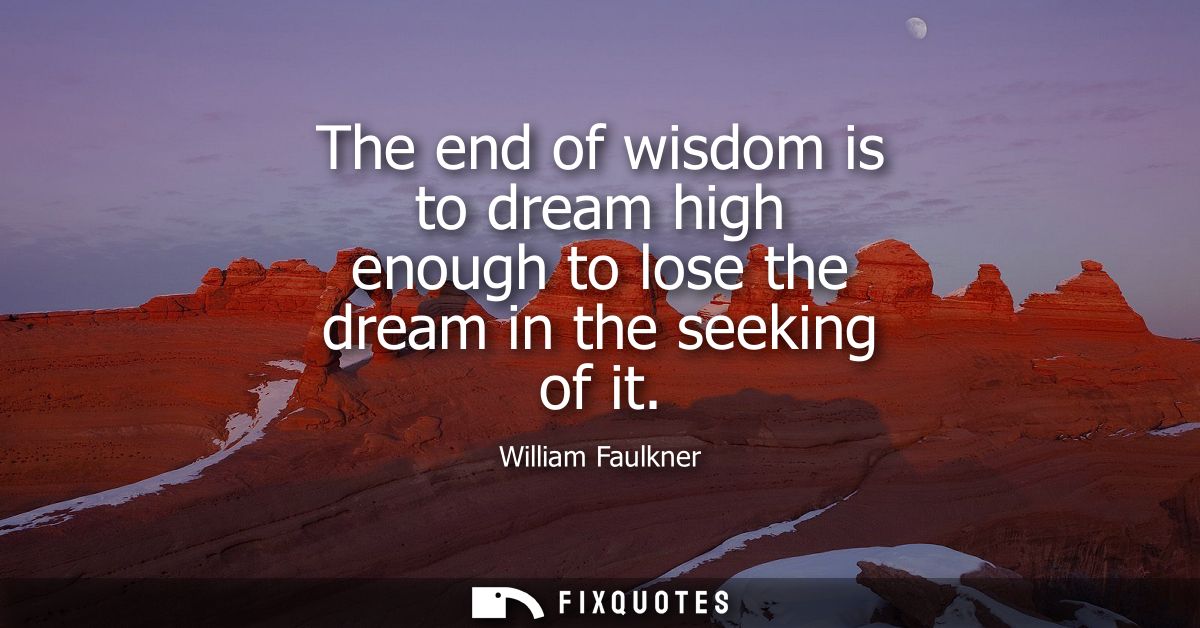
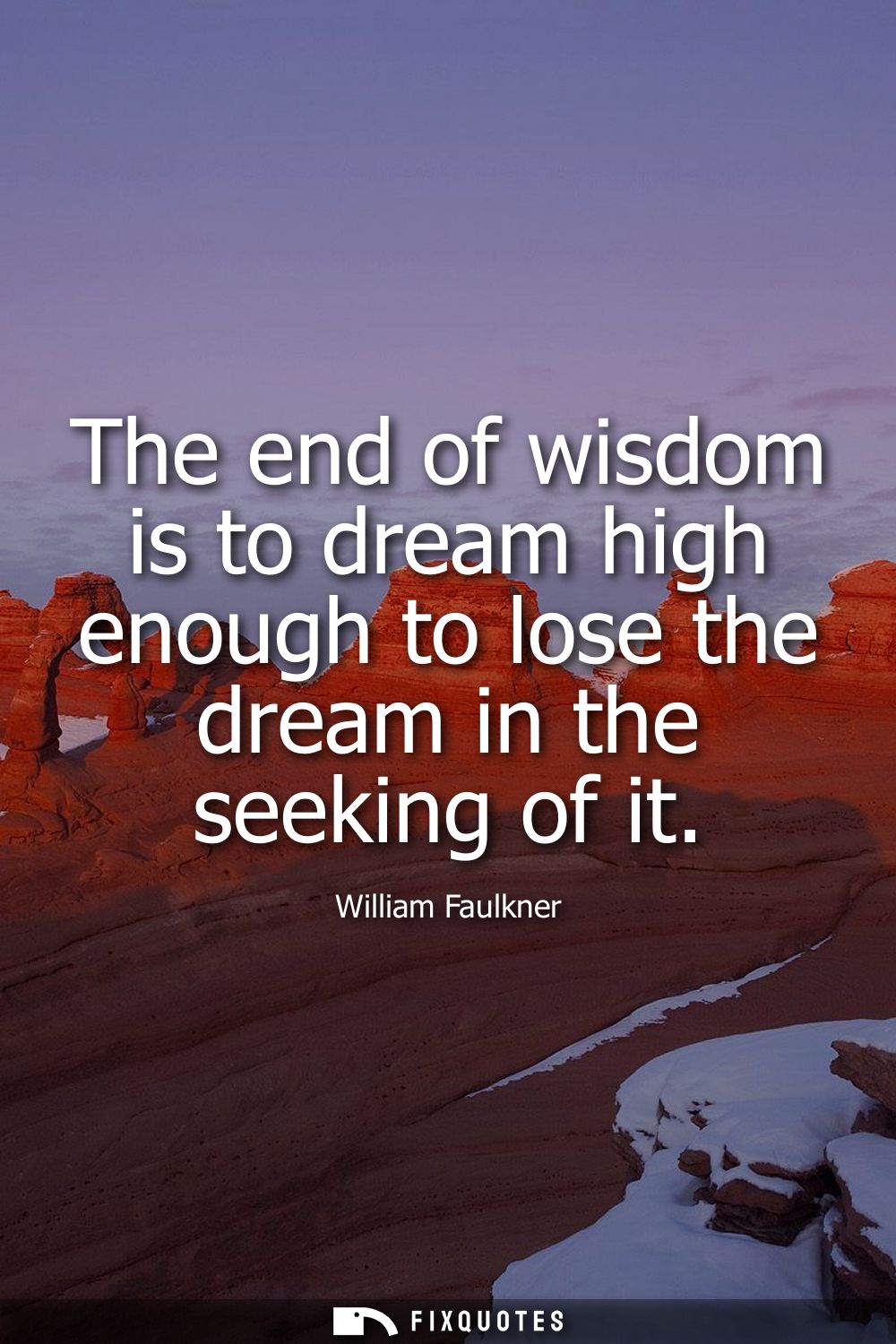
"The end of wisdom is to dream high enough to lose the dream in the seeking of it"
About this Quote
That’s classic Faulknerian psychology: desire as a force that both animates and ruins you, the self as a messy tangle of will and memory. “Dream high enough” is a dare, but the second half undercuts the motivational-poster vibe. If you’re truly seeking, you eventually “lose” the dream - not because you failed, but because the chase changes what you thought you wanted. The dream can’t survive contact with your actual life, with time, with compromise, with the stubborn density of the world.
Context matters. Faulkner wrote about people haunted by grand ideals in a South trapped by history, pride, violence, and mythmaking. His characters are forever reaching for purity - of family, of honor, of love - only to find those abstractions corrupted by real circumstances. The subtext here is harshly humane: aim beyond your grasp, not to possess the impossible, but to be remade by the pursuit. Wisdom, he implies, is learning to live inside that unfinishedness without flinching.
Quote Details
| Topic | Wisdom |
|---|---|
| Source | Help us find the source |
| Cite |
Citation Formats
APA Style (7th ed.)
Faulkner, William. (2026, January 15). The end of wisdom is to dream high enough to lose the dream in the seeking of it. FixQuotes. https://fixquotes.com/quotes/the-end-of-wisdom-is-to-dream-high-enough-to-lose-34915/
Chicago Style
Faulkner, William. "The end of wisdom is to dream high enough to lose the dream in the seeking of it." FixQuotes. January 15, 2026. https://fixquotes.com/quotes/the-end-of-wisdom-is-to-dream-high-enough-to-lose-34915/.
MLA Style (9th ed.)
"The end of wisdom is to dream high enough to lose the dream in the seeking of it." FixQuotes, 15 Jan. 2026, https://fixquotes.com/quotes/the-end-of-wisdom-is-to-dream-high-enough-to-lose-34915/. Accessed 7 Apr. 2026.