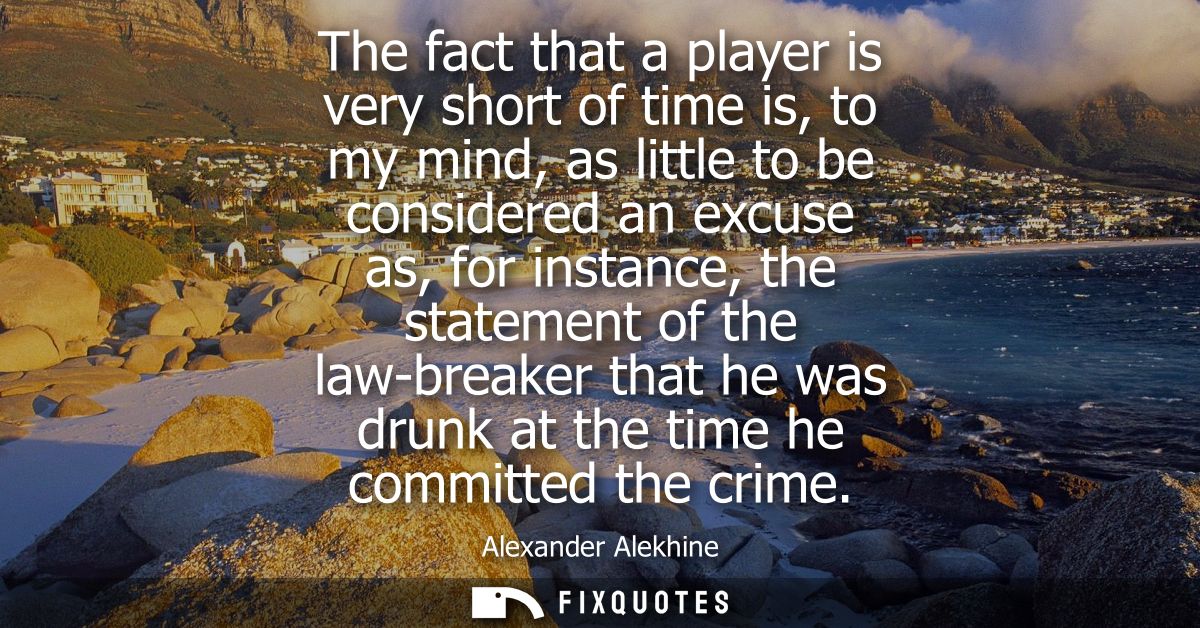
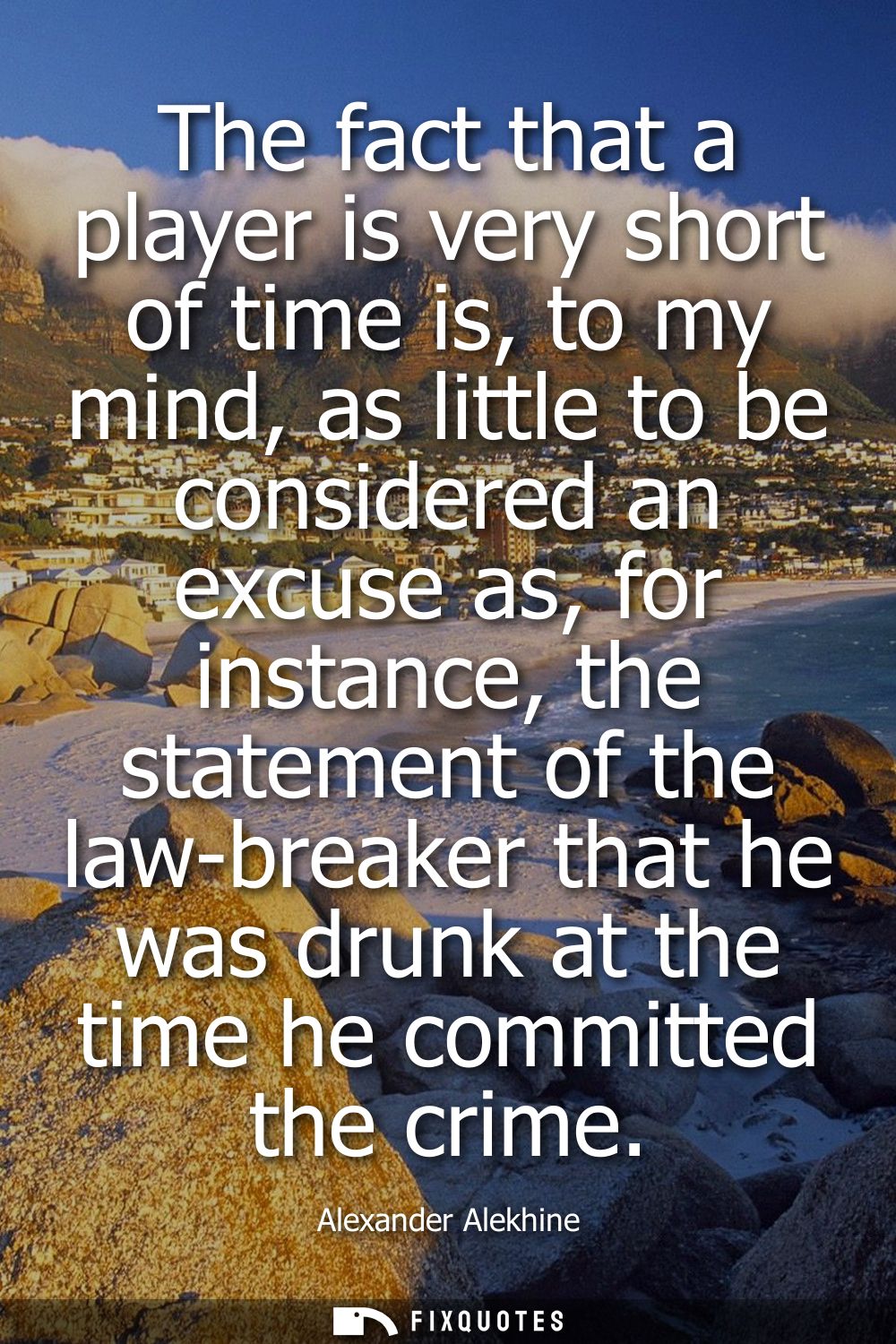
"The fact that a player is very short of time is, to my mind, as little to be considered an excuse as, for instance, the statement of the law-breaker that he was drunk at the time he committed the crime"
About this Quote
The intent is partly practical. In tournament chess, “I was low on time” is the most common alibi for a bad move, and Alekhine is trying to seal that escape hatch. But the subtext is bigger: elite play is about self-command. If you can’t manage your nerves, your calculation, and your clock, you’re not a victim of circumstance; you’re unfit for the level you’re claiming.
It also reflects Alekhine’s era and persona. Early 20th-century chess culture prized willpower, discipline, and a kind of aristocratic severity. Champions cultivated an image of mastery that extended beyond the board: not only finding the best move, but doing so under constraints that everyone shares. The drunken-lawbreaker analogy is deliberately unfair, which is why it works. It jolts the listener into accepting a harsh standard: responsibility doesn’t dissolve when conditions get stressful; that’s exactly when it’s tested.
Underneath the moralism is gamesmanship, too. If time pressure gets no sympathy, opponents are encouraged to create it, and the “real” champion is the one who can weaponize the clock without apologizing for the damage.
Quote Details
| Topic | Ethics & Morality |
|---|---|
| Source | Help us find the source |
| Cite |
Citation Formats
APA Style (7th ed.)
Alekhine, Alexander. (2026, January 15). The fact that a player is very short of time is, to my mind, as little to be considered an excuse as, for instance, the statement of the law-breaker that he was drunk at the time he committed the crime. FixQuotes. https://fixquotes.com/quotes/the-fact-that-a-player-is-very-short-of-time-is-61653/
Chicago Style
Alekhine, Alexander. "The fact that a player is very short of time is, to my mind, as little to be considered an excuse as, for instance, the statement of the law-breaker that he was drunk at the time he committed the crime." FixQuotes. January 15, 2026. https://fixquotes.com/quotes/the-fact-that-a-player-is-very-short-of-time-is-61653/.
MLA Style (9th ed.)
"The fact that a player is very short of time is, to my mind, as little to be considered an excuse as, for instance, the statement of the law-breaker that he was drunk at the time he committed the crime." FixQuotes, 15 Jan. 2026, https://fixquotes.com/quotes/the-fact-that-a-player-is-very-short-of-time-is-61653/. Accessed 13 Mar. 2026.