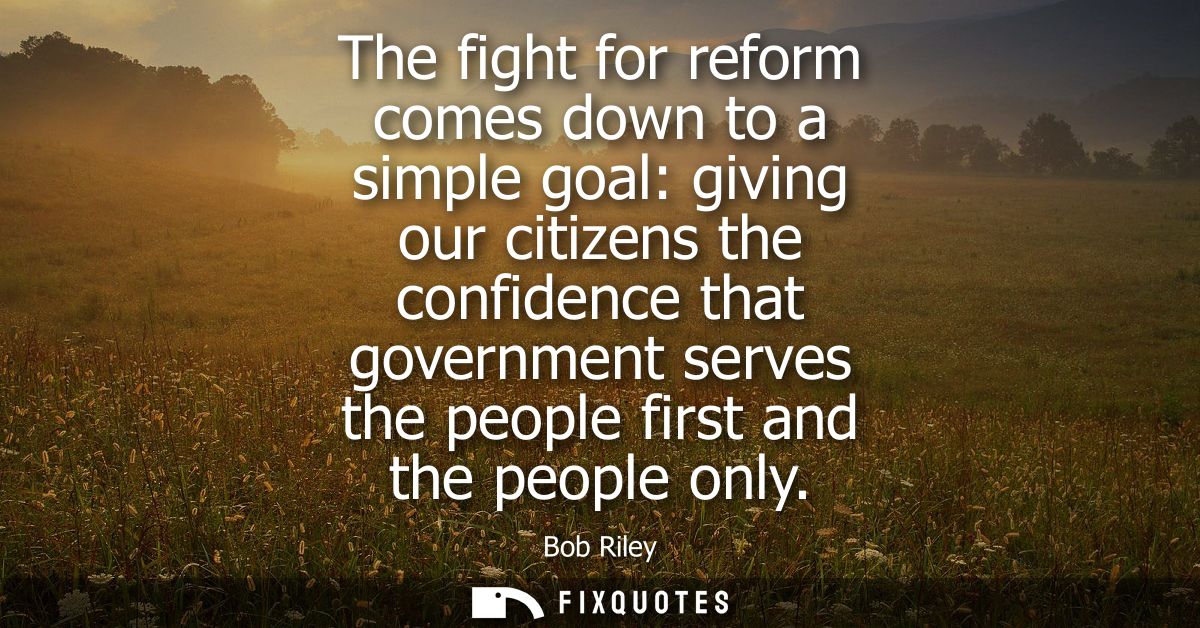
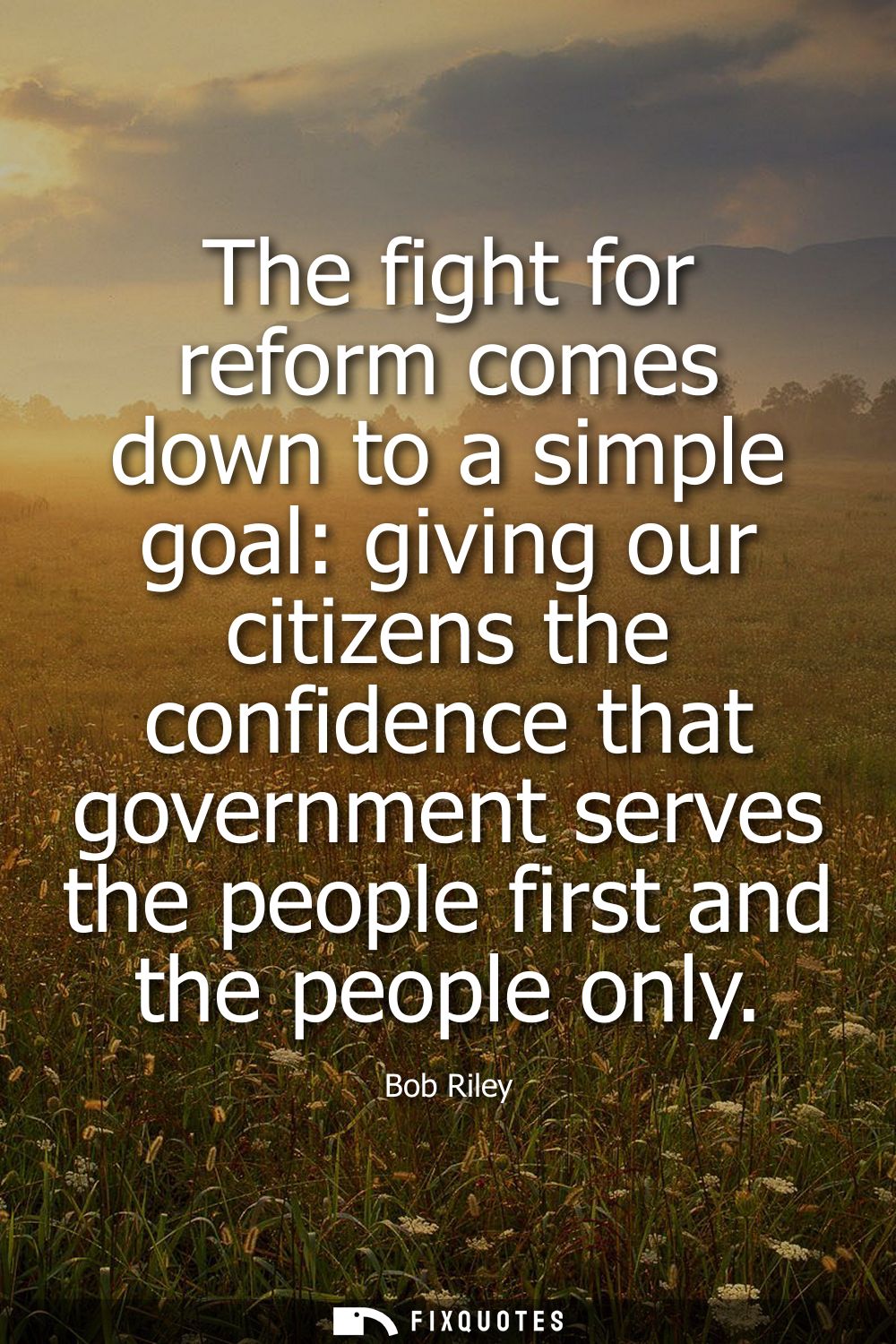
"The fight for reform comes down to a simple goal: giving our citizens the confidence that government serves the people first and the people only"
About this Quote
The line is built on an almost populist absolutism: "serves the people first and the people only". The repetition of "people" is a rhythmic hammer, meant to crowd out the uncomfortable reality that government always balances competing interests, including businesses, donors, party factions, and bureaucratic incentives. The subtext is defensive as much as aspirational: someone, implicitly, has been serving themselves. "Reform" becomes a diagnosis of corruption or capture without naming villains, which keeps the coalition wide and the accusation deniable.
Context matters because Riley is a Southern Republican governor era figure, operating in a climate where skepticism of government is both cultural inheritance and partisan fuel. The statement tries to square that circle: it validates distrust ("you have reason to doubt") while asking citizens to re-invest in the institution ("but we can fix it"). It's a promise of government that sounds anti-government - a rhetorical judo move designed to make reform feel like common sense rather than ideology.
Quote Details
| Topic | Justice |
|---|---|
| Source | Help us find the source |
| Cite |
Citation Formats
APA Style (7th ed.)
Riley, Bob. (2026, January 17). The fight for reform comes down to a simple goal: giving our citizens the confidence that government serves the people first and the people only. FixQuotes. https://fixquotes.com/quotes/the-fight-for-reform-comes-down-to-a-simple-goal-46272/
Chicago Style
Riley, Bob. "The fight for reform comes down to a simple goal: giving our citizens the confidence that government serves the people first and the people only." FixQuotes. January 17, 2026. https://fixquotes.com/quotes/the-fight-for-reform-comes-down-to-a-simple-goal-46272/.
MLA Style (9th ed.)
"The fight for reform comes down to a simple goal: giving our citizens the confidence that government serves the people first and the people only." FixQuotes, 17 Jan. 2026, https://fixquotes.com/quotes/the-fight-for-reform-comes-down-to-a-simple-goal-46272/. Accessed 3 Apr. 2026.