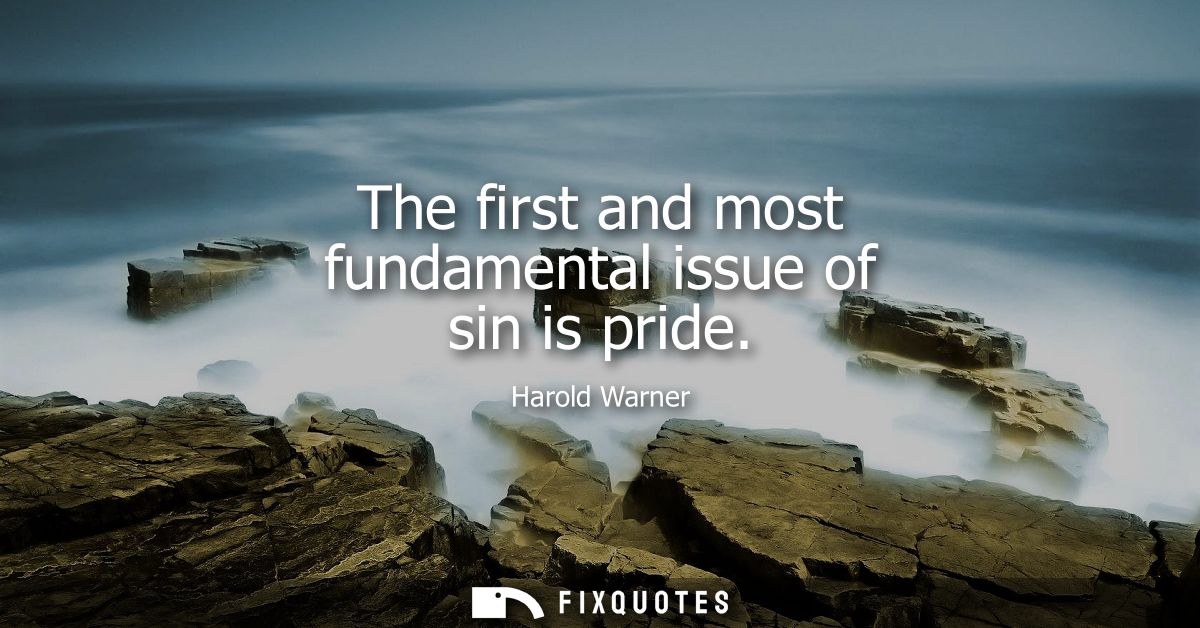
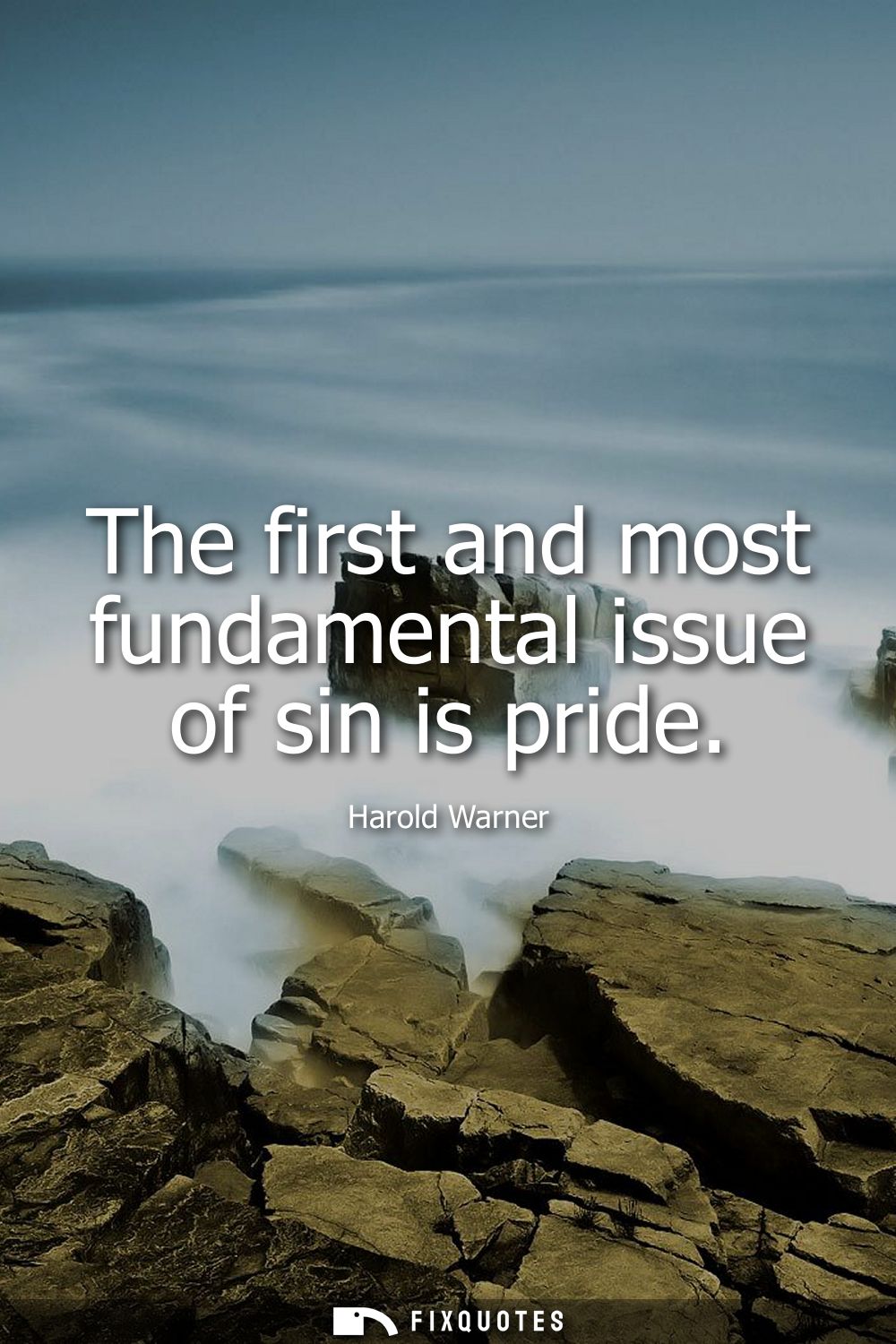
"The first and most fundamental issue of sin is pride"
About this Quote
Pride gets framed here less as a personality quirk and more as the original software bug: the thing that quietly corrupts every other function. By calling it the "first and most fundamental issue of sin", Harold Warner isn’t ranking vices for a morality scorecard; he’s offering a diagnosis. Pride is the hidden engine that makes other sins feel justified, even virtuous. Greed becomes "I deserve it". Anger becomes "How dare they". Lust becomes entitlement. The phrasing matters: "issue" sounds clinical, almost managerial, as if sin is an ongoing systems problem rather than a single scandalous act. That shifts the focus from public wrongdoing to private posture.
The subtext is a rebuke to the modern habit of treating morality as image management. Pride is the sin that can wear clean clothes. It thrives in achievement culture, in righteous politics, in spiritual performance. You can be outwardly correct and inwardly self-worshiping, and pride will still cash the check. Warner’s sentence works because it implies that the most dangerous moral failure is the one that makes you incapable of admitting moral failure. Pride doesn’t just break rules; it rewrites the rulebook with you as the exception.
Contextually, the line sits squarely in a traditional Christian moral psychology (Augustine, Aquinas, the whole "root vice" tradition), but it reads cleanly in a secular key: ego isn’t merely unattractive, it’s epistemically damaging. Pride is what keeps people from changing their mind, saying sorry, or seeing others as fully real. That’s why it’s "fundamental": it sabotages the very tools you’d use to get better.
The subtext is a rebuke to the modern habit of treating morality as image management. Pride is the sin that can wear clean clothes. It thrives in achievement culture, in righteous politics, in spiritual performance. You can be outwardly correct and inwardly self-worshiping, and pride will still cash the check. Warner’s sentence works because it implies that the most dangerous moral failure is the one that makes you incapable of admitting moral failure. Pride doesn’t just break rules; it rewrites the rulebook with you as the exception.
Contextually, the line sits squarely in a traditional Christian moral psychology (Augustine, Aquinas, the whole "root vice" tradition), but it reads cleanly in a secular key: ego isn’t merely unattractive, it’s epistemically damaging. Pride is what keeps people from changing their mind, saying sorry, or seeing others as fully real. That’s why it’s "fundamental": it sabotages the very tools you’d use to get better.
Quote Details
| Topic | Humility |
|---|---|
| Source | Help us find the source |
| Cite |
Citation Formats
APA Style (7th ed.)
Warner, Harold. (2026, January 16). The first and most fundamental issue of sin is pride. FixQuotes. https://fixquotes.com/quotes/the-first-and-most-fundamental-issue-of-sin-is-118339/
Chicago Style
Warner, Harold. "The first and most fundamental issue of sin is pride." FixQuotes. January 16, 2026. https://fixquotes.com/quotes/the-first-and-most-fundamental-issue-of-sin-is-118339/.
MLA Style (9th ed.)
"The first and most fundamental issue of sin is pride." FixQuotes, 16 Jan. 2026, https://fixquotes.com/quotes/the-first-and-most-fundamental-issue-of-sin-is-118339/. Accessed 12 Mar. 2026.
More Quotes by Harold
Add to List