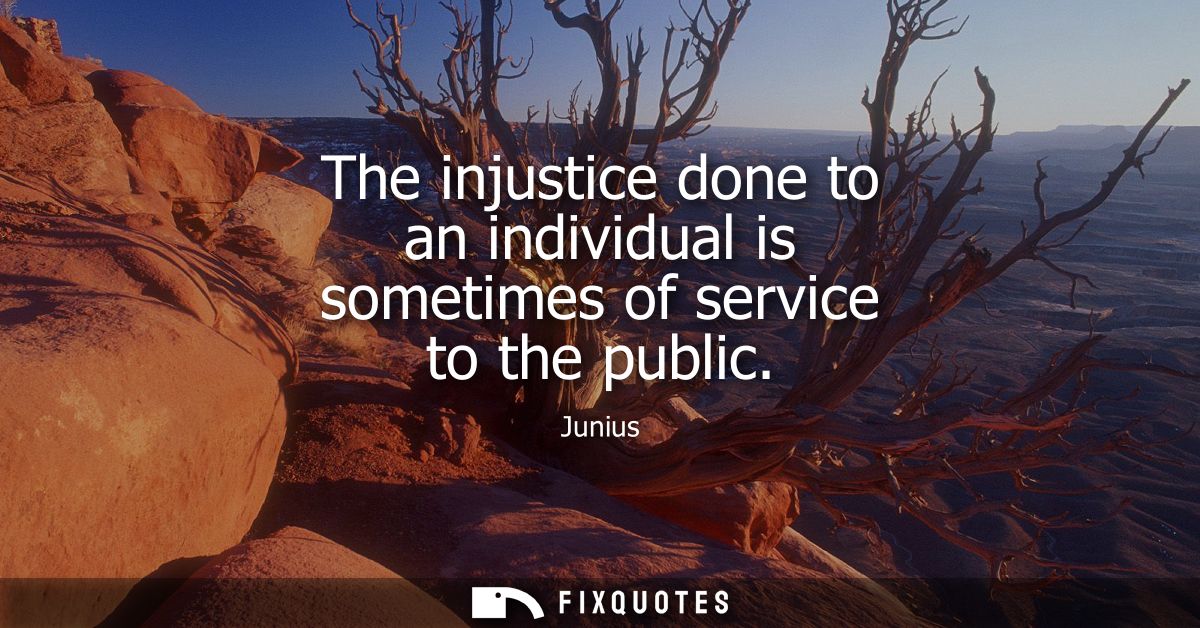
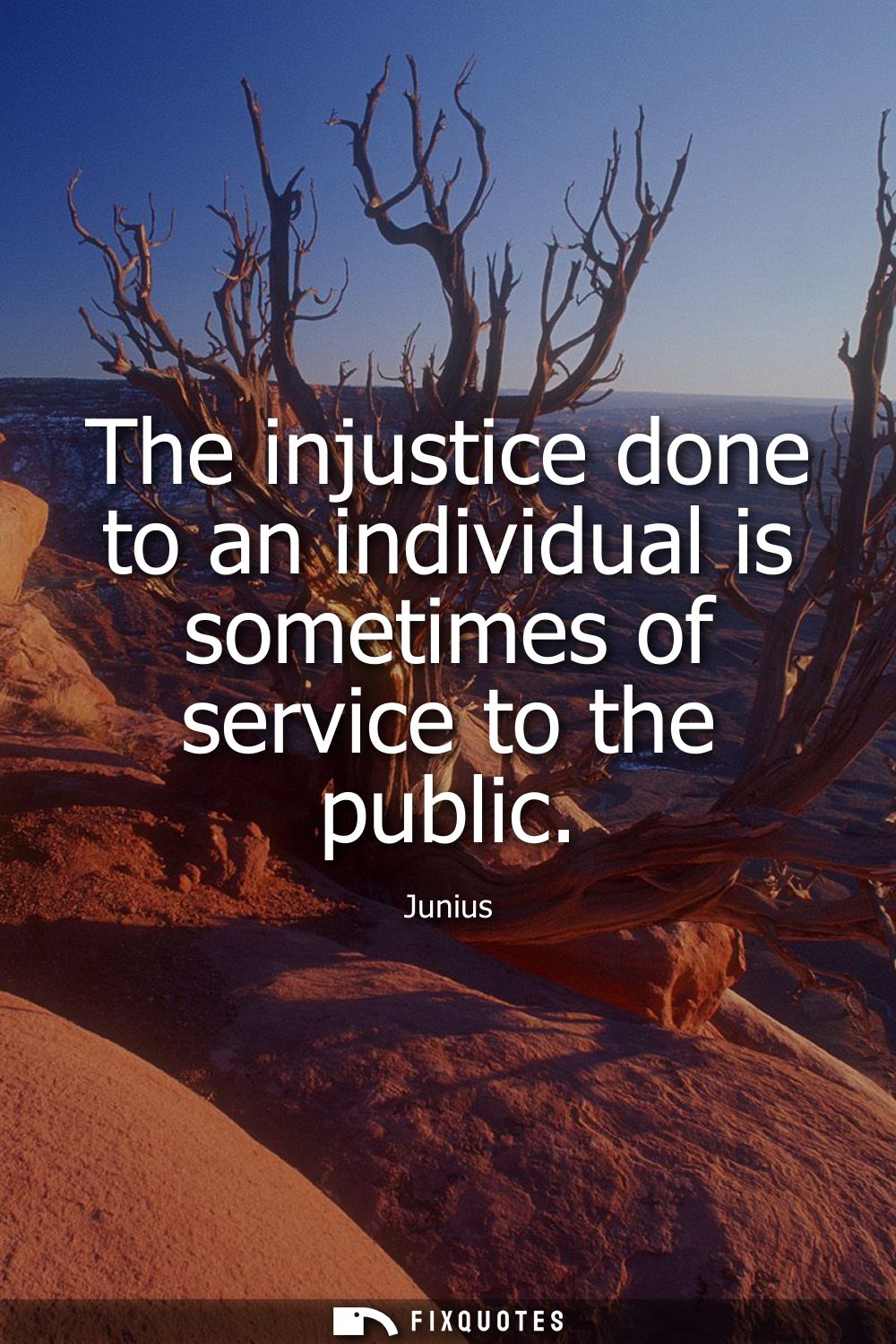
"The injustice done to an individual is sometimes of service to the public"
About this Quote
A clean, unsettling provocation: that a person can be sacrificed and the crowd can still call it progress. Junius, the anonymous polemicist who haunted 1760s-70s British politics, knew exactly how to weaponize that discomfort. The line flatters no one. It invites the reader to admit a truth polite constitutional rhetoric tries to hide: states often learn, reform, or stabilize only after someone gets crushed by the machine.
The intent is double-edged. On one level, it reads like a bleak concession to realpolitik, the kind of sentence that could be used to excuse a scapegoat, a wrongful prosecution, a ruined reputation. Junius is too sharp for that to be the whole story. The subtext is accusatory: if “public service” is purchased with private suffering, then the public’s virtue is counterfeit and the system’s legitimacy is conditional. He’s baiting the establishment into revealing its moral math.
Context matters because Junius wrote amid fierce fights over ministerial power, press freedom, and cases like John Wilkes’s persecution, where the government’s overreach ended up galvanizing popular demands for rights. In that world, injustice can accidentally produce precedent, solidarity, or backlash - the public benefits not because the injustice is good, but because it exposes where power has been hiding.
The line works because it refuses comfort. It forces the reader to ask the question Junius really cares about: if reform requires a victim, is that reform justice at all, or just damage control with better branding?
The intent is double-edged. On one level, it reads like a bleak concession to realpolitik, the kind of sentence that could be used to excuse a scapegoat, a wrongful prosecution, a ruined reputation. Junius is too sharp for that to be the whole story. The subtext is accusatory: if “public service” is purchased with private suffering, then the public’s virtue is counterfeit and the system’s legitimacy is conditional. He’s baiting the establishment into revealing its moral math.
Context matters because Junius wrote amid fierce fights over ministerial power, press freedom, and cases like John Wilkes’s persecution, where the government’s overreach ended up galvanizing popular demands for rights. In that world, injustice can accidentally produce precedent, solidarity, or backlash - the public benefits not because the injustice is good, but because it exposes where power has been hiding.
The line works because it refuses comfort. It forces the reader to ask the question Junius really cares about: if reform requires a victim, is that reform justice at all, or just damage control with better branding?
Quote Details
| Topic | Justice |
|---|---|
| Source | Help us find the source |
More Quotes by Junius
Add to List