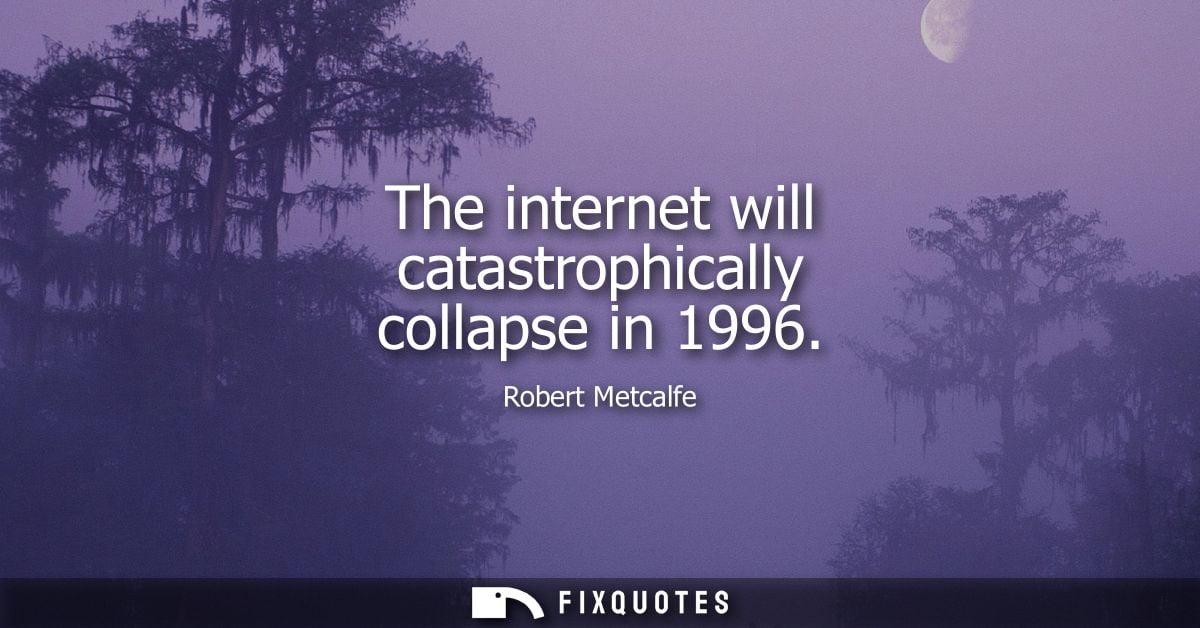
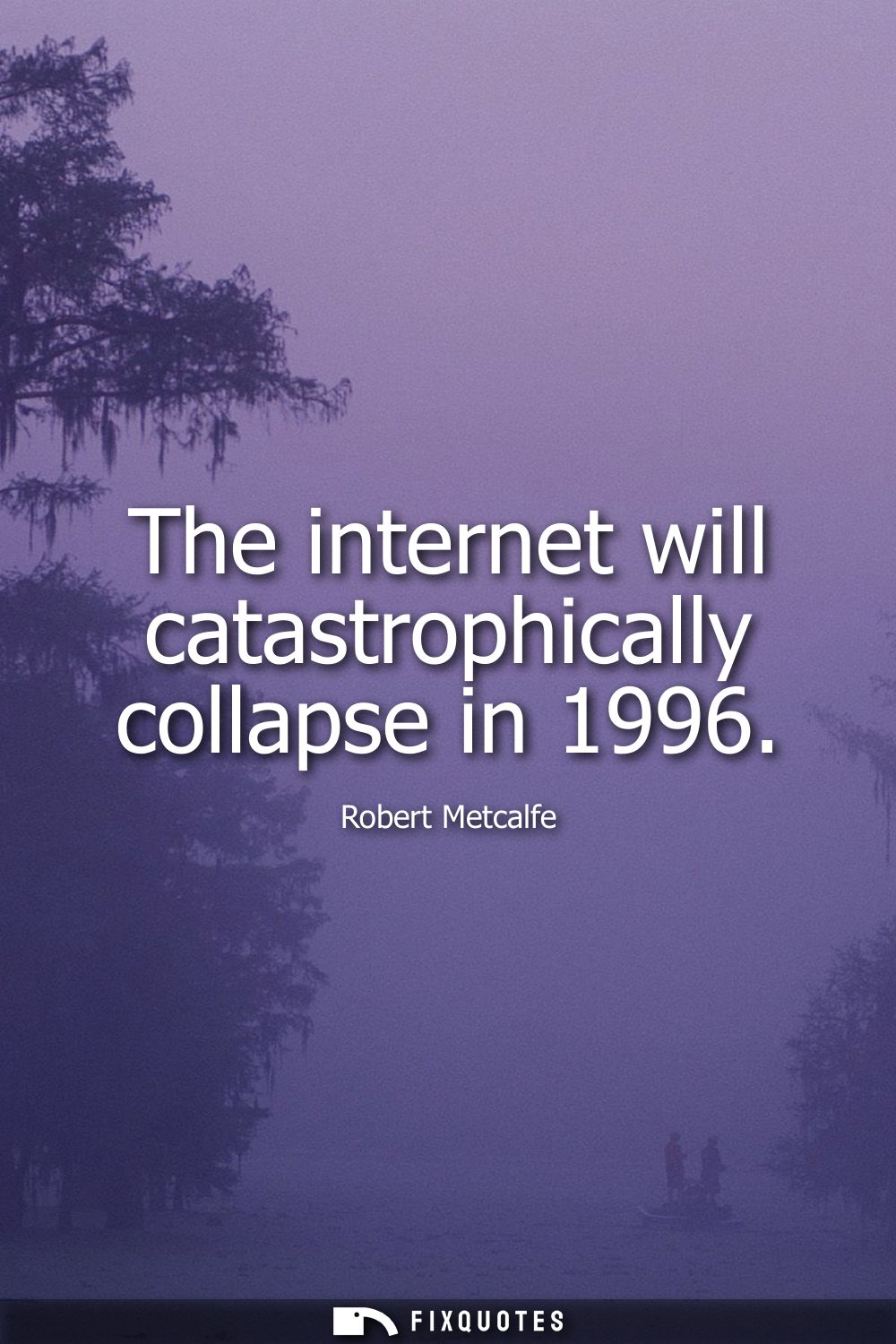
"The internet will catastrophically collapse in 1996"
About this Quote
There is something deliciously 90s about the confidence here: a clean, calendar-stamped apocalypse for a network designed to route around failure. Metcalfe wasn’t a crank; he was the inventor of Ethernet, a foundational figure in the very architecture making the internet possible. That’s what gives the line its bite. It’s prophecy delivered from inside the machine.
The intent reads as a warning shot to engineers, investors, and policymakers who were treating explosive growth like a law of nature. In the early-to-mid 1990s, the web was going mainstream, dial-up traffic was spiking, and the conversation around scaling was equal parts optimism and duct tape. Predicting “catastrophic collapse” dramatizes a genuine technical anxiety: congestion, routing complexity, brittle infrastructure, and the sense that a network built by academics and hobbyists was being asked to behave like a utility.
Subtext: even the people who built the internet didn’t fully trust its governance or incentives. “Will” is doing a lot of work, turning a probabilistic risk into a moral claim about complacency. It’s also a flex - expertise as authority, the inventor’s prerogative to scold the crowd rushing in.
What makes it culturally sticky is that it’s wrong in the literal sense but right as a template. The internet didn’t collapse in 1996; it repeatedly approaches its own failure modes and then reinvents itself through protocols, capacity, and market pressure. Metcalfe’s date-stamped doom captures a recurring American ritual: new infrastructure arrives, everyone overpromises, someone credible predicts collapse, and the future survives by improvisation.
The intent reads as a warning shot to engineers, investors, and policymakers who were treating explosive growth like a law of nature. In the early-to-mid 1990s, the web was going mainstream, dial-up traffic was spiking, and the conversation around scaling was equal parts optimism and duct tape. Predicting “catastrophic collapse” dramatizes a genuine technical anxiety: congestion, routing complexity, brittle infrastructure, and the sense that a network built by academics and hobbyists was being asked to behave like a utility.
Subtext: even the people who built the internet didn’t fully trust its governance or incentives. “Will” is doing a lot of work, turning a probabilistic risk into a moral claim about complacency. It’s also a flex - expertise as authority, the inventor’s prerogative to scold the crowd rushing in.
What makes it culturally sticky is that it’s wrong in the literal sense but right as a template. The internet didn’t collapse in 1996; it repeatedly approaches its own failure modes and then reinvents itself through protocols, capacity, and market pressure. Metcalfe’s date-stamped doom captures a recurring American ritual: new infrastructure arrives, everyone overpromises, someone credible predicts collapse, and the future survives by improvisation.
Quote Details
| Topic | Internet |
|---|---|
| Source | Help us find the source |
| Cite |
Citation Formats
APA Style (7th ed.)
Metcalfe, Robert. (2026, January 15). The internet will catastrophically collapse in 1996. FixQuotes. https://fixquotes.com/quotes/the-internet-will-catastrophically-collapse-in-170615/
Chicago Style
Metcalfe, Robert. "The internet will catastrophically collapse in 1996." FixQuotes. January 15, 2026. https://fixquotes.com/quotes/the-internet-will-catastrophically-collapse-in-170615/.
MLA Style (9th ed.)
"The internet will catastrophically collapse in 1996." FixQuotes, 15 Jan. 2026, https://fixquotes.com/quotes/the-internet-will-catastrophically-collapse-in-170615/. Accessed 12 Feb. 2026.
More Quotes by Robert
Add to List