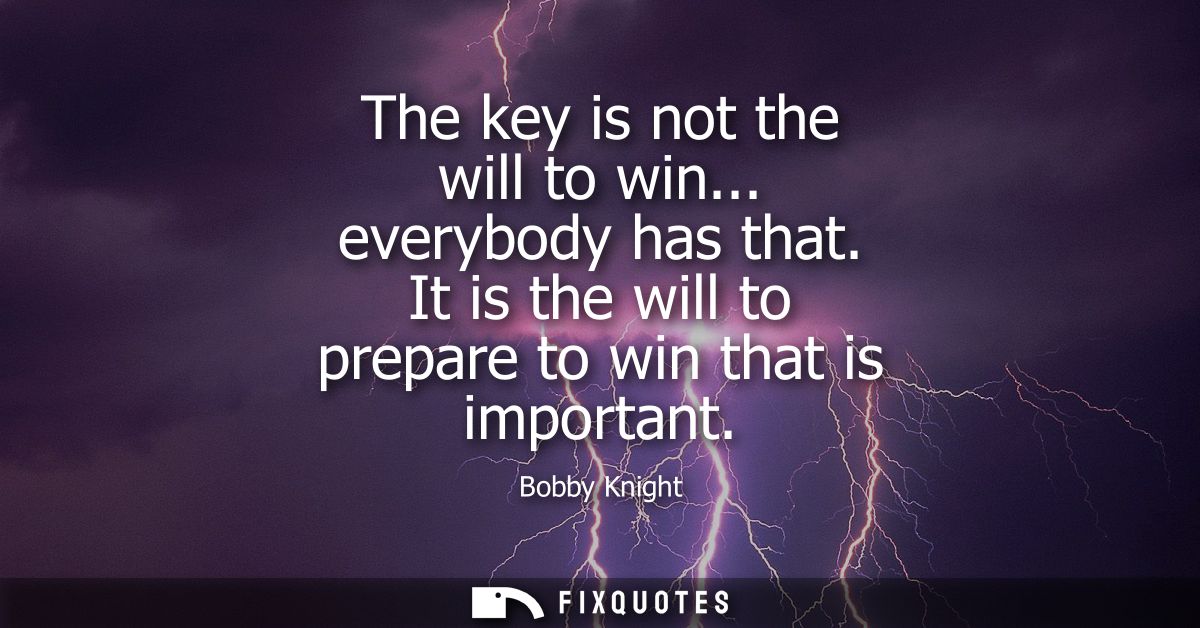
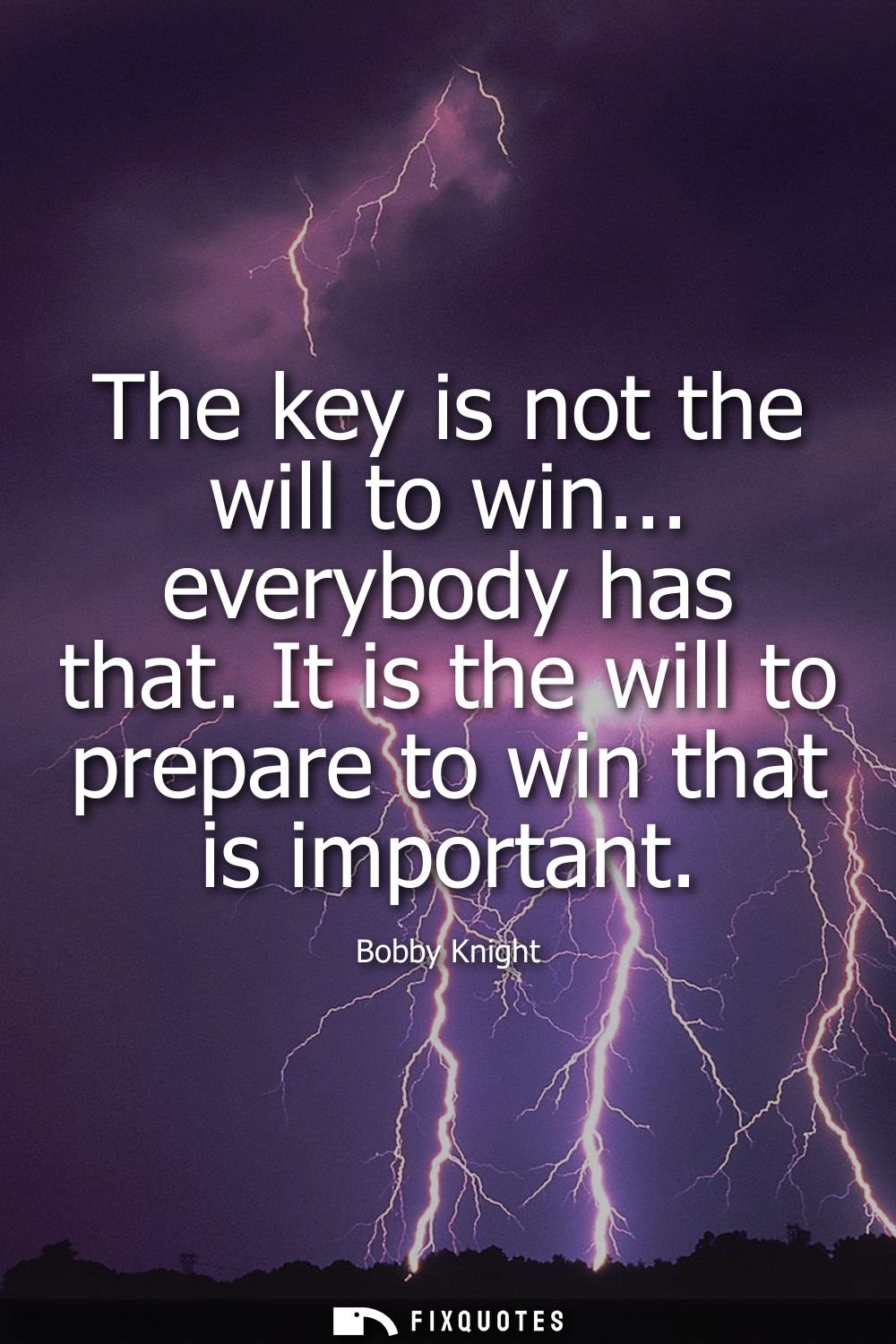
"The key is not the will to win... Everybody has that. It is the will to prepare to win that is important"
About this Quote
The ellipsis does a lot of work. It’s a pause that dismisses bravado, the kind athletes and fans mistake for seriousness. Knight isn’t denying desire; he’s stripping it of its moral halo. Wanting to win is natural. Preparing to win is a choice, and it’s the choice most people avoid because it costs time, comfort, and ego. Preparation also implies submission: to routine, to criticism, to repetition, to the possibility that effort still won’t be enough.
Context matters because Knight’s brand of coaching was famously rigid, sometimes ugly, always demanding. In that world, this quote doubles as both philosophy and warning. It justifies discipline as the real currency of excellence, and it reframes “talent” as something that has to be converted into habits. The subtext is almost prosecutorial: if you lost, don’t romanticize your hunger or blame fate. Look at the practice tape. Look at the conditioning. Look at whether you loved the process or merely loved the idea of being the person who wins.
It’s persuasive because it’s anti-heroic. Winning isn’t a climax; it’s paperwork, done daily, before you earn the right to celebrate.
Quote Details
| Topic | Work Ethic |
|---|---|
| Source | Help us find the source |
| Cite |
Citation Formats
APA Style (7th ed.)
Knight, Bobby. (2026, February 19). The key is not the will to win... Everybody has that. It is the will to prepare to win that is important. FixQuotes. https://fixquotes.com/quotes/the-key-is-not-the-will-to-win-everybody-has-that-27491/
Chicago Style
Knight, Bobby. "The key is not the will to win... Everybody has that. It is the will to prepare to win that is important." FixQuotes. February 19, 2026. https://fixquotes.com/quotes/the-key-is-not-the-will-to-win-everybody-has-that-27491/.
MLA Style (9th ed.)
"The key is not the will to win... Everybody has that. It is the will to prepare to win that is important." FixQuotes, 19 Feb. 2026, https://fixquotes.com/quotes/the-key-is-not-the-will-to-win-everybody-has-that-27491/. Accessed 2 Apr. 2026.