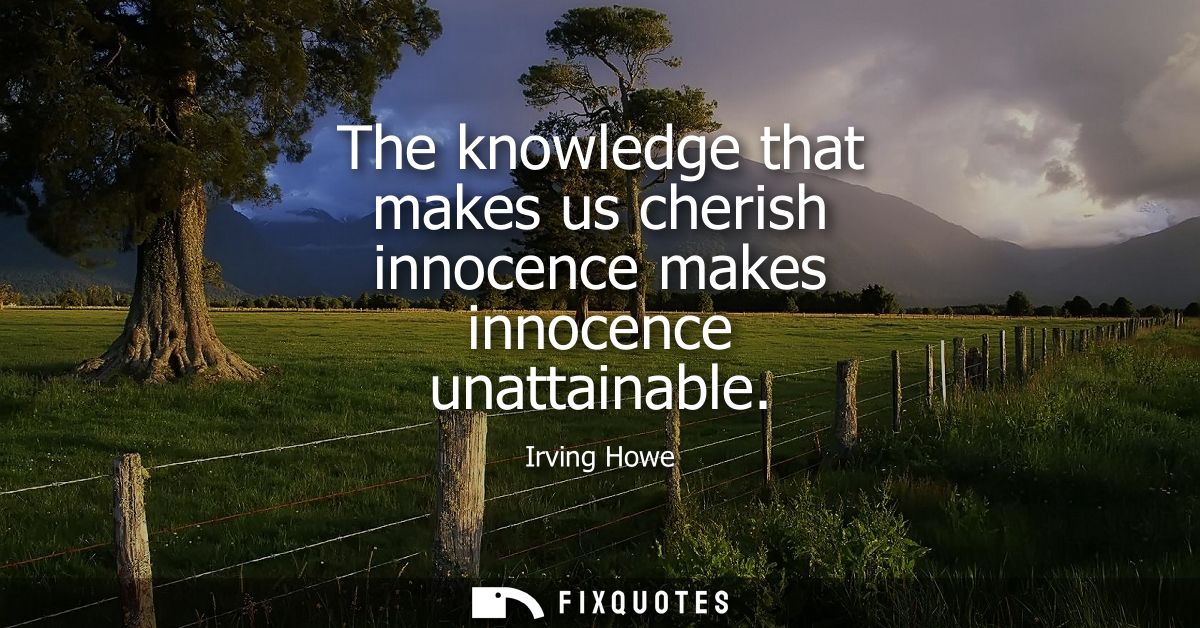
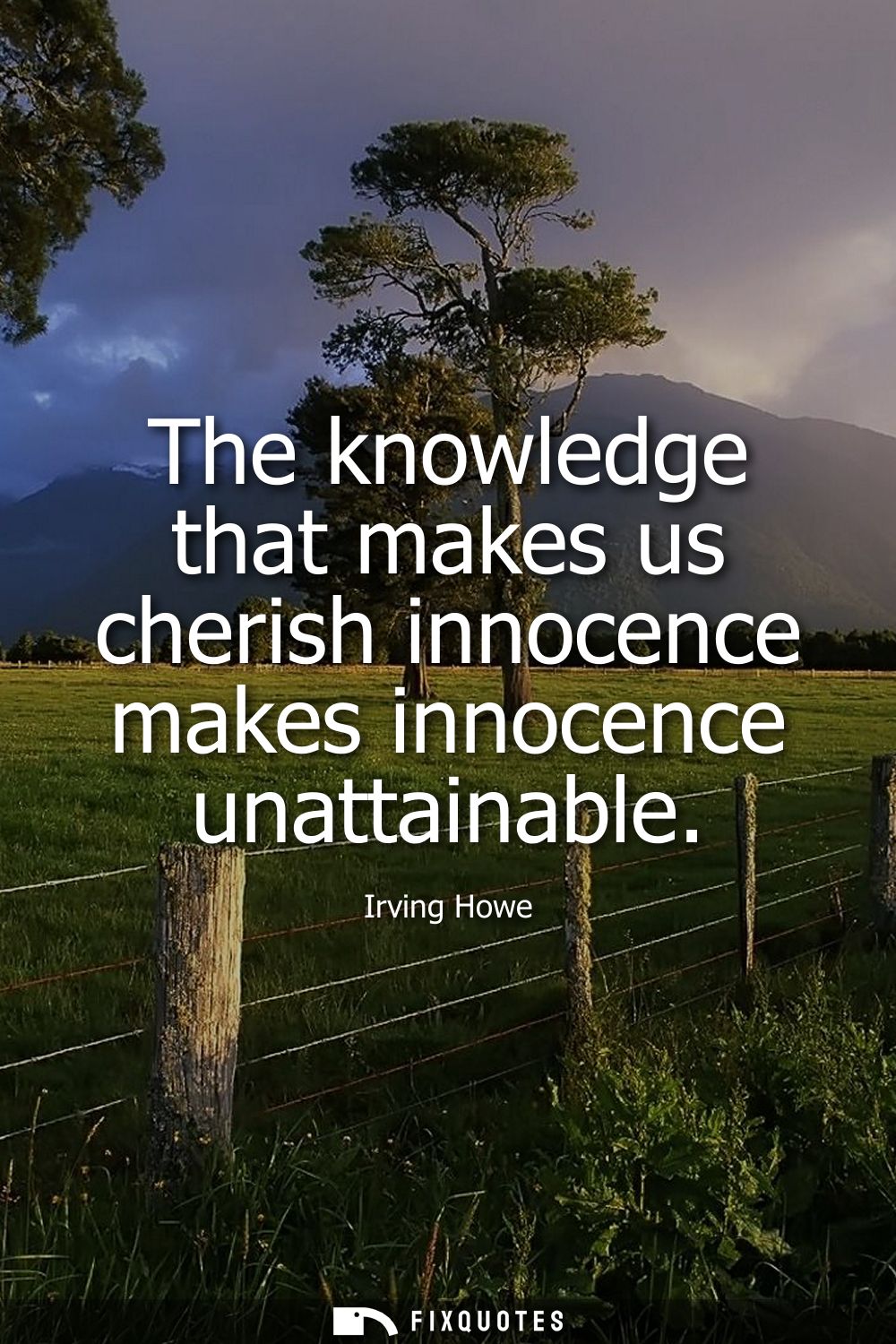
"The knowledge that makes us cherish innocence makes innocence unattainable"
About this Quote
Howe, a historian and critic shaped by the moral wreckage of the 20th century, is writing against sentimental longings for a cleaner past. After genocide, ideological terror, and the mass politics that made cruelty bureaucratic, innocence becomes less a personal quality than a cultural fantasy. Knowledge here isn’t just information; it’s historical consciousness, the burden of patterns. Once you recognize how easily innocence can be weaponized (by states, by movements, by ourselves), you can’t return to it without bad faith.
The subtext is also about adulthood in intellectual life: learning to see complicity. The more you understand systems, the harder it is to claim you “didn’t know,” the hardest-working excuse innocence has. Howe suggests that moral growth contains its own grief. We mourn innocence precisely when we’re no longer entitled to it, which is why the longing feels both tender and accusatory. The line lands because it refuses comfort: it grants the desire, then denies the alibi.
Quote Details
| Topic | Wisdom |
|---|---|
| Source | Help us find the source |
| Cite |
Citation Formats
APA Style (7th ed.)
Howe, Irving. (2026, January 16). The knowledge that makes us cherish innocence makes innocence unattainable. FixQuotes. https://fixquotes.com/quotes/the-knowledge-that-makes-us-cherish-innocence-133486/
Chicago Style
Howe, Irving. "The knowledge that makes us cherish innocence makes innocence unattainable." FixQuotes. January 16, 2026. https://fixquotes.com/quotes/the-knowledge-that-makes-us-cherish-innocence-133486/.
MLA Style (9th ed.)
"The knowledge that makes us cherish innocence makes innocence unattainable." FixQuotes, 16 Jan. 2026, https://fixquotes.com/quotes/the-knowledge-that-makes-us-cherish-innocence-133486/. Accessed 27 Mar. 2026.