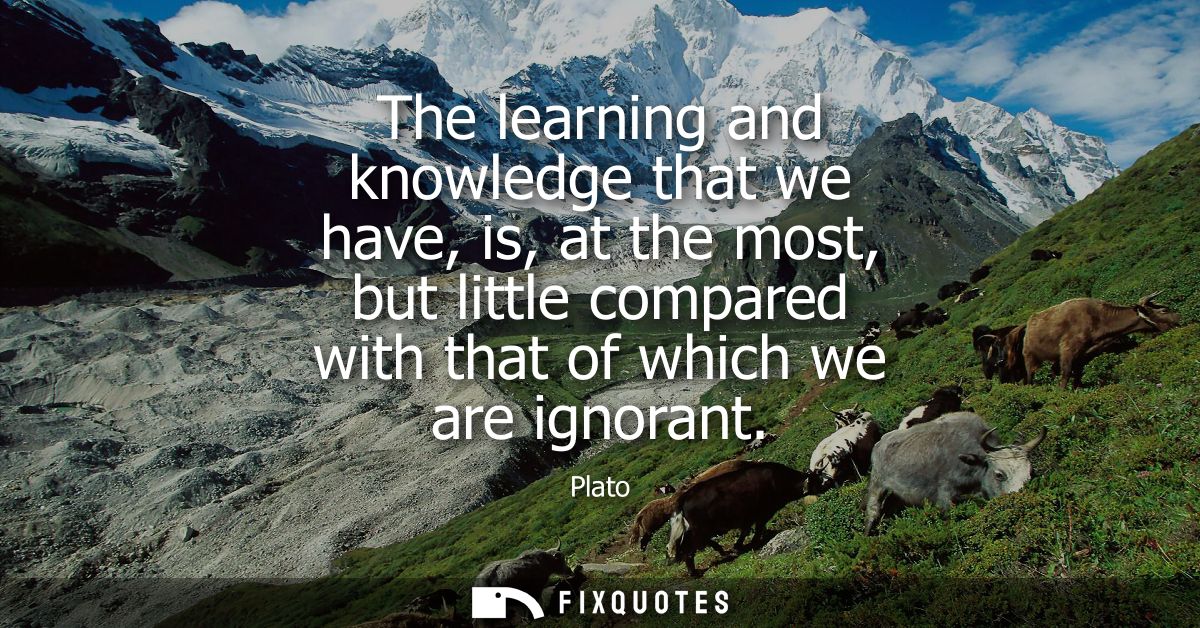
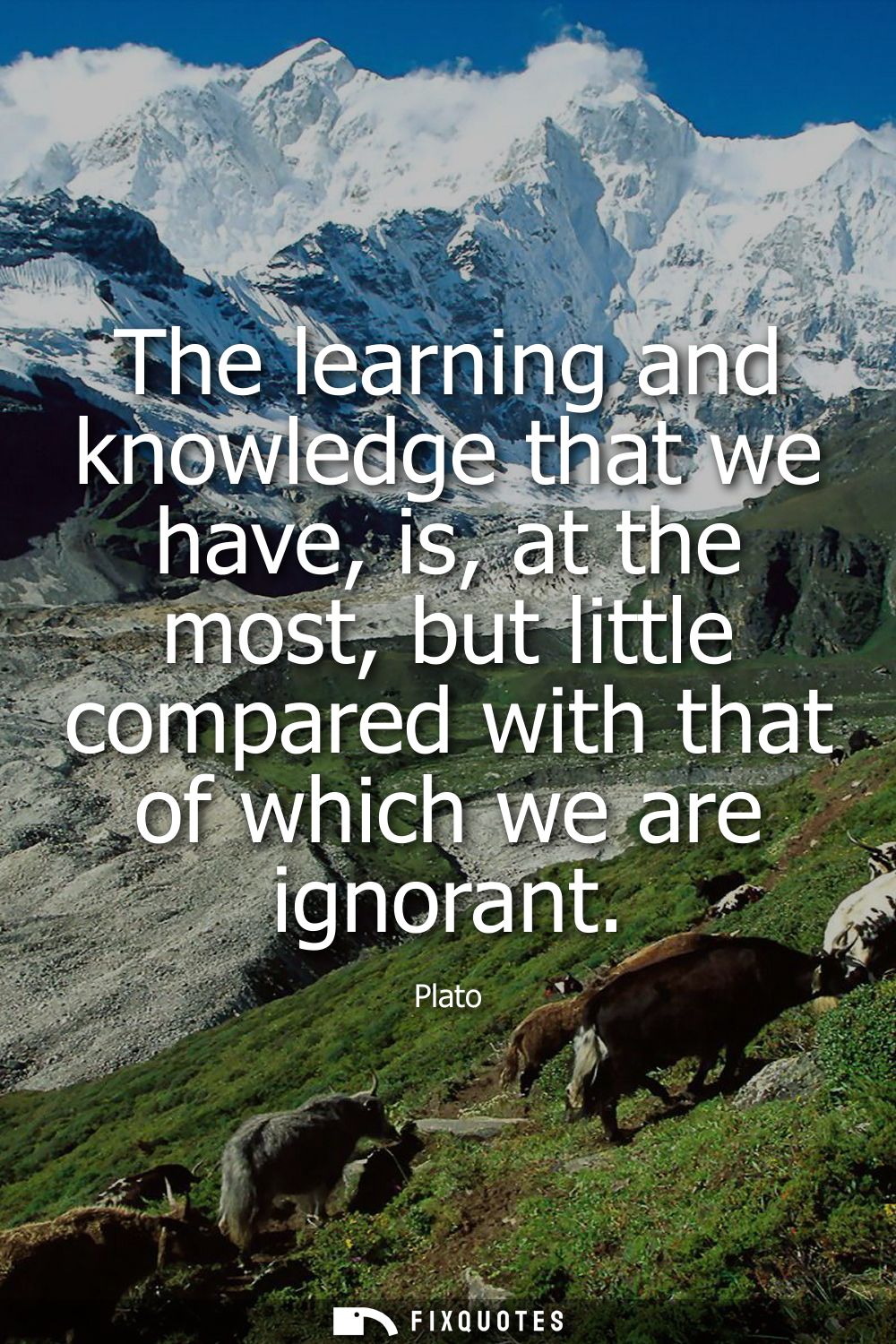
"The learning and knowledge that we have, is, at the most, but little compared with that of which we are ignorant"
About this Quote
The subtext is distinctly Socratic. In the dialogues, the smartest people in the room routinely discover that their certainty is a costume stitched from assumptions. This sentence belongs to that moral theater: ignorance isn’t merely a lack, it’s the condition that makes inquiry honest. By shrinking “knowledge” down to “little,” Plato also reframes philosophy as a discipline of orientation rather than accumulation. The point isn’t to hoard answers; it’s to train the soul to recognize the limits of its own sight.
Context matters: Plato is writing in a Greece where public persuasion (rhetoric, sophistry, political performance) can look like knowledge without being tethered to truth. This maxim quietly rejects that marketplace confidence. It argues that education should produce not swagger but calibration: a mind capable of doubt, and therefore capable of learning.
Quote Details
| Topic | Knowledge |
|---|---|
| Source | Help us find the source |
| Cite |
Citation Formats
APA Style (7th ed.)
Plato. (2026, January 17). The learning and knowledge that we have, is, at the most, but little compared with that of which we are ignorant. FixQuotes. https://fixquotes.com/quotes/the-learning-and-knowledge-that-we-have-is-at-the-29313/
Chicago Style
Plato. "The learning and knowledge that we have, is, at the most, but little compared with that of which we are ignorant." FixQuotes. January 17, 2026. https://fixquotes.com/quotes/the-learning-and-knowledge-that-we-have-is-at-the-29313/.
MLA Style (9th ed.)
"The learning and knowledge that we have, is, at the most, but little compared with that of which we are ignorant." FixQuotes, 17 Jan. 2026, https://fixquotes.com/quotes/the-learning-and-knowledge-that-we-have-is-at-the-29313/. Accessed 12 Feb. 2026.