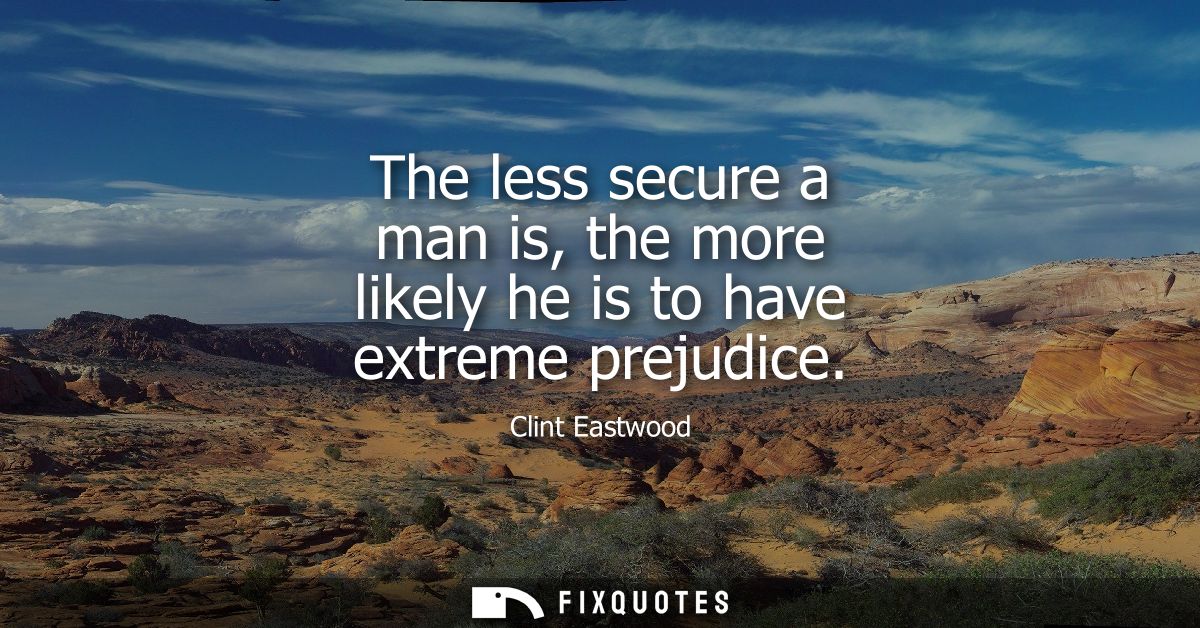
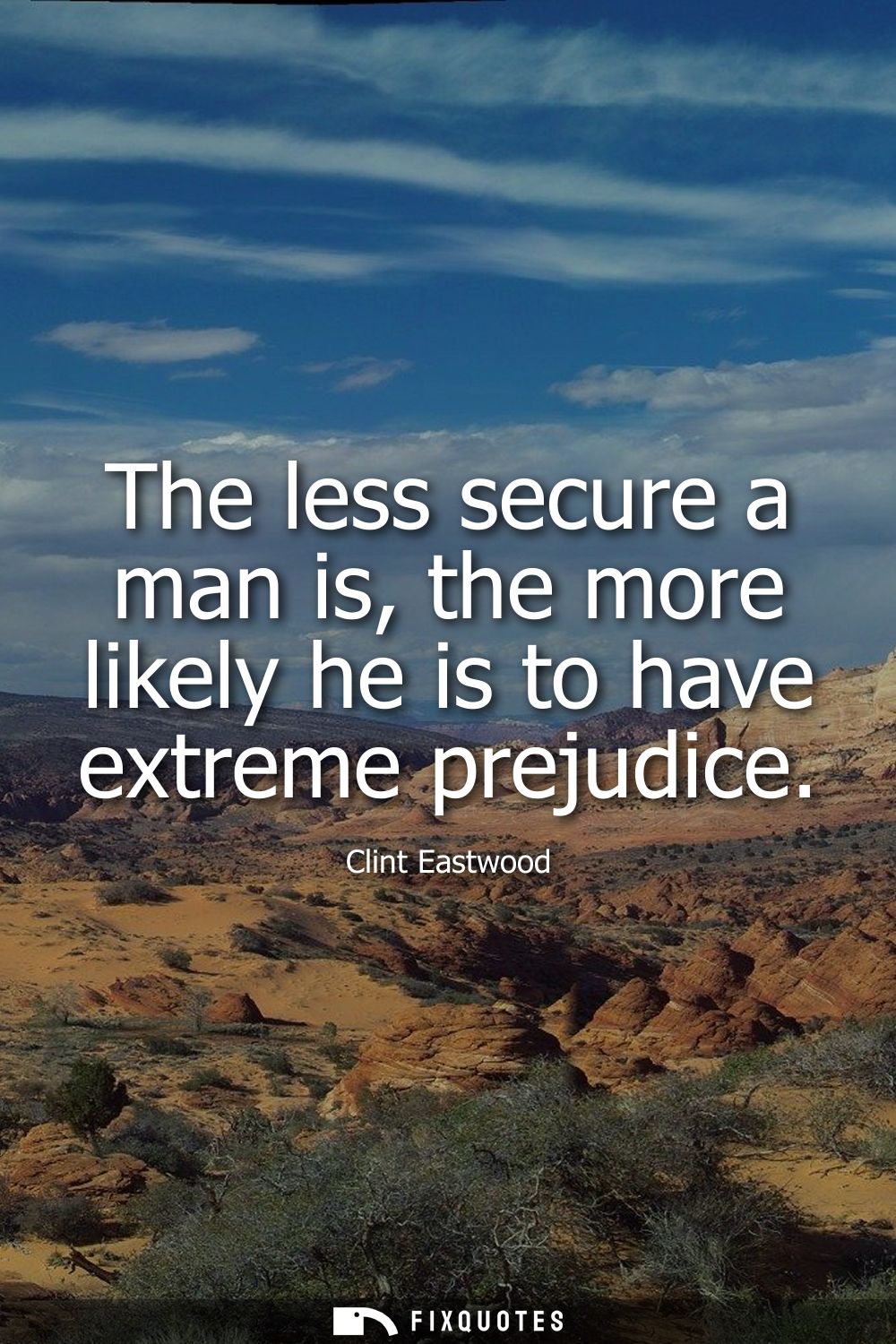
"The less secure a man is, the more likely he is to have extreme prejudice"
About this Quote
The intent is practical, almost behavioral. “Less secure” points to status anxiety, not just personal fragility. It’s the guy who feels his job slipping, his cultural centrality questioned, his masculinity inspected. “Extreme prejudice” becomes a kind of emotional armor: if the world won’t reliably tell you who you are, you start policing who others are allowed to be. The “extreme” matters because Eastwood isn’t talking about mild bias or inherited blind spots; he’s describing the escalated, performative kind that demands targets and rituals of exclusion.
The subtext also carries a warning about how prejudice spreads. Insecure people don’t just hold beliefs; they recruit them. Extremity signals belonging, a shortcut to identity through antagonism. Read in modern context - grievance politics, algorithm-fed outrage, public performances of contempt - the quote explains why prejudice so often comes packaged as confidence. It isn’t confidence. It’s stagecraft.
Quote Details
| Topic | Confidence |
|---|---|
| Source | Help us find the source |
| Cite | Cite this Quote |
Citation Formats
APA Style (7th ed.)
Eastwood, Clint. (2026, January 17). The less secure a man is, the more likely he is to have extreme prejudice. FixQuotes. https://fixquotes.com/quotes/the-less-secure-a-man-is-the-more-likely-he-is-to-30613/
Chicago Style
Eastwood, Clint. "The less secure a man is, the more likely he is to have extreme prejudice." FixQuotes. January 17, 2026. https://fixquotes.com/quotes/the-less-secure-a-man-is-the-more-likely-he-is-to-30613/.
MLA Style (9th ed.)
"The less secure a man is, the more likely he is to have extreme prejudice." FixQuotes, 17 Jan. 2026, https://fixquotes.com/quotes/the-less-secure-a-man-is-the-more-likely-he-is-to-30613/. Accessed 3 Feb. 2026.