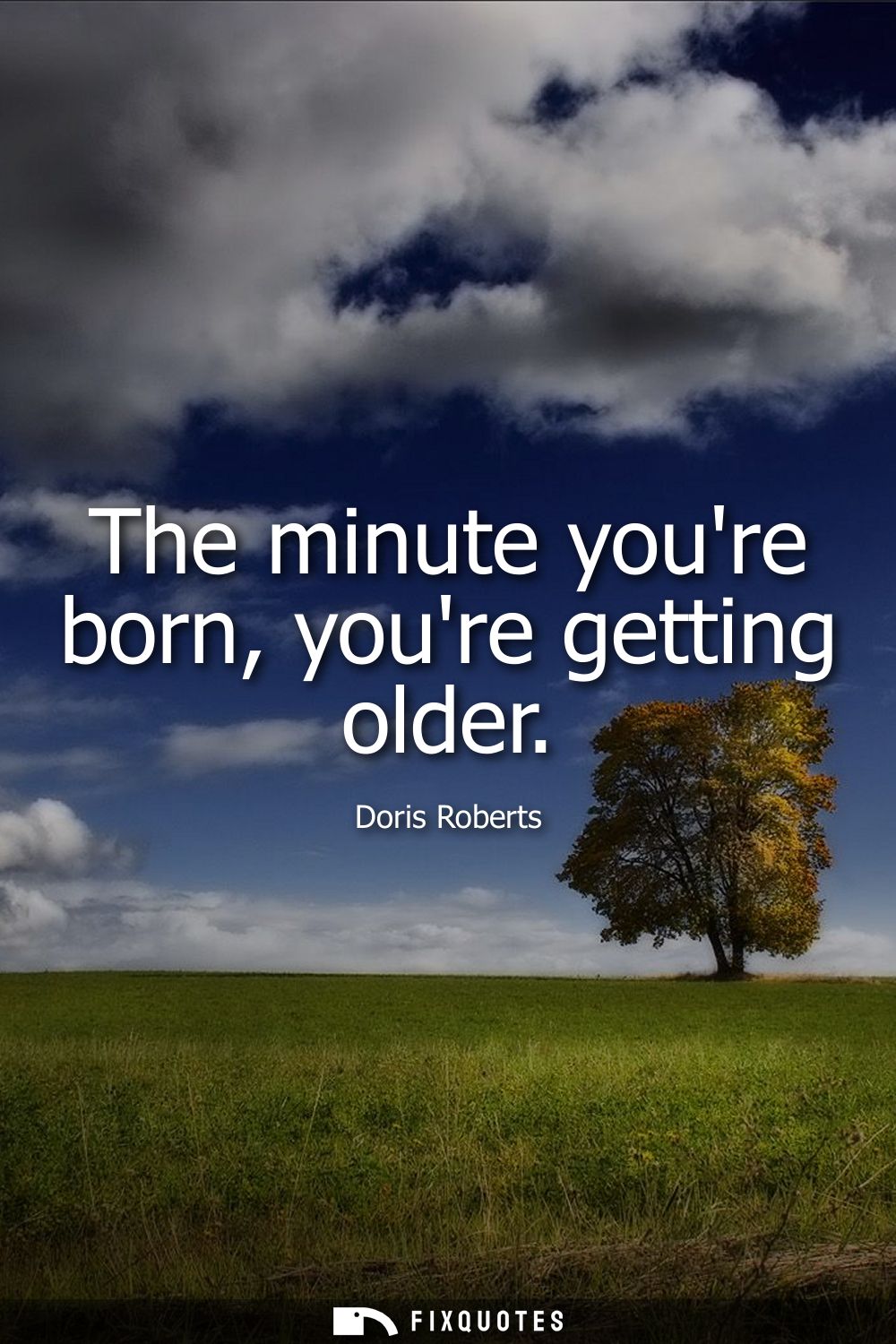
"The minute you're born, you're getting older"
About this Quote
It lands like a sitcom punchline because it is one: a simple, almost childish tautology that suddenly feels accusatory. Doris Roberts turns the soft-focus myth of “growing up” into a stopwatch. No inspirational arc, no before-and-after glow-up. Just the blunt fact that time starts billing you at birth.
As an actress best known for playing a mother who weaponized common sense, Roberts’ delivery is baked into the line even on the page. The humor isn’t in the idea (everyone knows it); it’s in the timing and the refusal to dress it up. “The minute” collapses nostalgia into a single beat. “Getting older” is a passive construction that makes aging sound less like a choice than a condition you’re drafted into, whether you’re ready or not.
The subtext is a quiet critique of the culture industry around youth: all the anti-aging creams, reinvention narratives, and self-help slogans that pretend time is negotiable if you optimize hard enough. Roberts doesn’t moralize; she shrugs. That shrug is its own kind of authority, the perspective of someone who’s lived through decades of changing standards for women’s bodies and public relevance, and who’s still standing.
In context, it reads like a comic coping mechanism with teeth. Laugh, because the premise is absurdly obvious. Wince, because it’s also a reminder that every “someday” is already underway.
As an actress best known for playing a mother who weaponized common sense, Roberts’ delivery is baked into the line even on the page. The humor isn’t in the idea (everyone knows it); it’s in the timing and the refusal to dress it up. “The minute” collapses nostalgia into a single beat. “Getting older” is a passive construction that makes aging sound less like a choice than a condition you’re drafted into, whether you’re ready or not.
The subtext is a quiet critique of the culture industry around youth: all the anti-aging creams, reinvention narratives, and self-help slogans that pretend time is negotiable if you optimize hard enough. Roberts doesn’t moralize; she shrugs. That shrug is its own kind of authority, the perspective of someone who’s lived through decades of changing standards for women’s bodies and public relevance, and who’s still standing.
In context, it reads like a comic coping mechanism with teeth. Laugh, because the premise is absurdly obvious. Wince, because it’s also a reminder that every “someday” is already underway.
Quote Details
| Topic | Aging |
|---|
More Quotes by Doris
Add to List