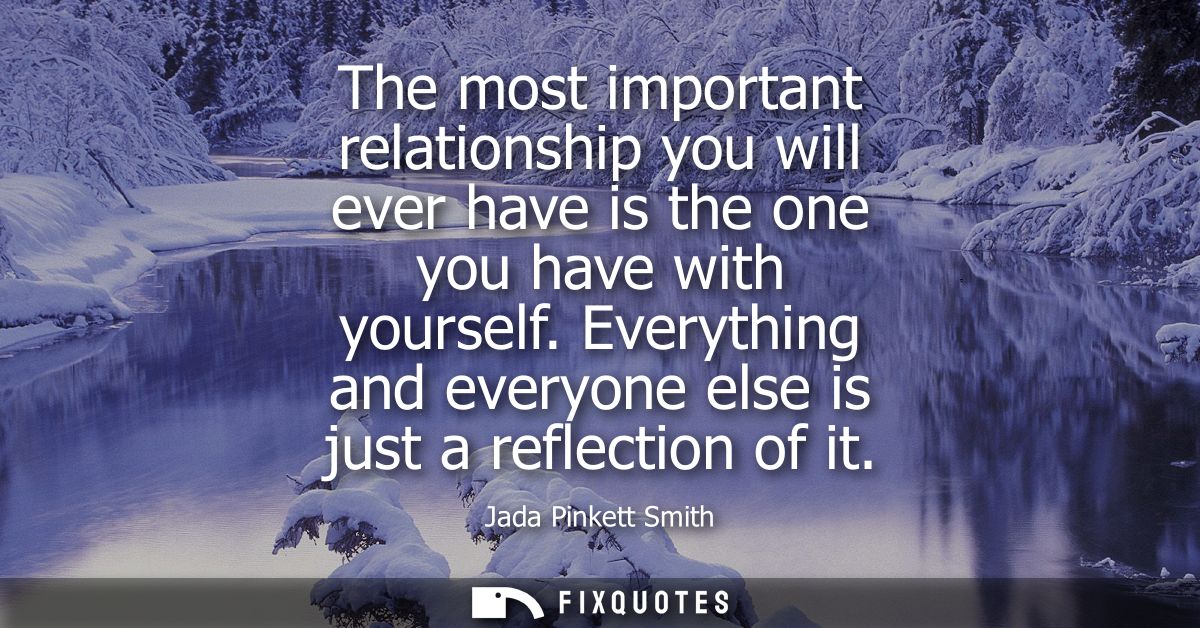
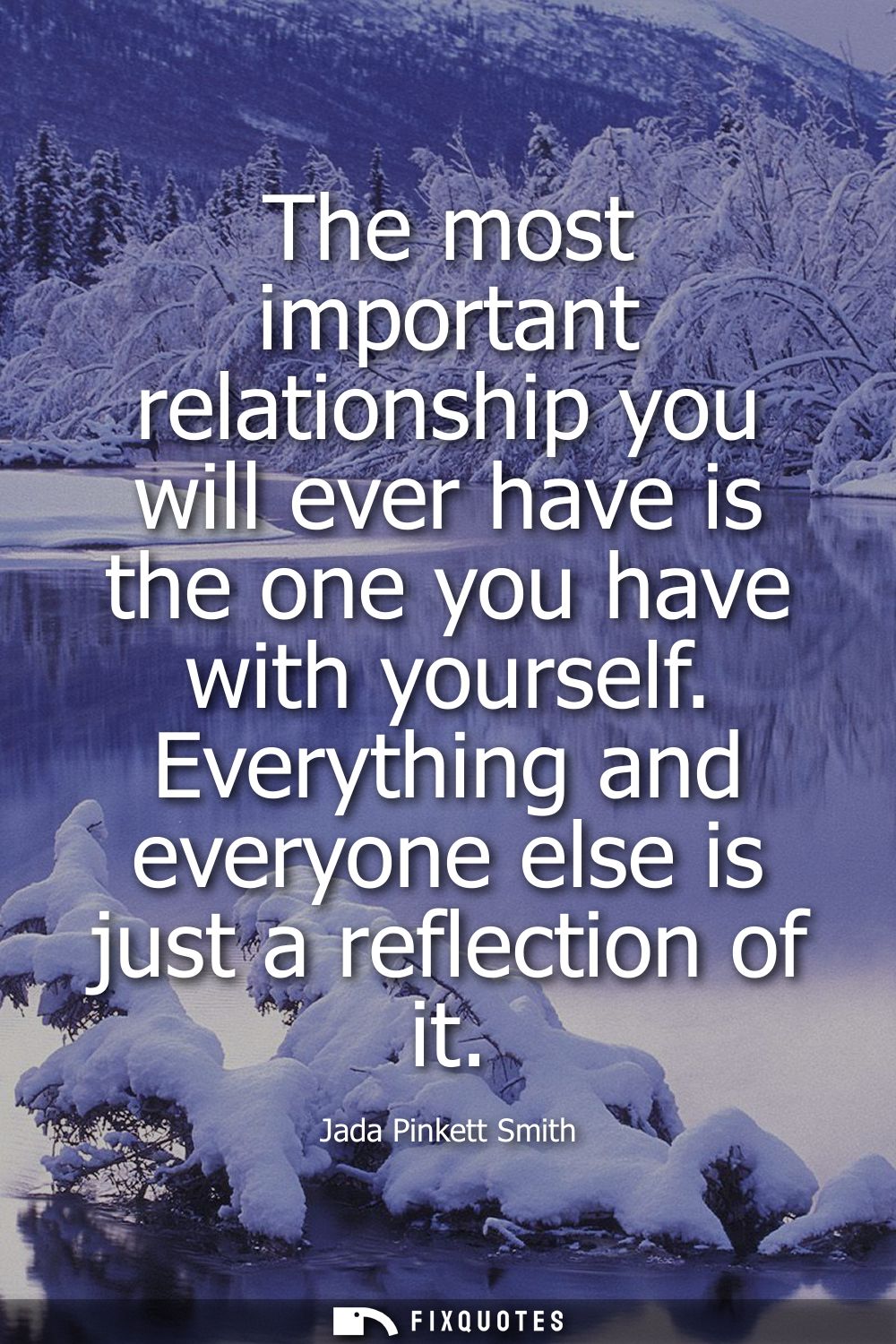
"The most important relationship you will ever have is the one you have with yourself. Everything and everyone else is just a reflection of it"
About this Quote
The second sentence does the heavy lifting. “Reflection” is a clever reversal: it removes the power from the crowd and puts it back in the mirror. Your partnerships, your friendships, even your enemies become diagnostic tools. It’s a cultural pivot away from romantic exceptionalism - the idea that one grand relationship will fix what you haven’t faced - and toward something more rigorous: your patterns don’t disappear when the cast changes.
The subtext is also slightly provocative. If “everything and everyone else” reflects you, then you can’t outsource blame as easily. The quote flirts with a hard truth that’s become common in therapy-speak spaces: the life you’re living is, in part, the life you’re tolerating. That can sound empowering or punishing, depending on what you’ve survived.
As an actress and talk-show figure who’s publicly processed marriage, motherhood, and mental health, Pinkett Smith is selling an unglamorous thesis: intimacy with others is downstream from intimacy with yourself. Not romantic, but useful.
Quote Details
| Topic | Self-Love |
|---|---|
| Source | Help us find the source |
| Cite |
Citation Formats
APA Style (7th ed.)
Smith, Jada Pinkett. (2026, January 15). The most important relationship you will ever have is the one you have with yourself. Everything and everyone else is just a reflection of it. FixQuotes. https://fixquotes.com/quotes/the-most-important-relationship-you-will-ever-171882/
Chicago Style
Smith, Jada Pinkett. "The most important relationship you will ever have is the one you have with yourself. Everything and everyone else is just a reflection of it." FixQuotes. January 15, 2026. https://fixquotes.com/quotes/the-most-important-relationship-you-will-ever-171882/.
MLA Style (9th ed.)
"The most important relationship you will ever have is the one you have with yourself. Everything and everyone else is just a reflection of it." FixQuotes, 15 Jan. 2026, https://fixquotes.com/quotes/the-most-important-relationship-you-will-ever-171882/. Accessed 12 Feb. 2026.