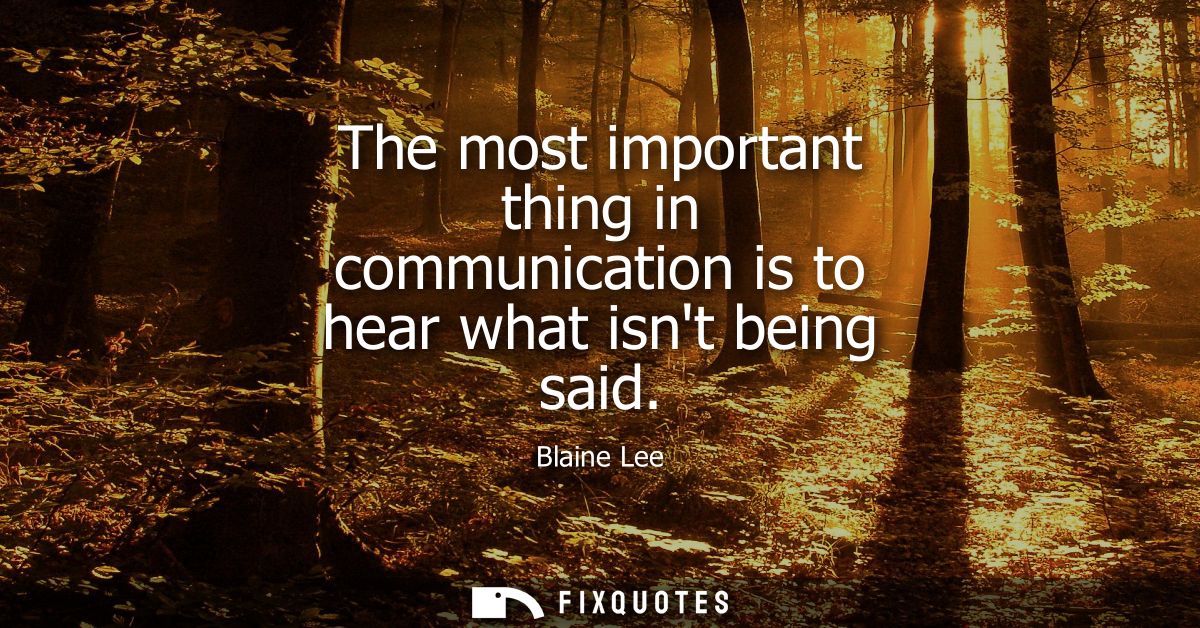
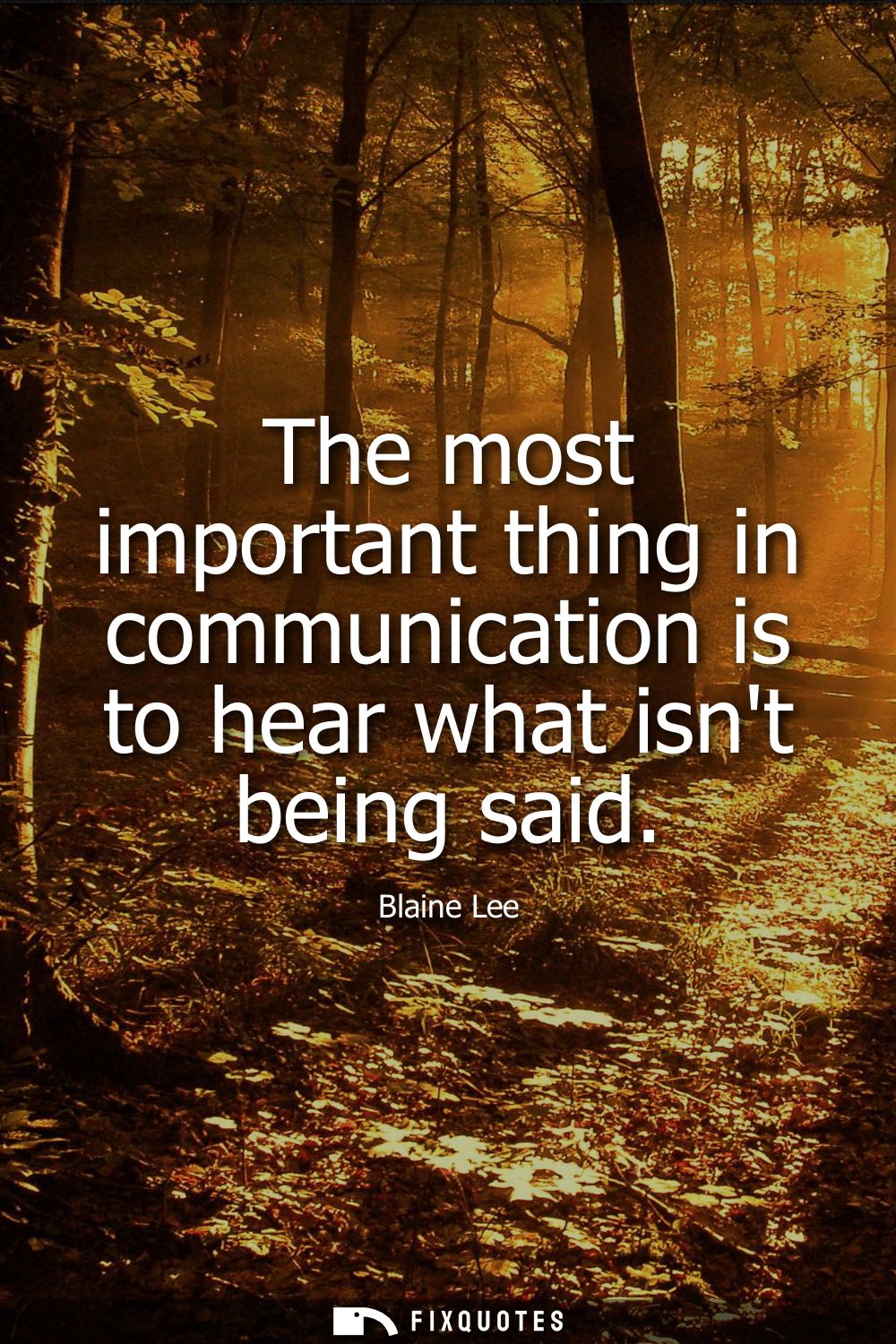
"The most important thing in communication is to hear what isn't being said"
About this Quote
Communication, Blaine Lee implies, is less a broadcast than a diagnostic. The line turns listening into a kind of X-ray: the real message often lives in omissions, hedges, posture, timing, and the carefully chosen “fine” that means anything but. It’s a provocative inversion of how we’re trained to think about language. Words are the headline; what isn’t said is the article.
The intent feels distinctly late-20th-century American self-management: a counsel for leaders, spouses, and negotiators living in a culture that prizes smoothness and punishes bluntness. In workplaces especially, people learn to speak in safe abstractions (“We should circle back”) and to bury conflict under process. Lee is telling you to treat that polish as evidence, not clarity. Silence becomes data. The sudden enthusiasm becomes suspect. The missing question signals fear.
The subtext is also a quiet rebuke to “good communicators” who equate talking with connection. Hearing what isn’t being said requires tolerating ambiguity and resisting the ego’s need to respond quickly. It asks for empathy without sentimentality: you listen not just for feelings, but for constraints, incentives, and risks the speaker can’t name out loud. What do they stand to lose by being direct? Who is in the room, even if only metaphorically?
It works because it flatters and challenges at once. You can’t practice it without becoming more socially literate - and more morally responsible - since reading between the lines can be either care or manipulation. Lee bets on care.
The intent feels distinctly late-20th-century American self-management: a counsel for leaders, spouses, and negotiators living in a culture that prizes smoothness and punishes bluntness. In workplaces especially, people learn to speak in safe abstractions (“We should circle back”) and to bury conflict under process. Lee is telling you to treat that polish as evidence, not clarity. Silence becomes data. The sudden enthusiasm becomes suspect. The missing question signals fear.
The subtext is also a quiet rebuke to “good communicators” who equate talking with connection. Hearing what isn’t being said requires tolerating ambiguity and resisting the ego’s need to respond quickly. It asks for empathy without sentimentality: you listen not just for feelings, but for constraints, incentives, and risks the speaker can’t name out loud. What do they stand to lose by being direct? Who is in the room, even if only metaphorically?
It works because it flatters and challenges at once. You can’t practice it without becoming more socially literate - and more morally responsible - since reading between the lines can be either care or manipulation. Lee bets on care.
Quote Details
| Topic | Wisdom |
|---|
More Quotes by Blaine
Add to List