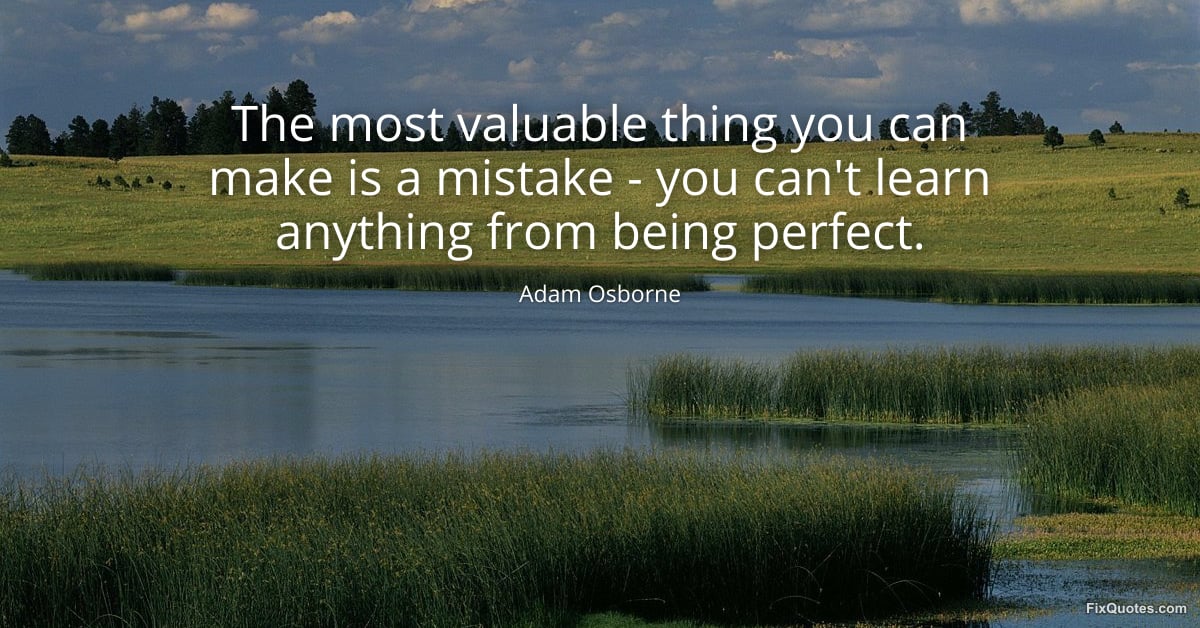
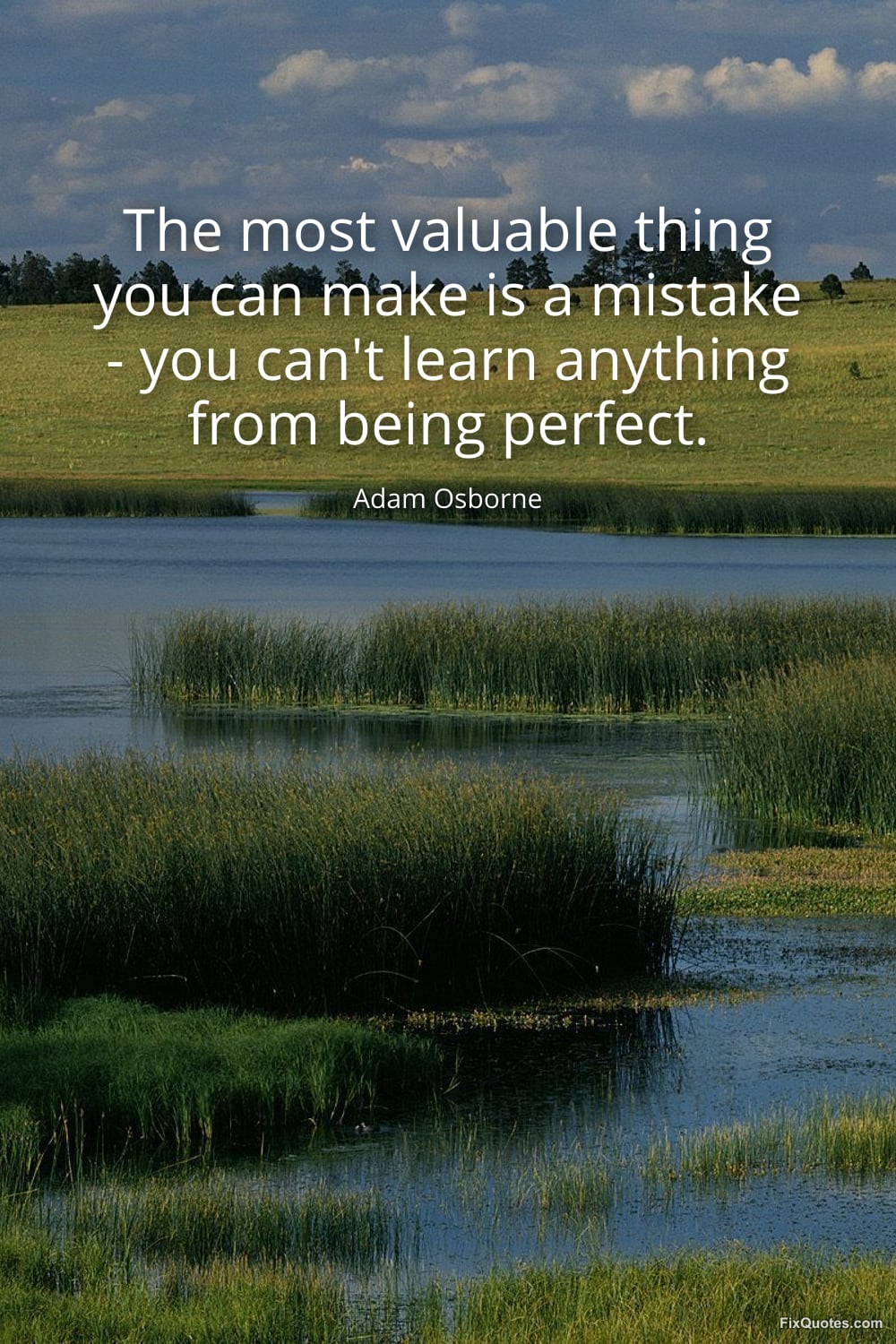
"The most valuable thing you can make is a mistake - you can't learn anything from being perfect"
About this Quote
The intent reads as practical and entrepreneurial rather than soft self-help. Osborne lived through the early personal computing era, when progress depended on rapid iteration, public failure, and the humility to debug. In that context, “mistake” is almost synonymous with “feedback.” It’s the moment reality contradicts your assumptions, and that contradiction is precisely where learning lives.
Subtext: stop performing. The line pushes against institutions that reward the appearance of correctness - schools that grade for compliance, workplaces that punish risk, reputations built on never being caught wrong. Osborne is arguing for a different prestige economy: one where admitting error signals seriousness, not weakness.
There’s also a quiet warning embedded in the breezy aphorism. If you chase “perfect,” you’ll optimize for safety, not truth. You’ll avoid experiments that might embarrass you, which means you’ll avoid the experiments most likely to teach you something.
Quote Details
| Topic | Learning from Mistakes |
|---|---|
| Source | Later attribution: How to Escape from Hell (David Gerrelli, 2022) modern compilationISBN: 9781398446946 · ID: b9OVEAAAQBAJ
Evidence:
... Adam Osborne said , " The most valuable thing you can make is a mistake – you can't learn anything from being perfect . " I've made plenty of grade A mistakes , but I've learnt from them all , and they've made me a better , stronger ... |
| Cite |
Citation Formats
APA Style (7th ed.)
Osborne, Adam. (2026, February 19). The most valuable thing you can make is a mistake - you can't learn anything from being perfect. FixQuotes. https://fixquotes.com/quotes/the-most-valuable-thing-you-can-make-is-a-mistake-160042/
Chicago Style
Osborne, Adam. "The most valuable thing you can make is a mistake - you can't learn anything from being perfect." FixQuotes. February 19, 2026. https://fixquotes.com/quotes/the-most-valuable-thing-you-can-make-is-a-mistake-160042/.
MLA Style (9th ed.)
"The most valuable thing you can make is a mistake - you can't learn anything from being perfect." FixQuotes, 19 Feb. 2026, https://fixquotes.com/quotes/the-most-valuable-thing-you-can-make-is-a-mistake-160042/. Accessed 4 Apr. 2026.