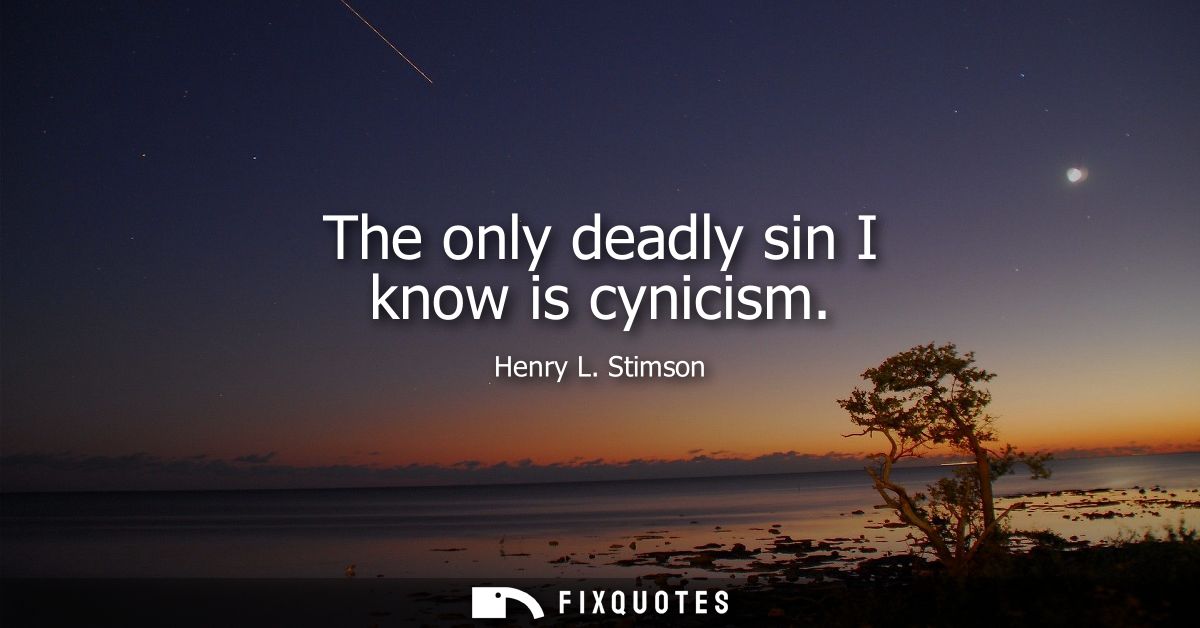
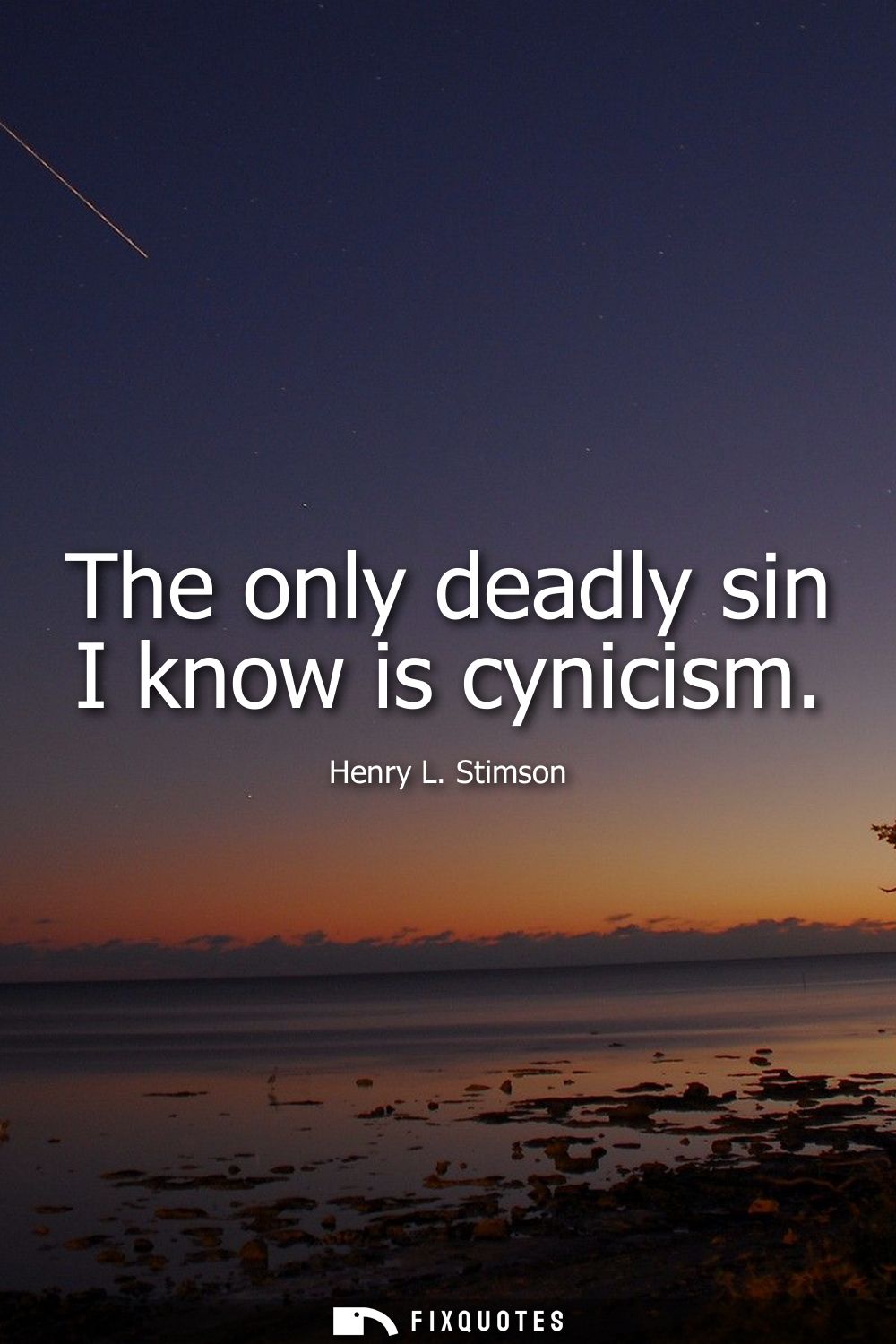
"The only deadly sin I know is cynicism"
About this Quote
In the mouth of a statesman, “cynicism” isn’t a vibe; it’s a national security risk. Henry L. Stimson spent his life inside the machinery of American power - Secretary of War, Secretary of State, the kind of administrator who had to make decisions where idealism collides with casualty counts. So when he brands cynicism as the only “deadly sin,” he’s not doing theology. He’s drawing a hard moral boundary around the one attitude that can corrode governance from the inside.
The line works because it flips expectations. We usually treat cynicism as sophistication: the knowing smirk, the refusal to be fooled. Stimson calls it lethal, not because it hurts feelings, but because it dissolves the possibility of collective action. A cynical public won’t sacrifice; a cynical bureaucracy won’t take responsibility; a cynical leader can justify anything by claiming everyone else is just as compromised. Cynicism is the solvent that makes hard choices feel weightless.
There’s subtext, too, about the moral posture required to wield power. Stimson isn’t naïve - his career intersects with war planning, secrecy, and the brutal arithmetic of “necessary” measures. Naming cynicism as the sin is a way of defending seriousness itself: you may have to do grim things, but you don’t get to sneer at the very idea of right and wrong. For a governing class tempted by fatalism, it’s a warning: once you stop believing anything can be better, you’ll start accepting anything can be done.
The line works because it flips expectations. We usually treat cynicism as sophistication: the knowing smirk, the refusal to be fooled. Stimson calls it lethal, not because it hurts feelings, but because it dissolves the possibility of collective action. A cynical public won’t sacrifice; a cynical bureaucracy won’t take responsibility; a cynical leader can justify anything by claiming everyone else is just as compromised. Cynicism is the solvent that makes hard choices feel weightless.
There’s subtext, too, about the moral posture required to wield power. Stimson isn’t naïve - his career intersects with war planning, secrecy, and the brutal arithmetic of “necessary” measures. Naming cynicism as the sin is a way of defending seriousness itself: you may have to do grim things, but you don’t get to sneer at the very idea of right and wrong. For a governing class tempted by fatalism, it’s a warning: once you stop believing anything can be better, you’ll start accepting anything can be done.
Quote Details
| Topic | Wisdom |
|---|---|
| Source | Help us find the source |
| Cite |
Citation Formats
APA Style (7th ed.)
Stimson, Henry L. (2026, January 18). The only deadly sin I know is cynicism. FixQuotes. https://fixquotes.com/quotes/the-only-deadly-sin-i-know-is-cynicism-18871/
Chicago Style
Stimson, Henry L. "The only deadly sin I know is cynicism." FixQuotes. January 18, 2026. https://fixquotes.com/quotes/the-only-deadly-sin-i-know-is-cynicism-18871/.
MLA Style (9th ed.)
"The only deadly sin I know is cynicism." FixQuotes, 18 Jan. 2026, https://fixquotes.com/quotes/the-only-deadly-sin-i-know-is-cynicism-18871/. Accessed 7 Apr. 2026.
More Quotes by Henry
Add to List