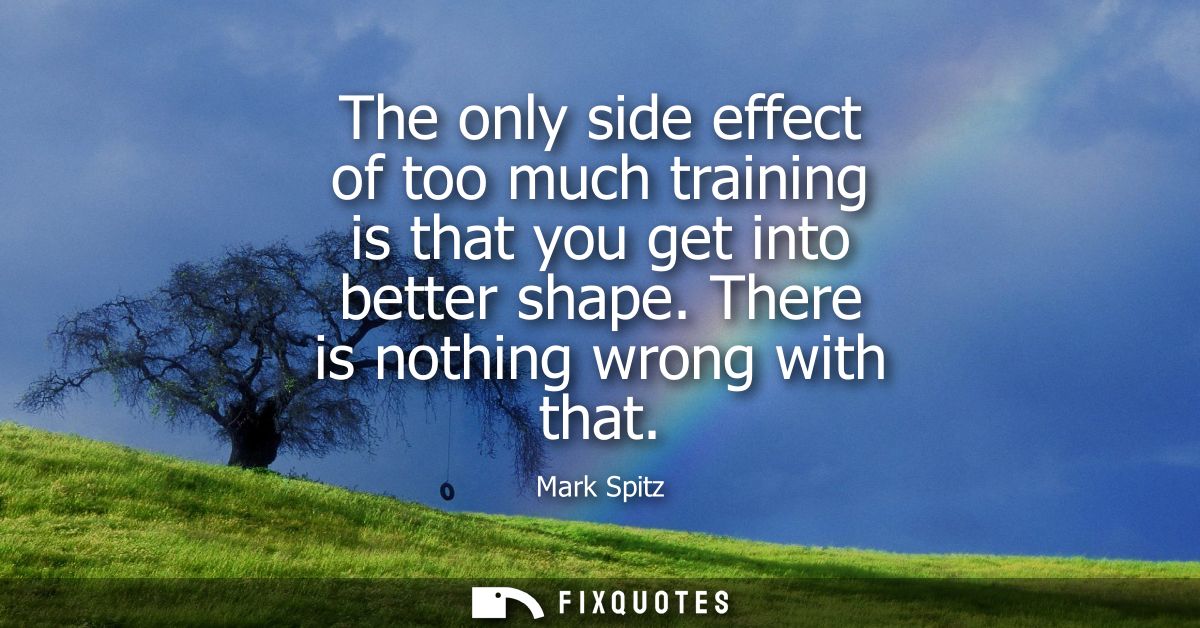
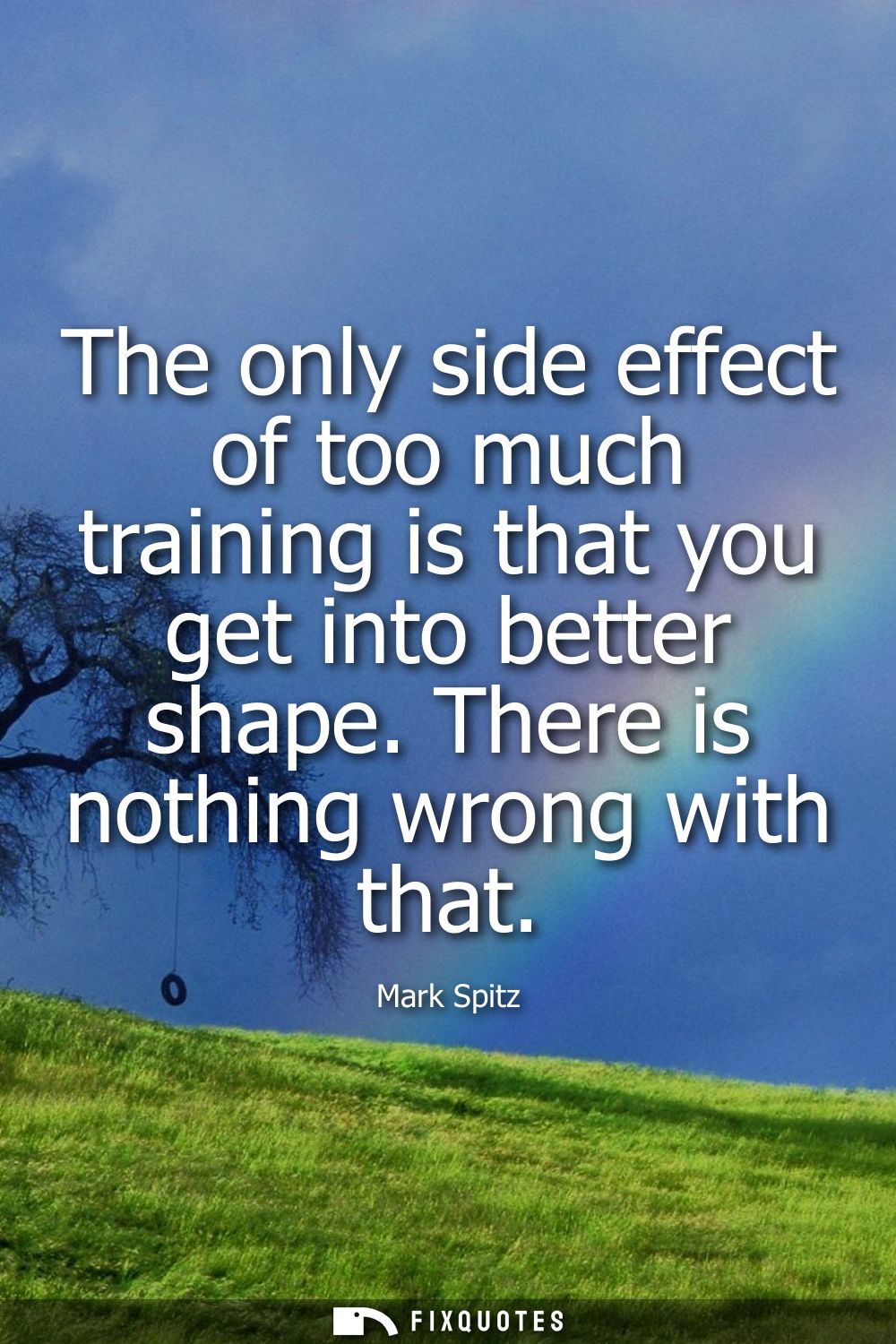
"The only side effect of too much training is that you get into better shape. There is nothing wrong with that"
About this Quote
The subtext is competitive, even when it sounds casual. “There is nothing wrong with that” reads like permission, but it’s also a quiet dismissal of excuses. If the worst thing that happens is you get better, why wouldn’t you push? Coming from Spitz, it carries the confidence of someone who lived at the edge of what “too much” looked like - the 1972 Olympics, seven golds, a public image built on relentlessness. In that era especially, training was becoming both more scientific and more mythologized; the modern athlete was turning into a full-time project.
The line works because it sells a fantasy of clean cause-and-effect: effort in, improvement out. It’s motivational, sure, but it’s also cultural branding - the idea that excellence doesn’t just require work, it requires loving the work enough to call the costs “nothing wrong.”
Quote Details
| Topic | Training & Practice |
|---|---|
| Source | Help us find the source |
| Cite |
Citation Formats
APA Style (7th ed.)
Spitz, Mark. (2026, January 16). The only side effect of too much training is that you get into better shape. There is nothing wrong with that. FixQuotes. https://fixquotes.com/quotes/the-only-side-effect-of-too-much-training-is-that-88574/
Chicago Style
Spitz, Mark. "The only side effect of too much training is that you get into better shape. There is nothing wrong with that." FixQuotes. January 16, 2026. https://fixquotes.com/quotes/the-only-side-effect-of-too-much-training-is-that-88574/.
MLA Style (9th ed.)
"The only side effect of too much training is that you get into better shape. There is nothing wrong with that." FixQuotes, 16 Jan. 2026, https://fixquotes.com/quotes/the-only-side-effect-of-too-much-training-is-that-88574/. Accessed 3 Apr. 2026.