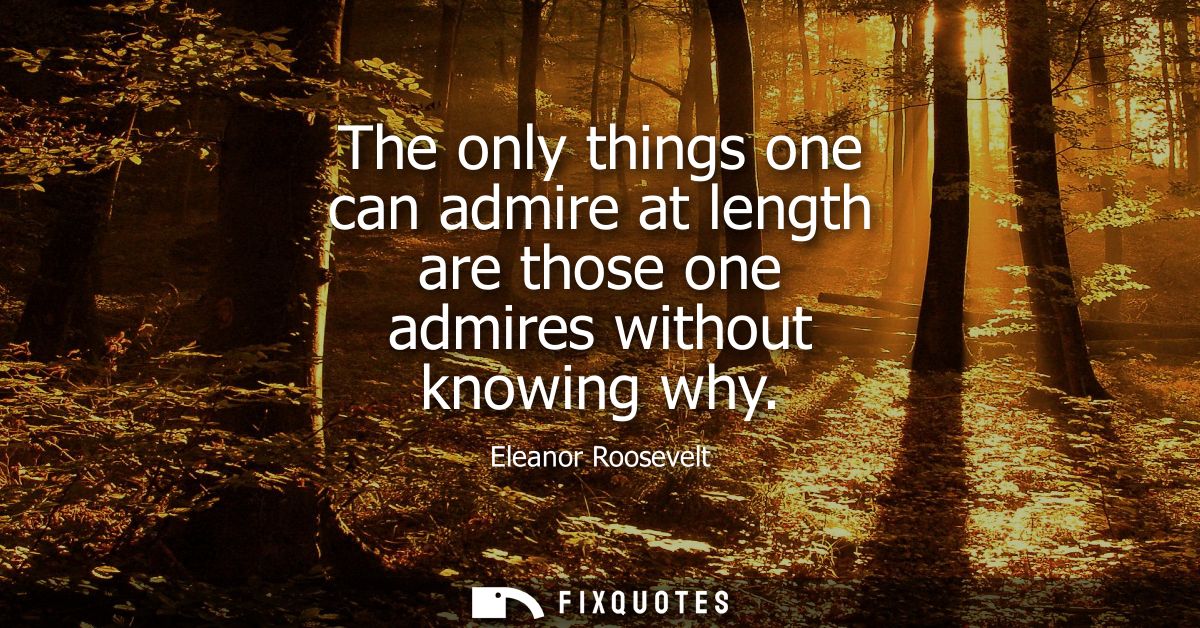
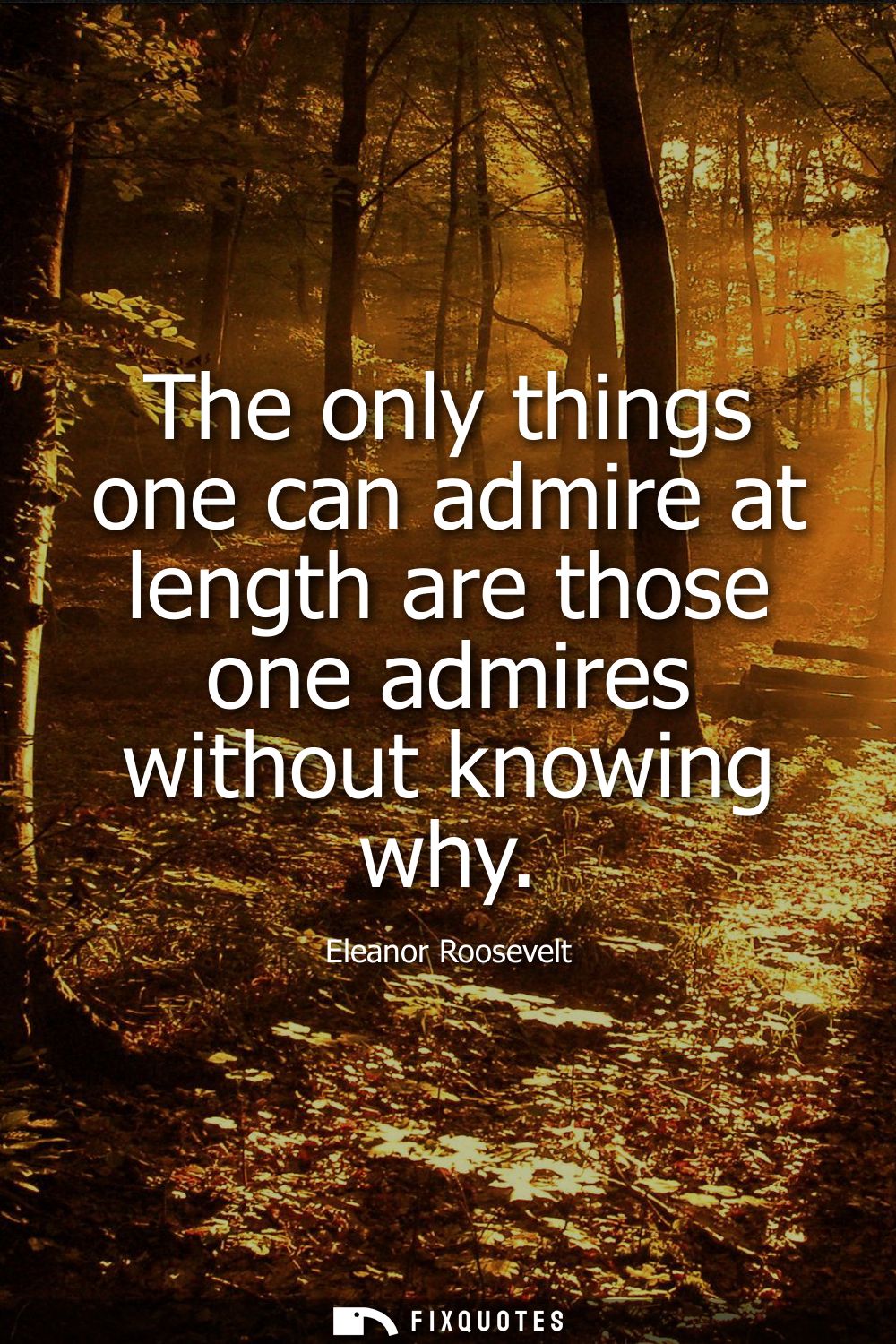
"The only things one can admire at length are those one admires without knowing why"
About this Quote
The subtext is wryly democratic. “Knowing why” often means borrowing a script from your class, your party, your social circle. Roosevelt spent her life navigating those scripts and then, famously, outgrowing them: moving from ceremonial First Lady to independent political actor, championing civil rights, labor, refugees, and the idea of human rights as something sturdier than national fashion. In that context, the quote reads like field-tested advice. When admiration is too legible, it’s too easy to weaponize: it becomes a badge, a networking tool, a way to sort people into “worthy” and “unworthy.”
She’s not romanticizing ignorance; she’s warning that rationales are porous, susceptible to propaganda and self-deception. The best admired things endure because they live beneath explanation: they don’t need constant maintenance from ideology. That’s a quietly radical standard for a public figure whose job was, in part, to make sentiments sound acceptable.
Quote Details
| Topic | Wisdom |
|---|---|
| Source | Help us find the source |
| Cite |
Citation Formats
APA Style (7th ed.)
Roosevelt, Eleanor. (2026, January 17). The only things one can admire at length are those one admires without knowing why. FixQuotes. https://fixquotes.com/quotes/the-only-things-one-can-admire-at-length-are-33179/
Chicago Style
Roosevelt, Eleanor. "The only things one can admire at length are those one admires without knowing why." FixQuotes. January 17, 2026. https://fixquotes.com/quotes/the-only-things-one-can-admire-at-length-are-33179/.
MLA Style (9th ed.)
"The only things one can admire at length are those one admires without knowing why." FixQuotes, 17 Jan. 2026, https://fixquotes.com/quotes/the-only-things-one-can-admire-at-length-are-33179/. Accessed 27 Mar. 2026.