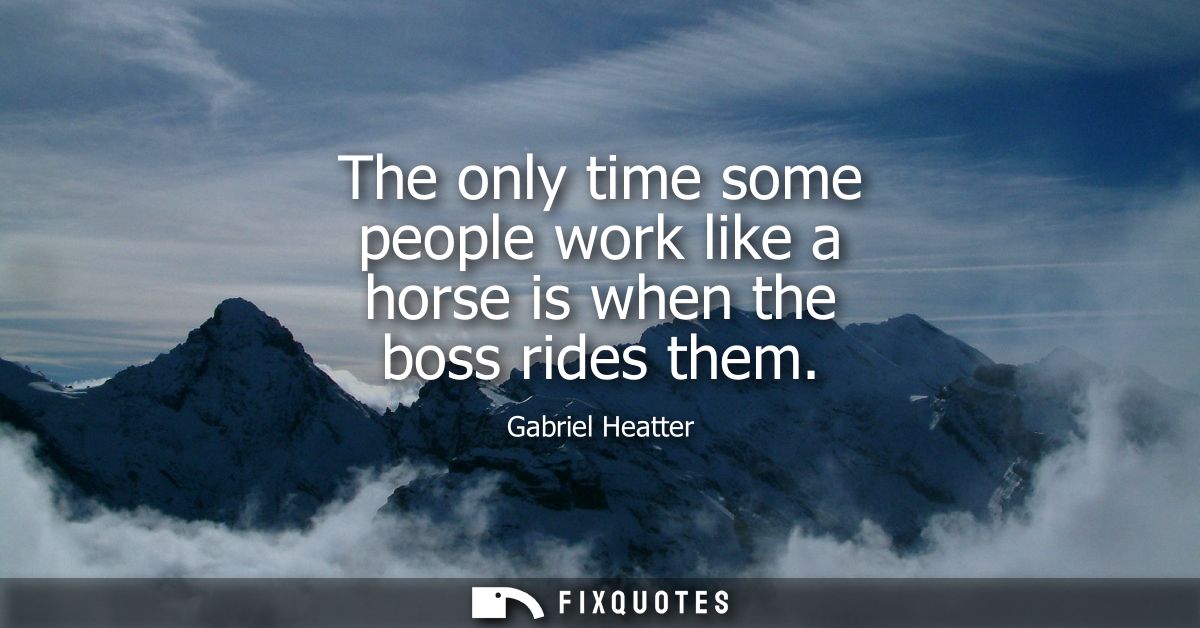
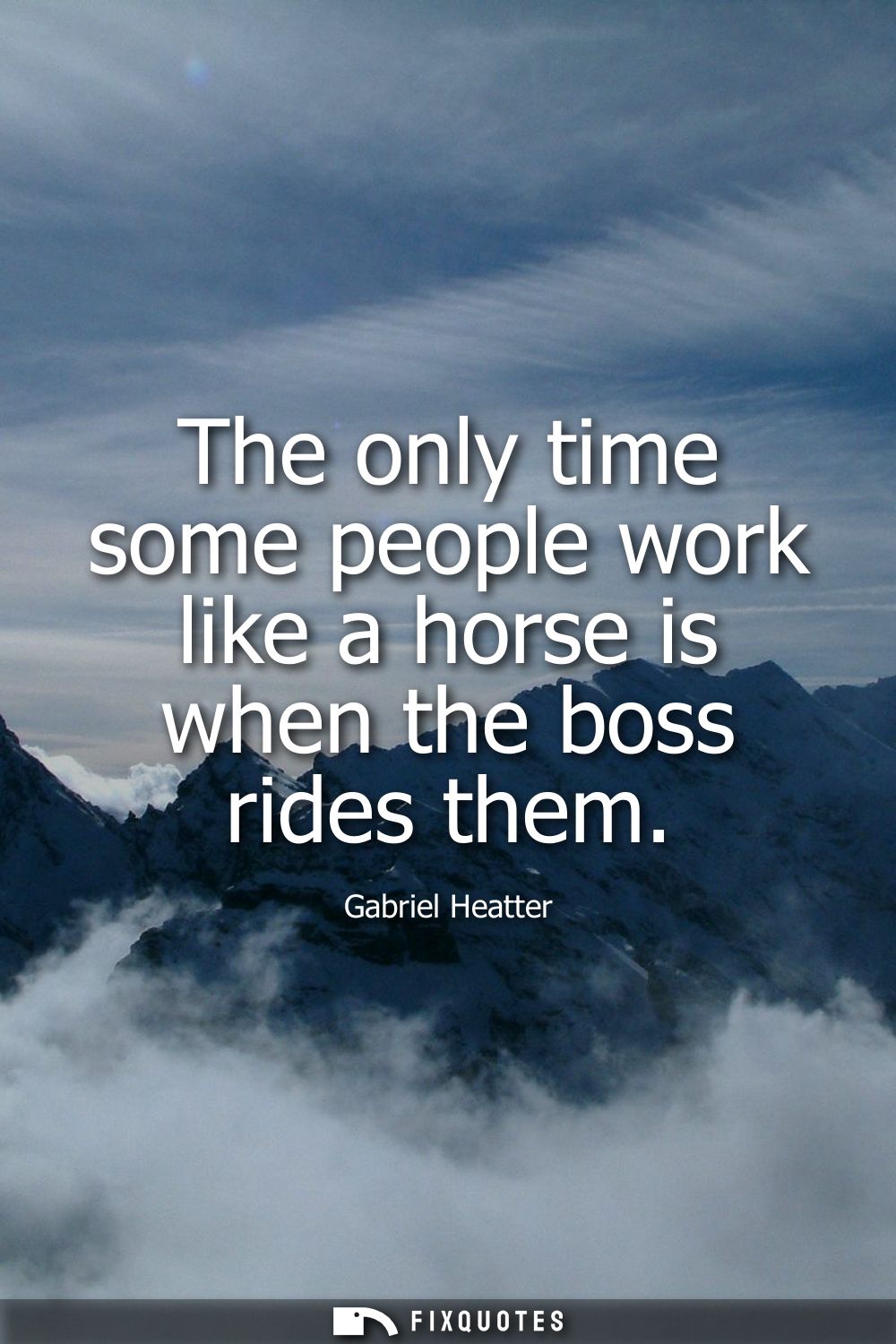
"The only time some people work like a horse is when the boss rides them"
About this Quote
Heatter’s line snaps like a newsroom wisecrack because it weaponizes a folksy image - the “horse” - and then flips the sentimentality into something sour. “Work like a horse” usually flatters grit; here it’s not devotion, it’s coercion. The joke lands on the word “rides,” which turns the boss from manager to mounted overseer and the worker from employee to livestock. It’s a metaphor that refuses to romanticize hustle. It insists that, for some people, labor isn’t sparked by pride or purpose but by pressure, surveillance, and fear of punishment.
The intent isn’t simply to scold laziness. It’s sharper: Heatter is mocking a workplace culture that mistakes compliance for character. The subtext is managerial insecurity. If performance only appears when authority is visibly applied, the organization hasn’t built motivation; it’s built a system where attention is the currency and autonomy is suspect. That implicates both sides: workers trained to do the minimum until squeezed, and bosses who confuse micromanagement with leadership.
Context matters. Heatter came from an era when American work talk was drenched in moral language - “hardworking,” “lazy,” “earning your keep” - while modern corporate management and mass labor were hardening into routines of supervision. The quote cuts through that piety. It’s not pro-worker or pro-boss so much as anti-illusion: if your productivity model requires a rider, you’re not running a stable team; you’re running a stable.
The intent isn’t simply to scold laziness. It’s sharper: Heatter is mocking a workplace culture that mistakes compliance for character. The subtext is managerial insecurity. If performance only appears when authority is visibly applied, the organization hasn’t built motivation; it’s built a system where attention is the currency and autonomy is suspect. That implicates both sides: workers trained to do the minimum until squeezed, and bosses who confuse micromanagement with leadership.
Context matters. Heatter came from an era when American work talk was drenched in moral language - “hardworking,” “lazy,” “earning your keep” - while modern corporate management and mass labor were hardening into routines of supervision. The quote cuts through that piety. It’s not pro-worker or pro-boss so much as anti-illusion: if your productivity model requires a rider, you’re not running a stable team; you’re running a stable.
Quote Details
| Topic | Work Ethic |
|---|---|
| Source | Help us find the source |
More Quotes by Gabriel
Add to List