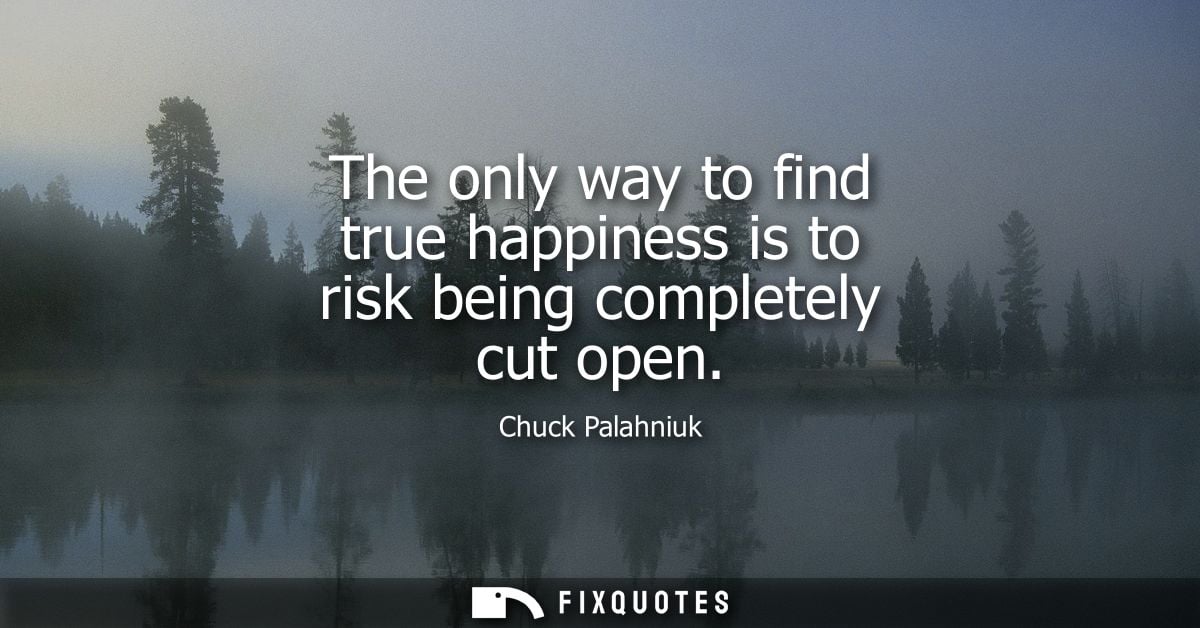
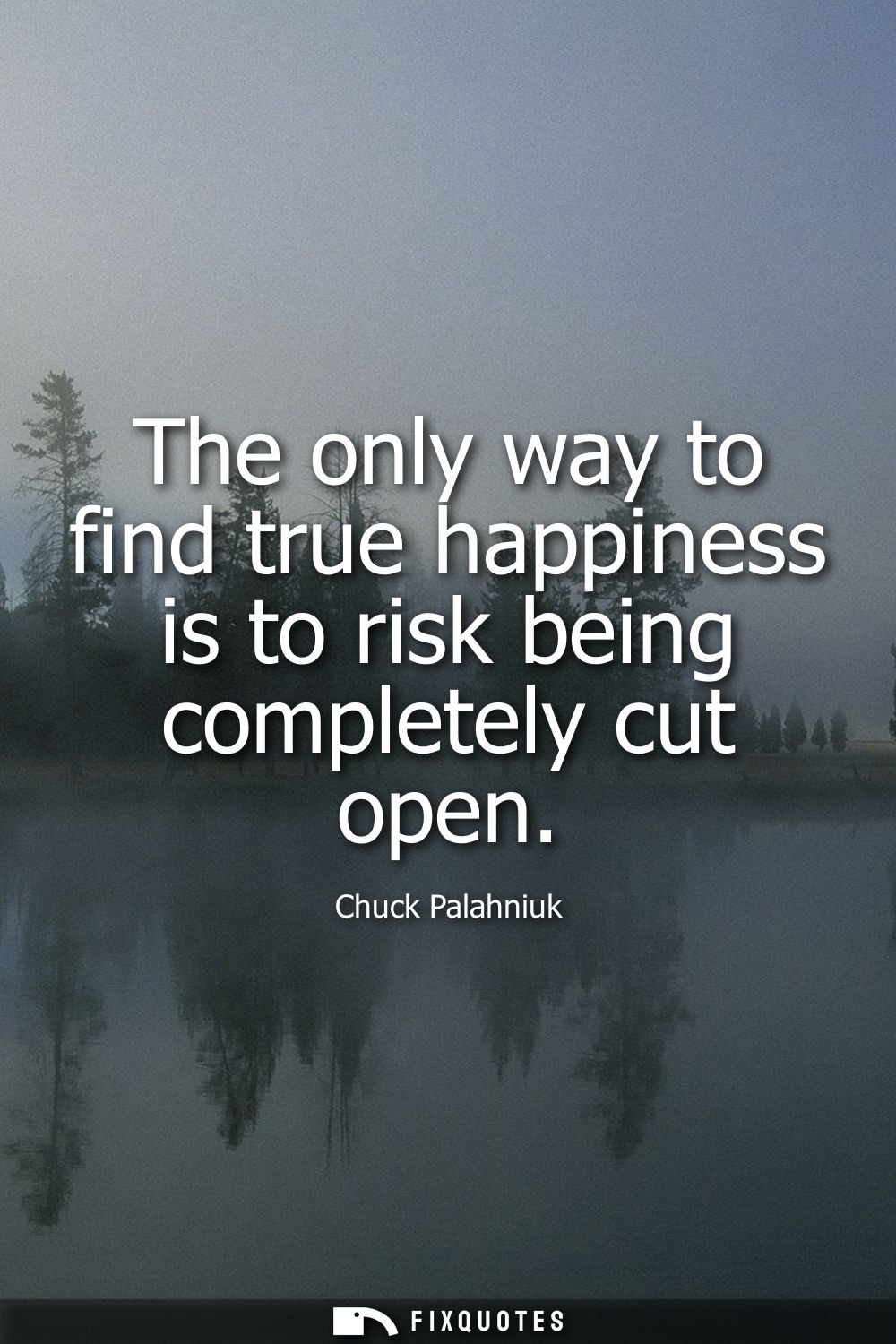
"The only way to find true happiness is to risk being completely cut open"
About this Quote
The specific intent is provocation with a moral edge: stop mistaking comfort for authenticity. Palahniuk’s fiction (especially Fight Club and the broader “transgressive” tradition he helped popularize) is obsessed with the ways modern life sedates people into performative identities. This sentence is a scalpel aimed at that anesthesia. Risk, here, isn’t adrenaline; it’s exposure. It’s confession, vulnerability, the willingness to have your narratives about yourself dismantled in public and still remain.
Subtextually, “cut open” also reads as a critique of masculine containment and consumer-era self-possession: the cultural training to stay sealed, efficient, invulnerable. Happiness becomes less a reward than a side effect of rupture - what leaks out when you stop managing impressions. The line works because it refuses to flatter the reader. It implies you’re not unhappy because you lack gratitude; you’re unhappy because you’re armoring yourself, and armor, by design, kills sensation.
Quote Details
| Topic | Happiness |
|---|---|
| Source | Help us find the source |
| Cite |
Citation Formats
APA Style (7th ed.)
Palahniuk, Chuck. (2026, January 17). The only way to find true happiness is to risk being completely cut open. FixQuotes. https://fixquotes.com/quotes/the-only-way-to-find-true-happiness-is-to-risk-33154/
Chicago Style
Palahniuk, Chuck. "The only way to find true happiness is to risk being completely cut open." FixQuotes. January 17, 2026. https://fixquotes.com/quotes/the-only-way-to-find-true-happiness-is-to-risk-33154/.
MLA Style (9th ed.)
"The only way to find true happiness is to risk being completely cut open." FixQuotes, 17 Jan. 2026, https://fixquotes.com/quotes/the-only-way-to-find-true-happiness-is-to-risk-33154/. Accessed 30 Mar. 2026.