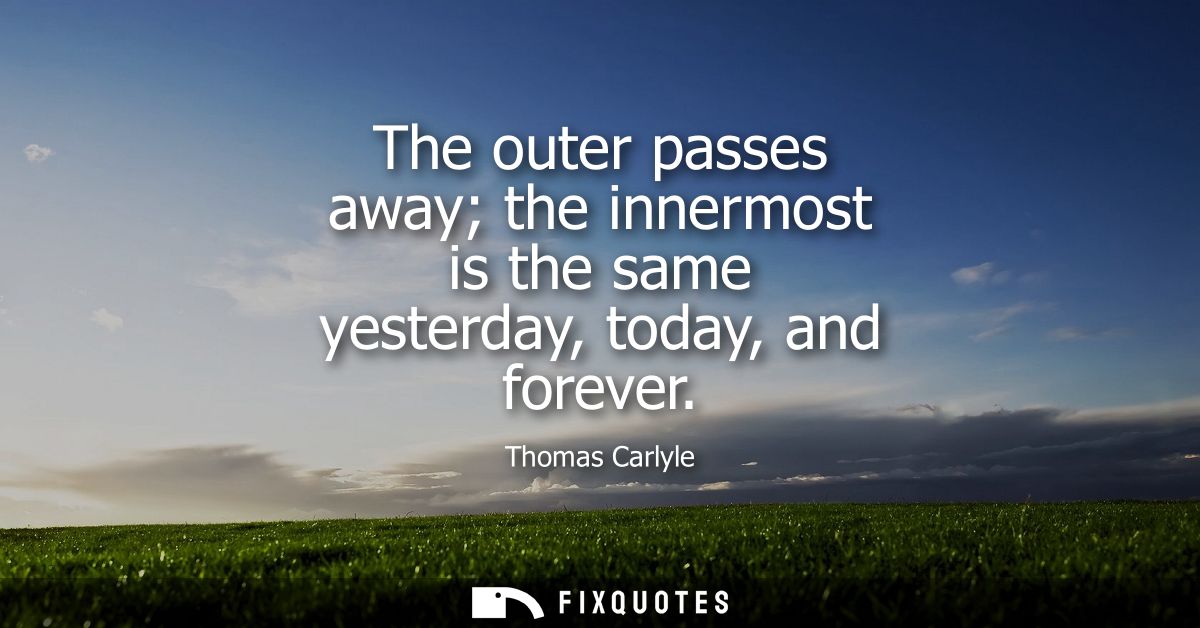
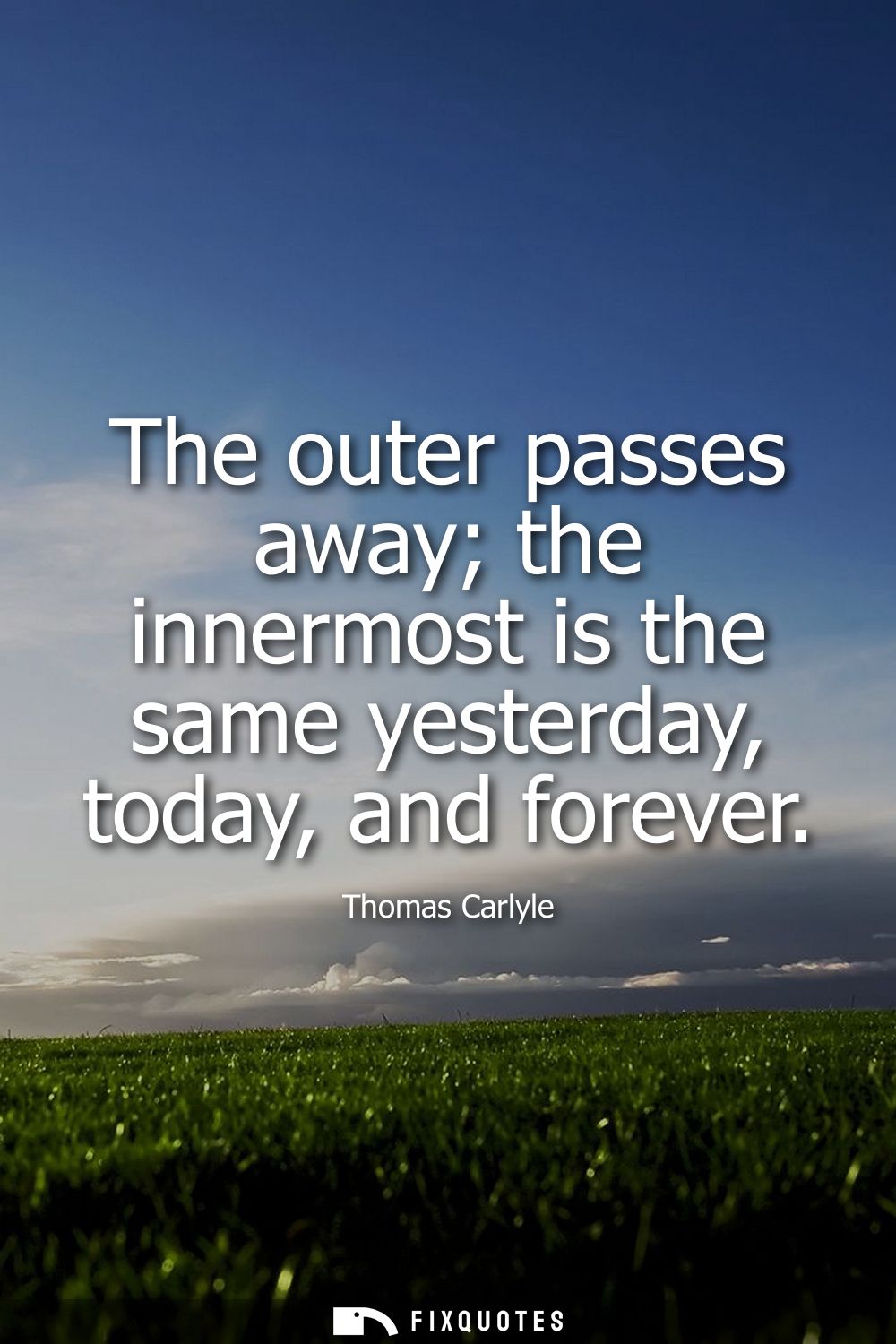
"The outer passes away; the innermost is the same yesterday, today, and forever"
About this Quote
The subtext is a rebuke to a century that believed it was inventing the future at industrial speed. Carlyle watched old certainties crack under factories, revolutions, and mass politics, and he distrusted the era’s confidence that progress automatically equals meaning. By insisting the “innermost” is “the same yesterday, today, and forever,” he’s staking out a moral constant beneath the churn - conscience, spiritual reality, character, the soul. The rhythmic tricolon (“yesterday, today, and forever”) borrows biblical gravitas, smuggling authority into a compact claim.
Intent matters here: this isn’t a soft self-help reassurance. It’s Carlyle drawing a hard line between the perishable and the essential, implying that if you anchor yourself in externals - wealth, public applause, the latest ideology - you’ve already lost. In a culture addicted to novelty, he offers permanence not as comfort, but as a standard you’ll be judged against.
Quote Details
| Topic | Wisdom |
|---|---|
| Source | Help us find the source |
| Cite |
Citation Formats
APA Style (7th ed.)
Carlyle, Thomas. (2026, January 16). The outer passes away; the innermost is the same yesterday, today, and forever. FixQuotes. https://fixquotes.com/quotes/the-outer-passes-away-the-innermost-is-the-same-133898/
Chicago Style
Carlyle, Thomas. "The outer passes away; the innermost is the same yesterday, today, and forever." FixQuotes. January 16, 2026. https://fixquotes.com/quotes/the-outer-passes-away-the-innermost-is-the-same-133898/.
MLA Style (9th ed.)
"The outer passes away; the innermost is the same yesterday, today, and forever." FixQuotes, 16 Jan. 2026, https://fixquotes.com/quotes/the-outer-passes-away-the-innermost-is-the-same-133898/. Accessed 24 Mar. 2026.