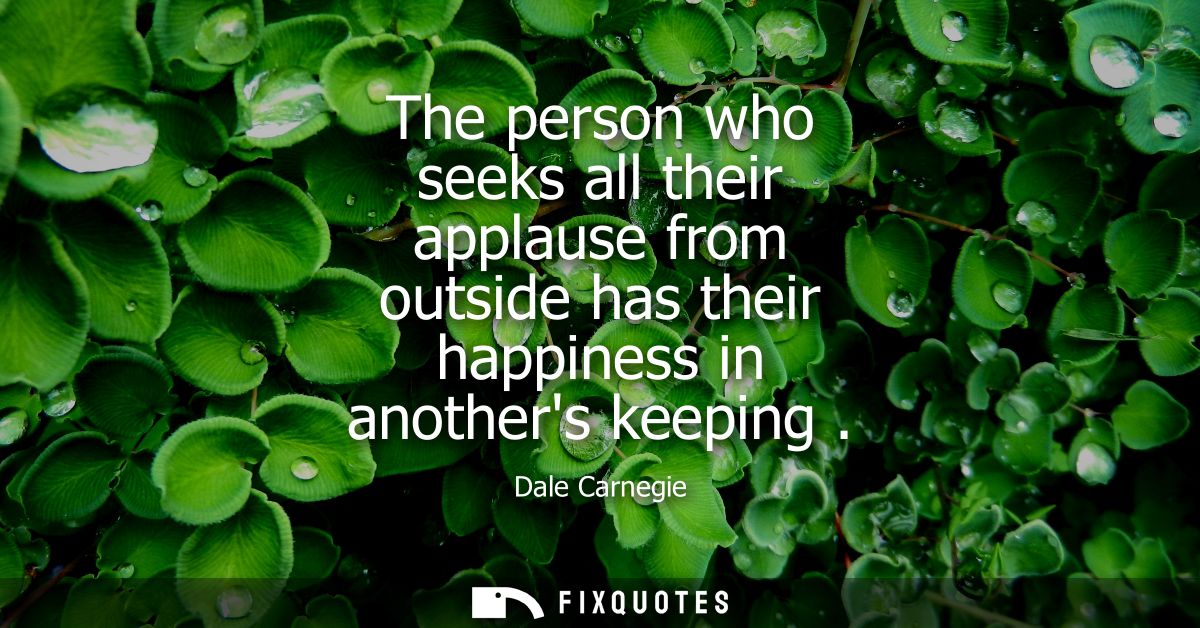
"The person who seeks all their applause from outside has their happiness in another's keeping "
About this Quote
The subtext is classic Carnegie-era pragmatism dressed as moral advice. Writing in the first half of the 20th century, he helped translate a rapidly modernizing America’s anxieties into actionable self-management: how to be liked, how to perform confidence, how to survive the social marketplace. This quote exposes the trap inside that very marketplace. Applause is volatile, distributed by fickle audiences, office politics, and shifting norms. Build your self-worth on it and you become easy to steer: flatterable, punishable, endlessly “improvable” in the direction other people prefer.
What makes it work rhetorically is its quiet threat. Carnegie doesn’t scold vanity; he frames dependency as a loss of control. The intent is less spiritual than strategic: keep your internal standards sturdy so external approval can be a bonus, not a leash. In a culture that increasingly monetizes attention, the warning feels less like etiquette and more like survival advice.
Quote Details
| Topic | Self-Love |
|---|---|
| Source | Help us find the source |
| Cite |
Citation Formats
APA Style (7th ed.)
Carnegie, Dale. (2026, January 15). The person who seeks all their applause from outside has their happiness in another's keeping . FixQuotes. https://fixquotes.com/quotes/the-person-who-seeks-all-their-applause-from-6070/
Chicago Style
Carnegie, Dale. "The person who seeks all their applause from outside has their happiness in another's keeping ." FixQuotes. January 15, 2026. https://fixquotes.com/quotes/the-person-who-seeks-all-their-applause-from-6070/.
MLA Style (9th ed.)
"The person who seeks all their applause from outside has their happiness in another's keeping ." FixQuotes, 15 Jan. 2026, https://fixquotes.com/quotes/the-person-who-seeks-all-their-applause-from-6070/. Accessed 13 Mar. 2026.