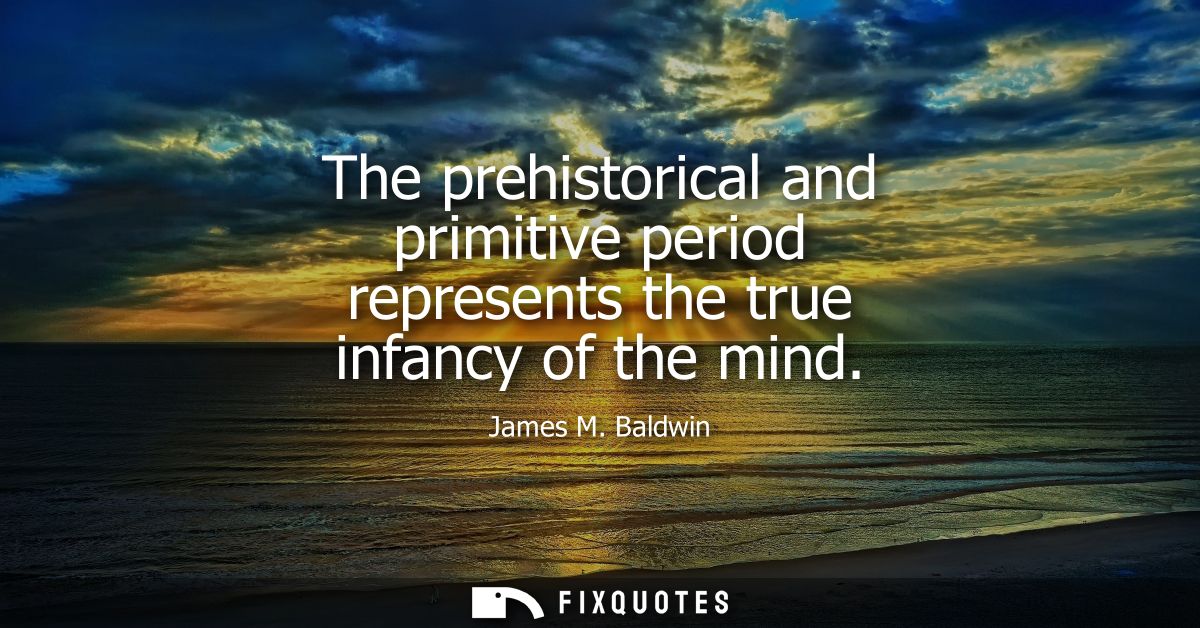
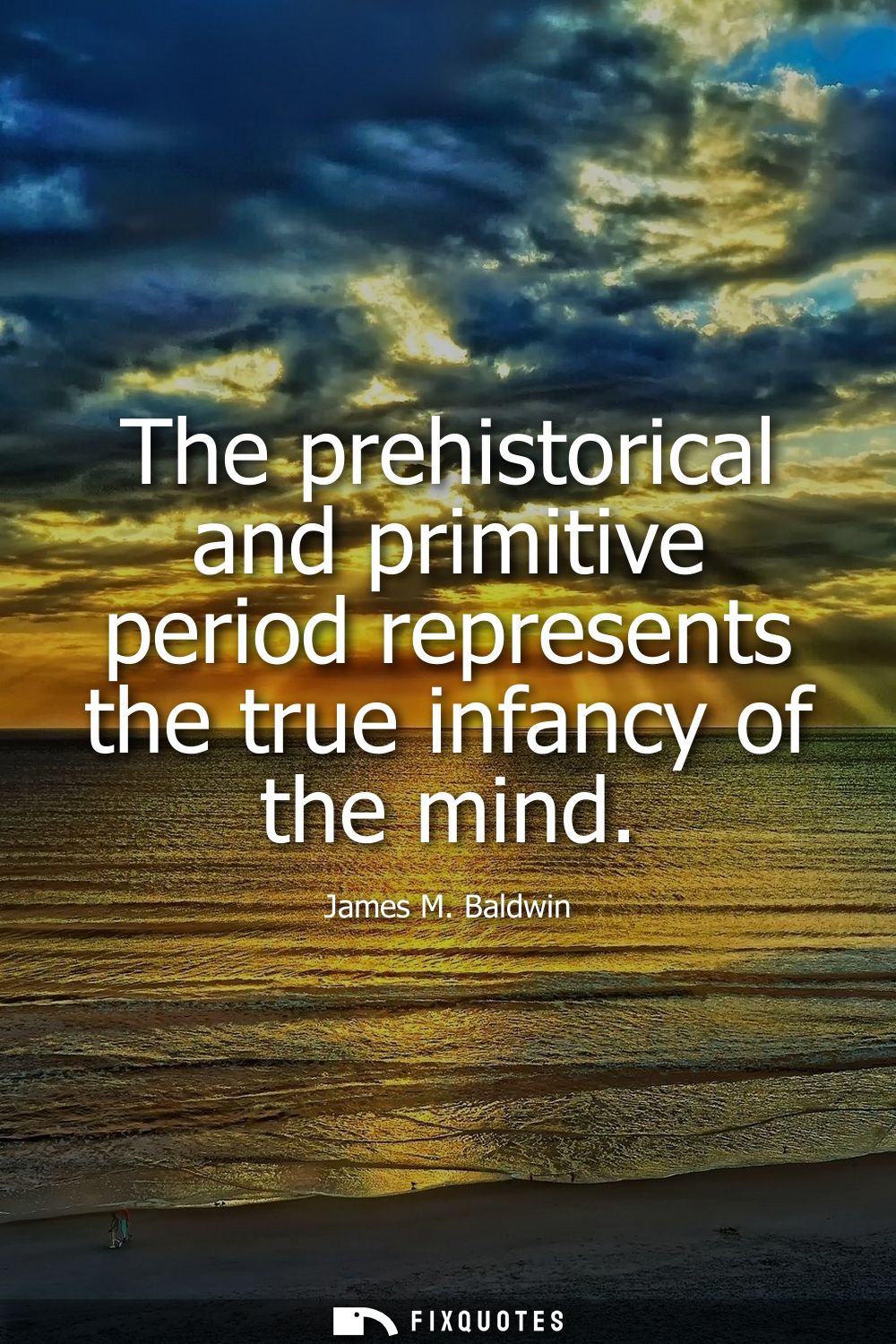
"The prehistorical and primitive period represents the true infancy of the mind"
About this Quote
The subtext is a hierarchy. "Prehistorical and primitive" collapses radically different cultures and epochs into a single lower rung, then recasts them as necessary but surpassed. "True infancy" sounds almost affectionate, yet it also licenses condescension: infancy is charming, but it is also incompetent, dependent, not to be trusted with authority. In the early 20th century, that logic traveled easily into colonial governance, racial science, and "civilizing" missions, where ruling others could be narrated as caretaking.
Why the line works is its rhetorical economy. "Infancy" turns an abstract claim about cognition into an image you can feel: the mind crawling before it walks. It makes progress feel natural, inevitable, even moral. Baldwin isn't merely describing early mental life; he's underwriting a politics of development where some societies get cast as the past, and others as the future.
Quote Details
| Topic | Deep |
|---|---|
| Source | Help us find the source |
| Cite |
Citation Formats
APA Style (7th ed.)
Baldwin, James M. (2026, January 15). The prehistorical and primitive period represents the true infancy of the mind. FixQuotes. https://fixquotes.com/quotes/the-prehistorical-and-primitive-period-represents-158563/
Chicago Style
Baldwin, James M. "The prehistorical and primitive period represents the true infancy of the mind." FixQuotes. January 15, 2026. https://fixquotes.com/quotes/the-prehistorical-and-primitive-period-represents-158563/.
MLA Style (9th ed.)
"The prehistorical and primitive period represents the true infancy of the mind." FixQuotes, 15 Jan. 2026, https://fixquotes.com/quotes/the-prehistorical-and-primitive-period-represents-158563/. Accessed 27 Mar. 2026.