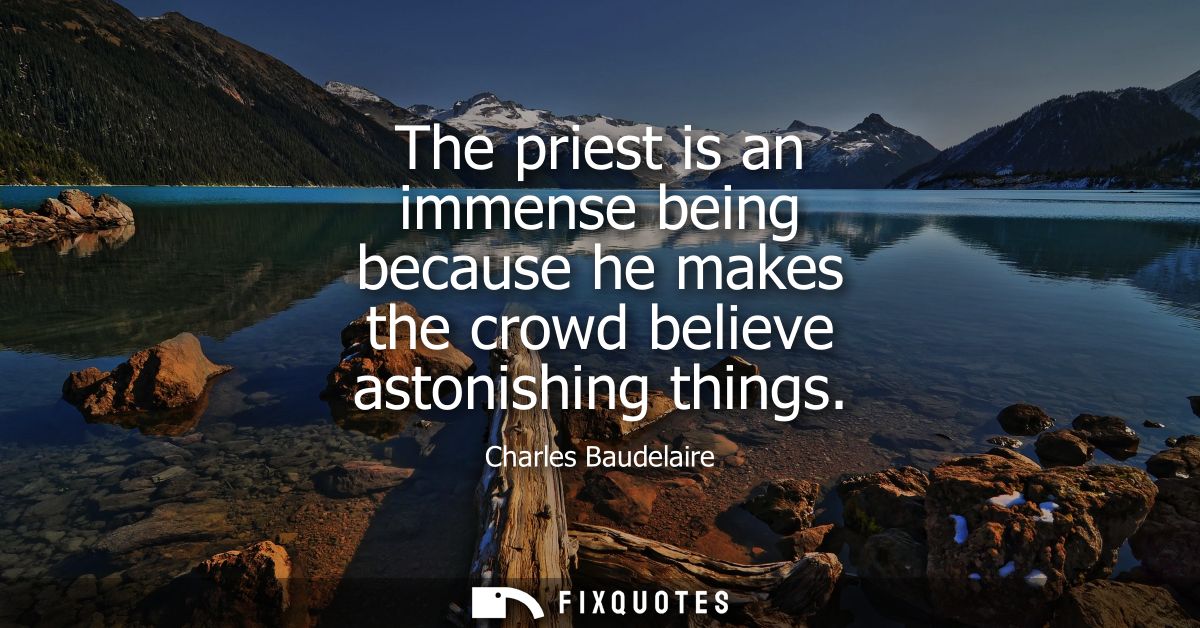
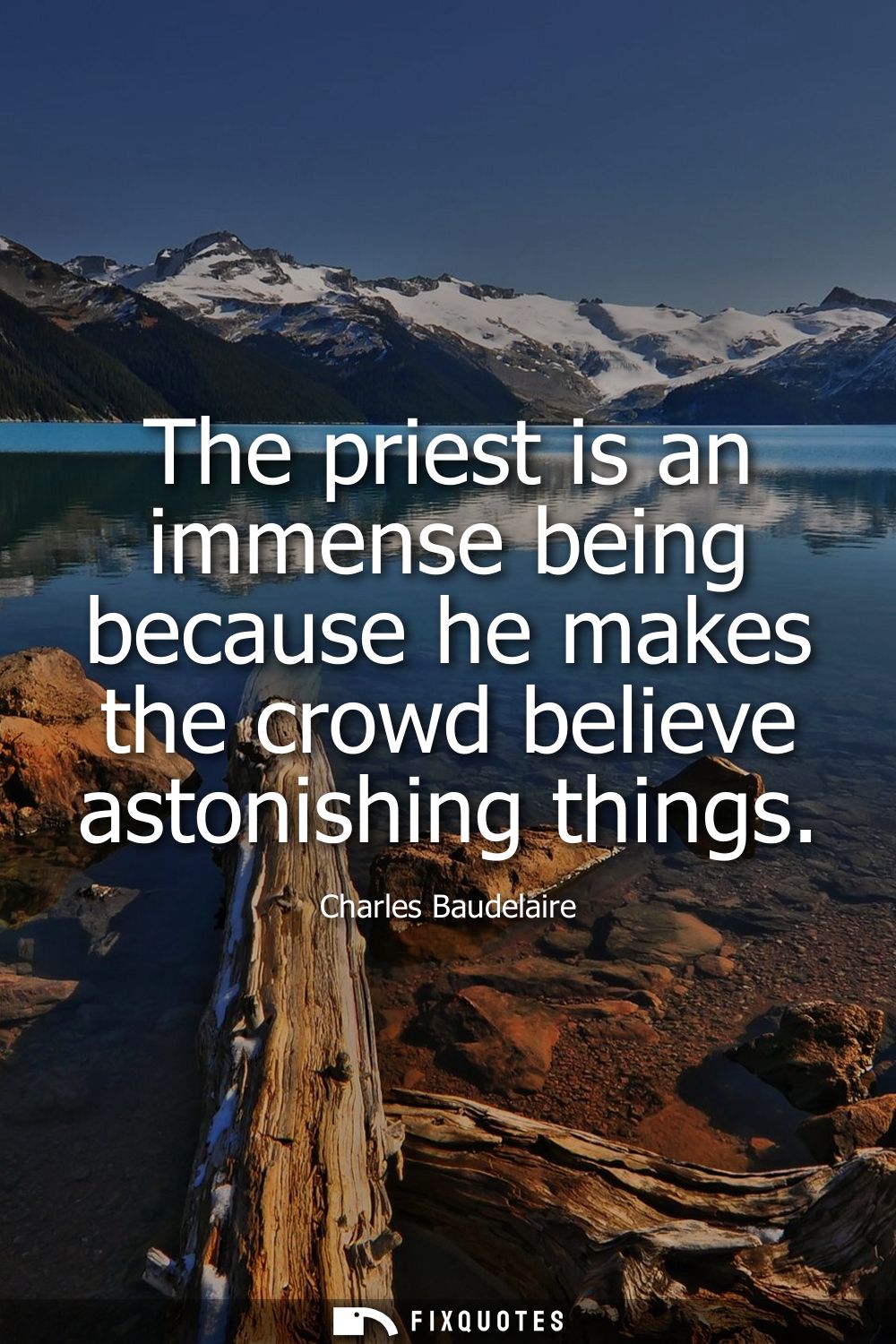
"The priest is an immense being because he makes the crowd believe astonishing things"
About this Quote
Baudelaire is writing out of 19th-century France, where Catholic authority was being renegotiated amid modernization, political upheaval, and a growing bourgeois public. The “astonishing things” are not just miracles in the doctrinal sense; they’re the audacity of any narrative that asks people to suspend ordinary skepticism. He’s fascinated by the mechanics: how language, ritual, architecture, and performance turn abstractions into lived reality. The priest is less a spiritual guide than a virtuoso of collective imagination.
Subtext: the crowd is complicit. Baudelaire doesn’t frame belief as mere deception imposed from above; he suggests a transaction. The priest offers astonishment, the crowd offers obedience and awe. That’s why the sentence stings: it demystifies charisma without denying its power. In Baudelaire’s world, modernity doesn’t eliminate enchantment; it relocates it into institutions and operators who can stage it convincingly. Replace “priest” with influencer, pundit, or founder and the anatomy remains: authority is the art of making improbable things feel necessary, shared, and true enough to organize a multitude.
Quote Details
| Topic | Faith |
|---|---|
| Source | Help us find the source |
| Cite |
Citation Formats
APA Style (7th ed.)
Baudelaire, Charles. (2026, January 17). The priest is an immense being because he makes the crowd believe astonishing things. FixQuotes. https://fixquotes.com/quotes/the-priest-is-an-immense-being-because-he-makes-45814/
Chicago Style
Baudelaire, Charles. "The priest is an immense being because he makes the crowd believe astonishing things." FixQuotes. January 17, 2026. https://fixquotes.com/quotes/the-priest-is-an-immense-being-because-he-makes-45814/.
MLA Style (9th ed.)
"The priest is an immense being because he makes the crowd believe astonishing things." FixQuotes, 17 Jan. 2026, https://fixquotes.com/quotes/the-priest-is-an-immense-being-because-he-makes-45814/. Accessed 31 Mar. 2026.