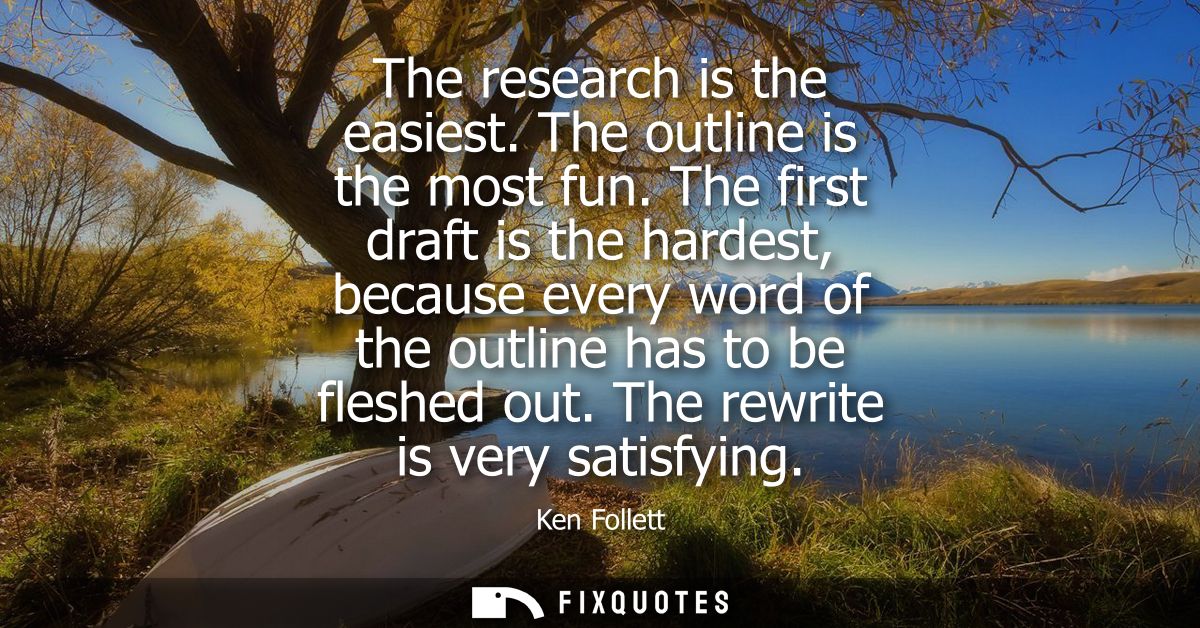
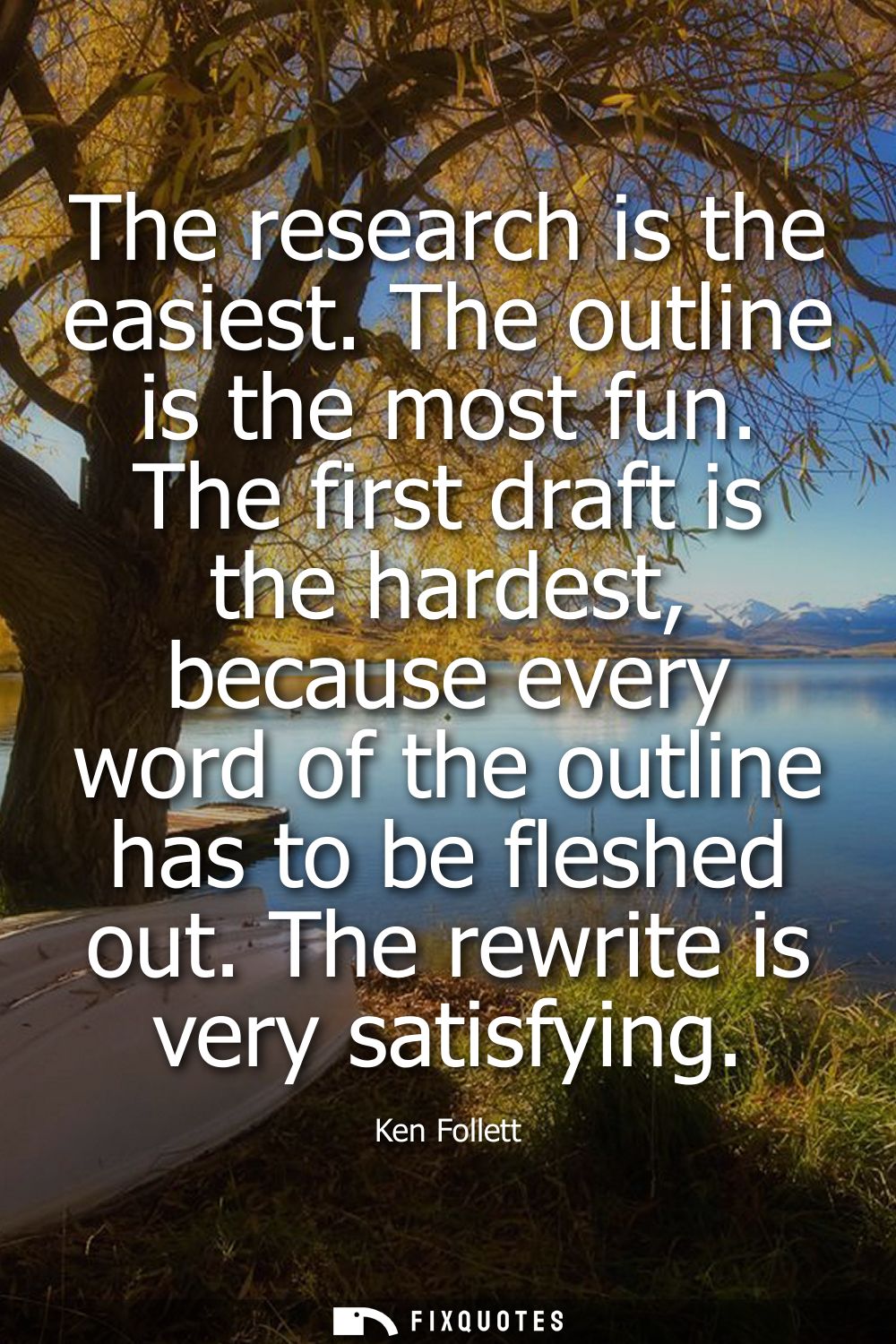
"The research is the easiest. The outline is the most fun. The first draft is the hardest, because every word of the outline has to be fleshed out. The rewrite is very satisfying"
About this Quote
Then comes the outline, framed not as bureaucratic scaffolding but as play. "The most fun" is a sly admission that control is pleasurable: in the outline you get to be god, arranging disasters, reveals, and reversals without paying the emotional cost of making any of it persuasive on the page. It's story as strategy.
"The first draft is the hardest" lands because Follett names the specific cruelty: converting symbolic placeholders into sentences. Outlines are promises; drafts are payments. Every bullet point becomes a demand for voice, rhythm, motive, and continuity. This is where writers discover that "and then" isn't a plot, and that characters won't perform on command unless you earn their choices word by word.
His closing turn - "The rewrite is very satisfying" - is the professional's tell. Satisfaction comes from power restored. Revision is where chaos becomes craft, where you stop being judged by what you haven't written and start shaping what exists. In the context of Follett's career - big, intricate narratives built to be devoured - it's also a quiet defense of discipline: the magic isn't the spark, it's the willingness to return and refine.
Quote Details
| Topic | Writing |
|---|---|
| Source | Help us find the source |
| Cite |
Citation Formats
APA Style (7th ed.)
Follett, Ken. (2026, January 15). The research is the easiest. The outline is the most fun. The first draft is the hardest, because every word of the outline has to be fleshed out. The rewrite is very satisfying. FixQuotes. https://fixquotes.com/quotes/the-research-is-the-easiest-the-outline-is-the-156481/
Chicago Style
Follett, Ken. "The research is the easiest. The outline is the most fun. The first draft is the hardest, because every word of the outline has to be fleshed out. The rewrite is very satisfying." FixQuotes. January 15, 2026. https://fixquotes.com/quotes/the-research-is-the-easiest-the-outline-is-the-156481/.
MLA Style (9th ed.)
"The research is the easiest. The outline is the most fun. The first draft is the hardest, because every word of the outline has to be fleshed out. The rewrite is very satisfying." FixQuotes, 15 Jan. 2026, https://fixquotes.com/quotes/the-research-is-the-easiest-the-outline-is-the-156481/. Accessed 28 Mar. 2026.