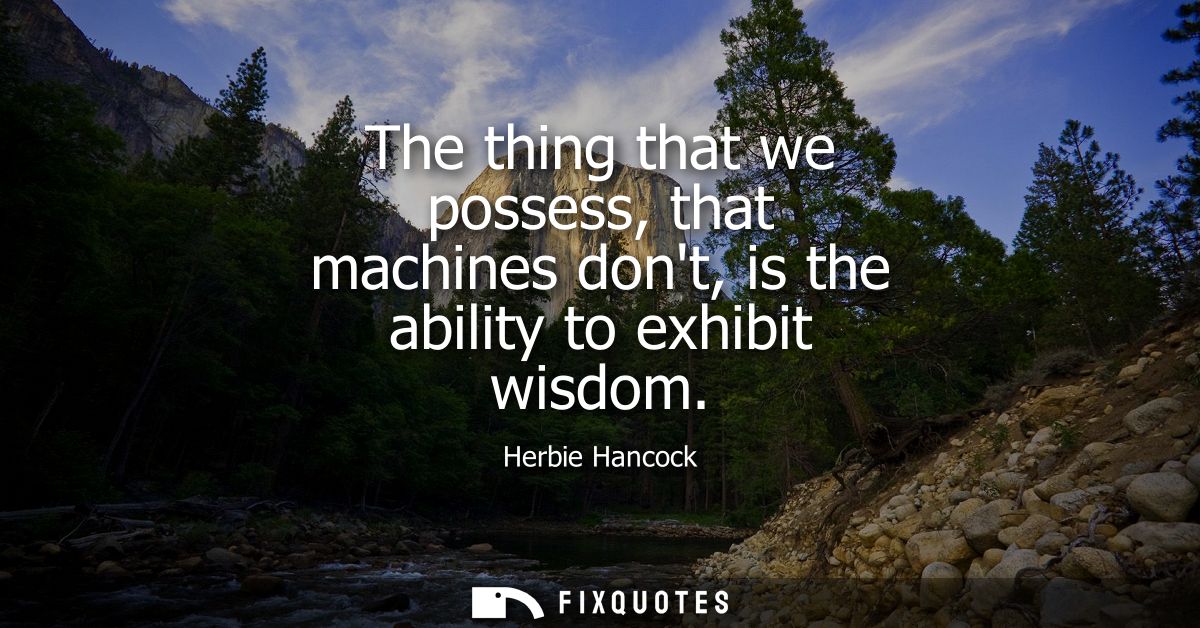
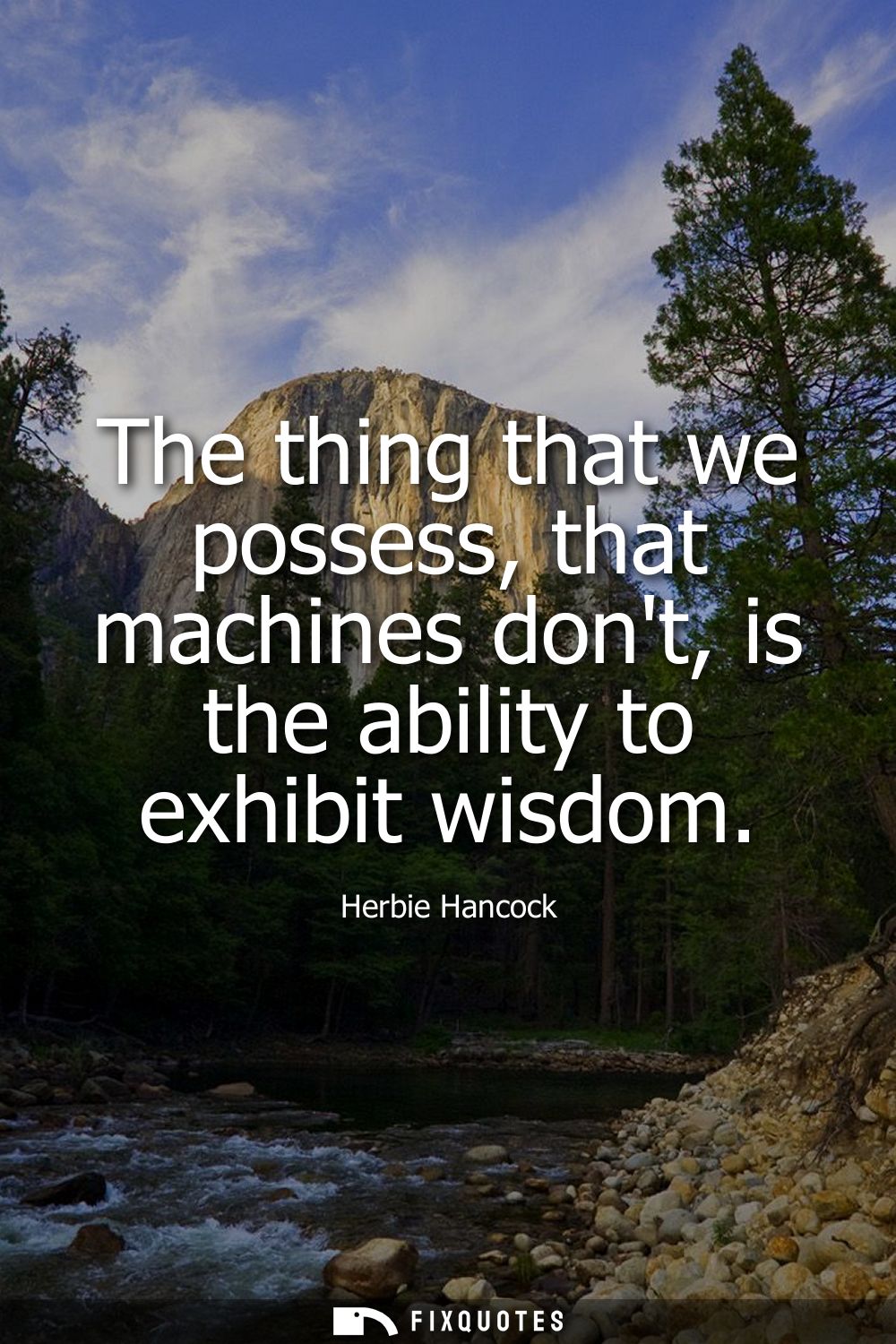
"The thing that we possess, that machines don't, is the ability to exhibit wisdom"
About this Quote
Coming from Hancock, the subtext is also artistic. Jazz is a lifelong practice of listening, responding, and choosing what not to play. A machine can generate patterns that resemble style; it can even “improvise” statistically. Hancock is pointing to the difference between plausible output and lived discernment: knowing when to push, when to lay back, when to protect the human in the room. That’s wisdom as timing, empathy, restraint.
There’s an implicit warning here, too: if wisdom is our edge, we can’t outsource it. The more we hand judgment to systems optimized for coherence and confidence, the more we risk becoming passive operators of other people’s models. Hancock’s intent reads less like techno-optimism than a challenge to mature: if machines can mimic our cleverness, we’d better cultivate the part of ourselves that can’t be scraped from data - the part that asks, “Should we?” not just “Can we?”
Quote Details
| Topic | Wisdom |
|---|---|
| Source | Help us find the source |
| Cite |
Citation Formats
APA Style (7th ed.)
Hancock, Herbie. (2026, January 15). The thing that we possess, that machines don't, is the ability to exhibit wisdom. FixQuotes. https://fixquotes.com/quotes/the-thing-that-we-possess-that-machines-dont-is-149161/
Chicago Style
Hancock, Herbie. "The thing that we possess, that machines don't, is the ability to exhibit wisdom." FixQuotes. January 15, 2026. https://fixquotes.com/quotes/the-thing-that-we-possess-that-machines-dont-is-149161/.
MLA Style (9th ed.)
"The thing that we possess, that machines don't, is the ability to exhibit wisdom." FixQuotes, 15 Jan. 2026, https://fixquotes.com/quotes/the-thing-that-we-possess-that-machines-dont-is-149161/. Accessed 24 Mar. 2026.