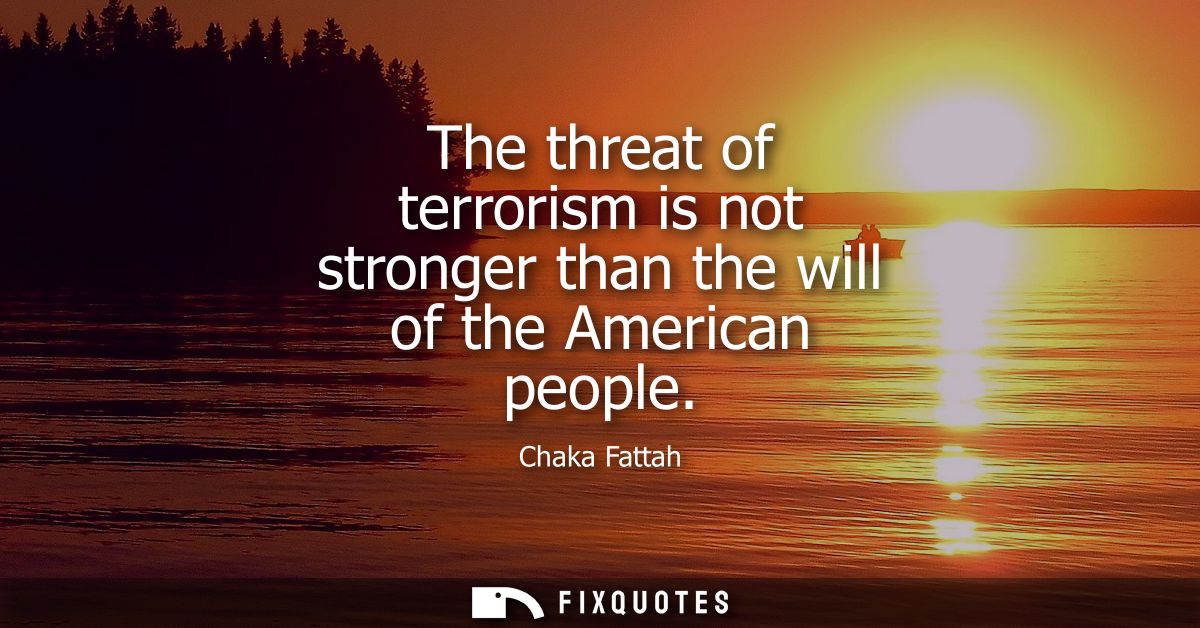
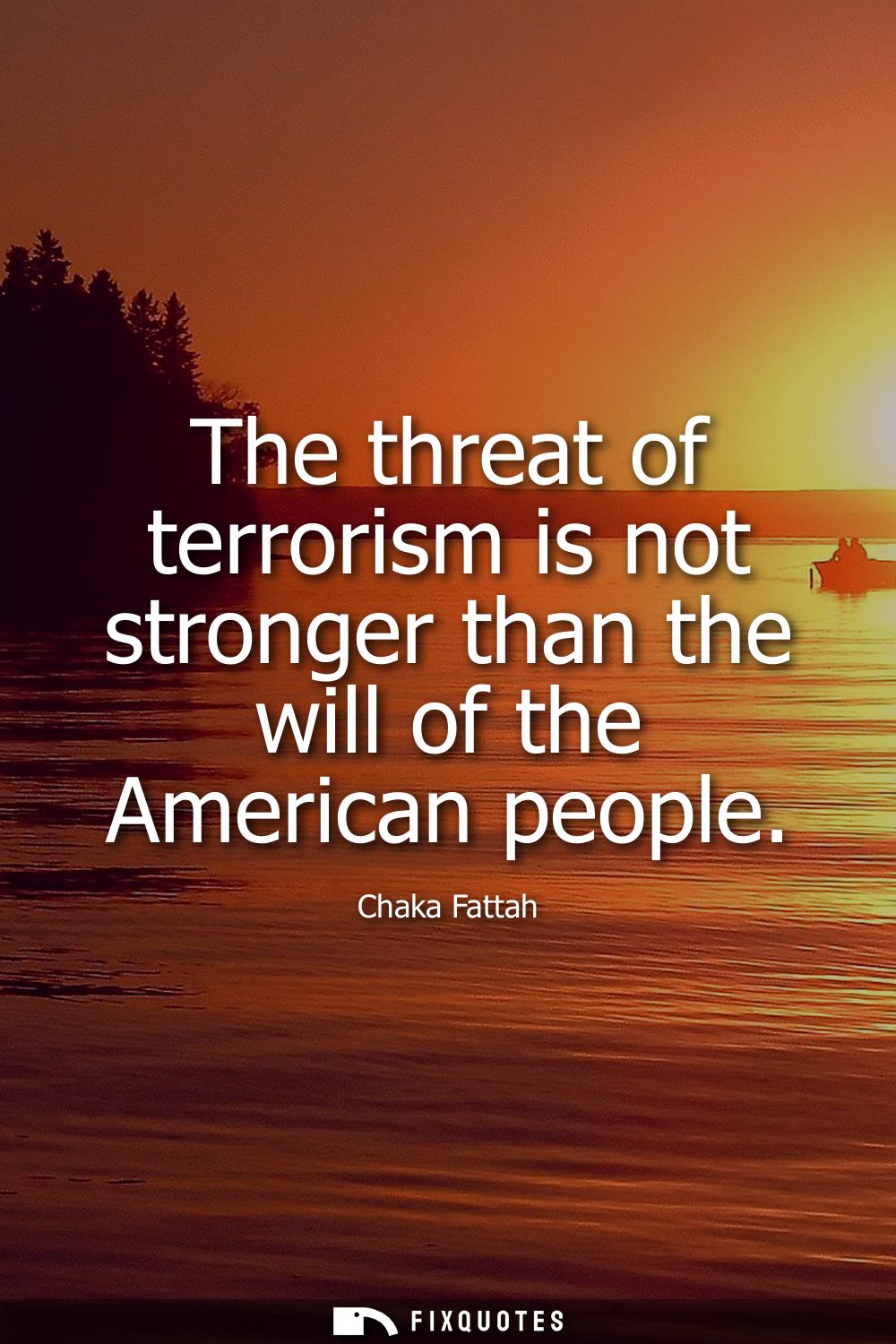
"The threat of terrorism is not stronger than the will of the American people"
About this Quote
The wording matters. “Not stronger” is deliberately comparative, not absolute. It concedes danger without granting it dominance, a rhetorical move that reassures without sounding naive. “Will of the American people” is an invocation of a collective spine, the idea that legitimacy and stamina are democratic resources. It also quietly asks citizens to participate: your daily choices, your tolerance for pluralism, your willingness to keep public life open, are cast as part of national defense.
As a politician’s statement, it doubles as pressure on institutions. If “the people” have the will, leaders must meet it with competence rather than panic - avoiding overreach that hands terrorists a secondary victory: a more fearful, less free country. The subtext is a warning against letting terrorism set the agenda. The intent is to keep the story from becoming “they can make us change” and to insist, instead, on a steadier American self-image: resilient, unbowed, and skeptical of fear as a governing principle.
Quote Details
| Topic | Freedom |
|---|---|
| Source | Help us find the source |
| Cite |
Citation Formats
APA Style (7th ed.)
Fattah, Chaka. (2026, January 16). The threat of terrorism is not stronger than the will of the American people. FixQuotes. https://fixquotes.com/quotes/the-threat-of-terrorism-is-not-stronger-than-the-132100/
Chicago Style
Fattah, Chaka. "The threat of terrorism is not stronger than the will of the American people." FixQuotes. January 16, 2026. https://fixquotes.com/quotes/the-threat-of-terrorism-is-not-stronger-than-the-132100/.
MLA Style (9th ed.)
"The threat of terrorism is not stronger than the will of the American people." FixQuotes, 16 Jan. 2026, https://fixquotes.com/quotes/the-threat-of-terrorism-is-not-stronger-than-the-132100/. Accessed 20 Mar. 2026.