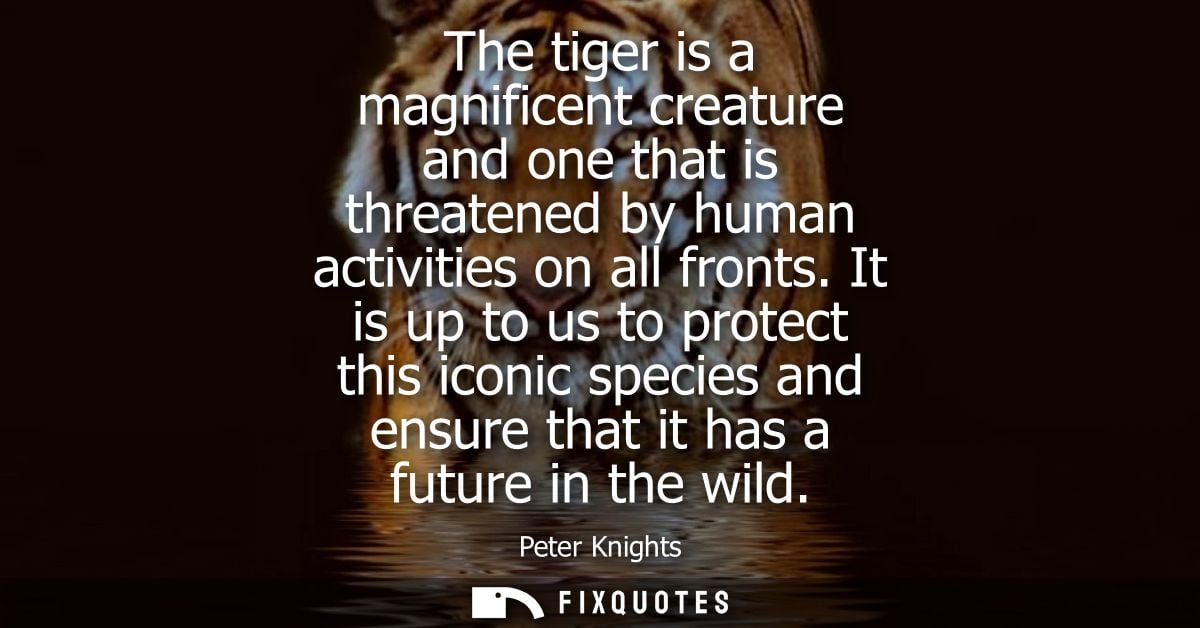
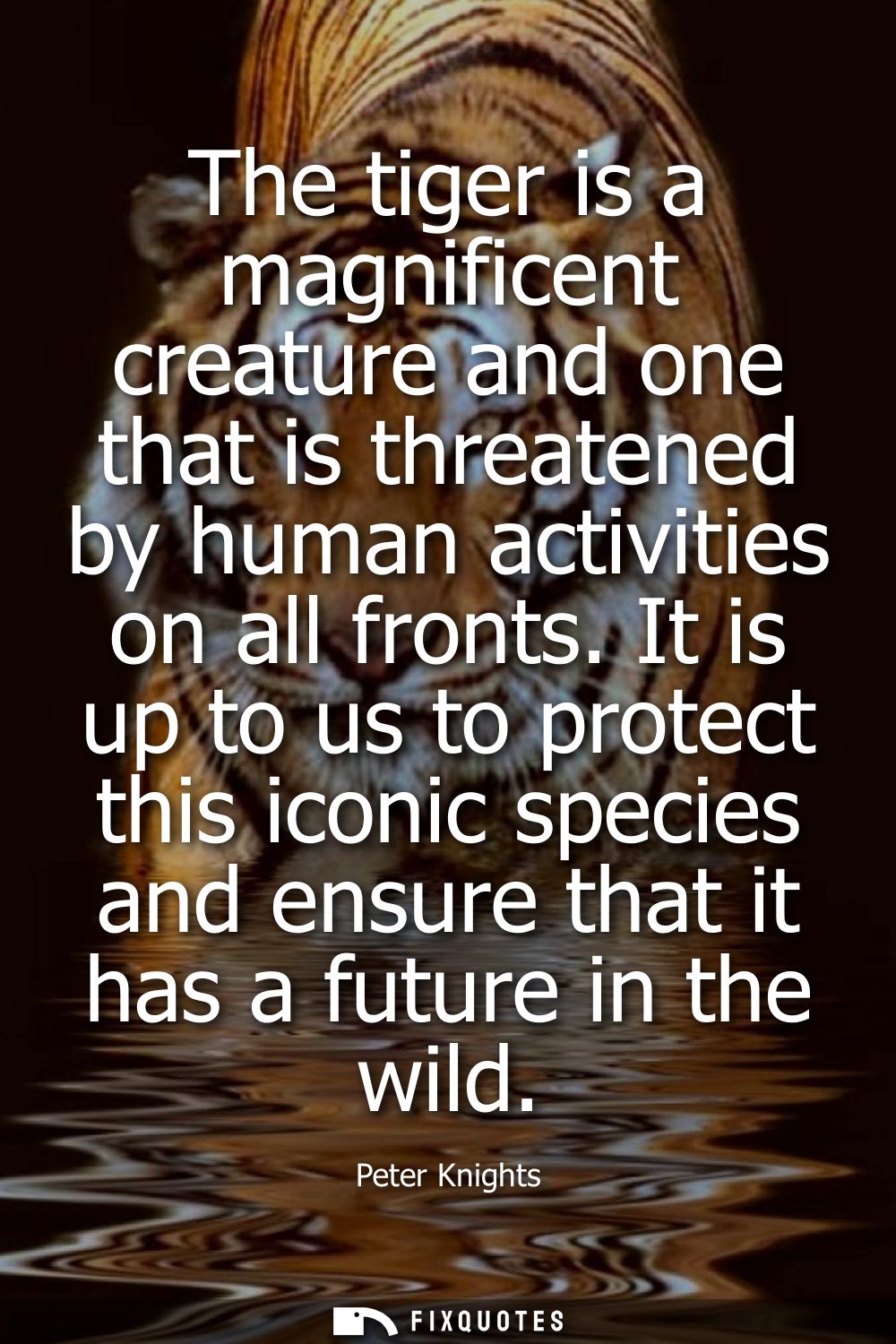
"The tiger is a magnificent creature and one that is threatened by human activities on all fronts. It is up to us to protect this iconic species and ensure that it has a future in the wild"
About this Quote
The line "threatened by human activities on all fronts" is deliberately broad, almost prosecutorial. It refuses the comforting fiction that tigers are vanishing because of one villain or one bad region. "All fronts" sweeps in habitat fragmentation, poaching, trafficking, deforestation, infrastructure, climate stress, even the soft violence of consumer demand. The vagueness is strategic: it prevents the listener from outsourcing blame to faraway criminals while letting governments, corporations, and ordinary buyers feel implicated without needing a footnote.
"It is up to us" is the rhetorical pivot from lament to mandate. Knights isn’t just describing extinction risk; he’s reassigning agency. That pronoun "us" is a coalition-builder, designed to collapse the distance between the donor, the voter, the policymaker, and the person scrolling past. Then comes the clincher: "a future in the wild". Not in zoos, not as a logo, not as a bedtime story. The subtext is a warning against symbolic conservation that keeps the image of the tiger while surrendering the living animal. The quote works because it treats survival as a civic project, not a niche cause.
Quote Details
| Topic | Nature |
|---|---|
| Source | Help us find the source |
| Featured | This quote was our Quote of the Day on March 17, 2023 |
| Cite |
Citation Formats
APA Style (7th ed.)
Knights, Peter. (2026, January 11). The tiger is a magnificent creature and one that is threatened by human activities on all fronts. It is up to us to protect this iconic species and ensure that it has a future in the wild. FixQuotes. https://fixquotes.com/quotes/the-tiger-is-a-magnificent-creature-and-one-that-171949/
Chicago Style
Knights, Peter. "The tiger is a magnificent creature and one that is threatened by human activities on all fronts. It is up to us to protect this iconic species and ensure that it has a future in the wild." FixQuotes. January 11, 2026. https://fixquotes.com/quotes/the-tiger-is-a-magnificent-creature-and-one-that-171949/.
MLA Style (9th ed.)
"The tiger is a magnificent creature and one that is threatened by human activities on all fronts. It is up to us to protect this iconic species and ensure that it has a future in the wild." FixQuotes, 11 Jan. 2026, https://fixquotes.com/quotes/the-tiger-is-a-magnificent-creature-and-one-that-171949/. Accessed 16 Feb. 2026.