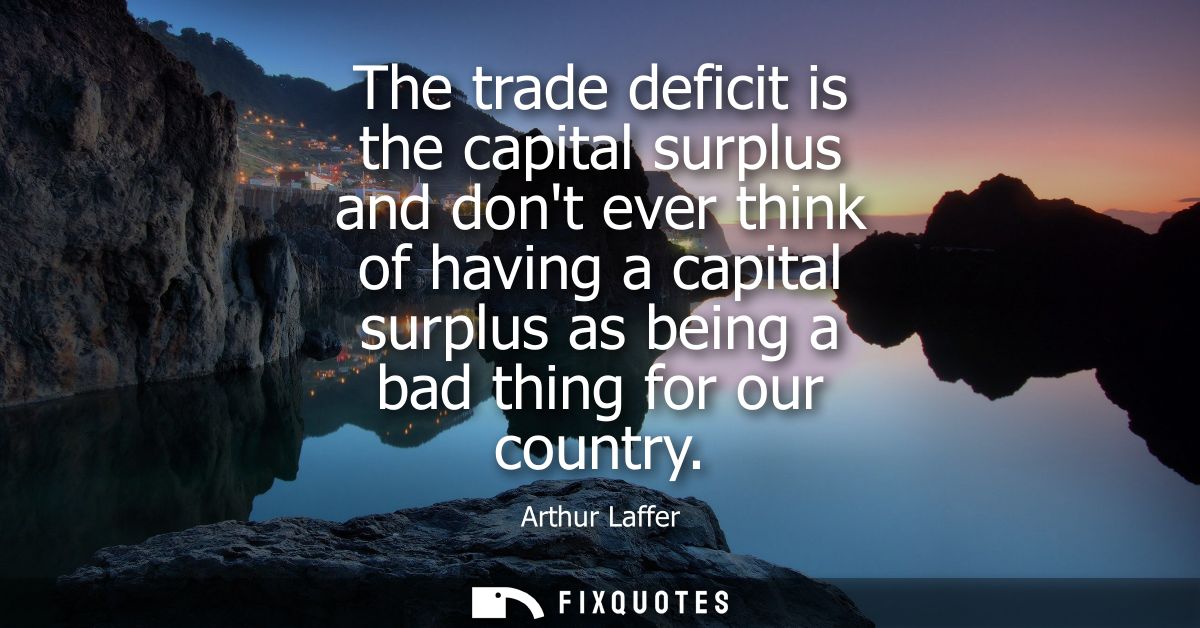
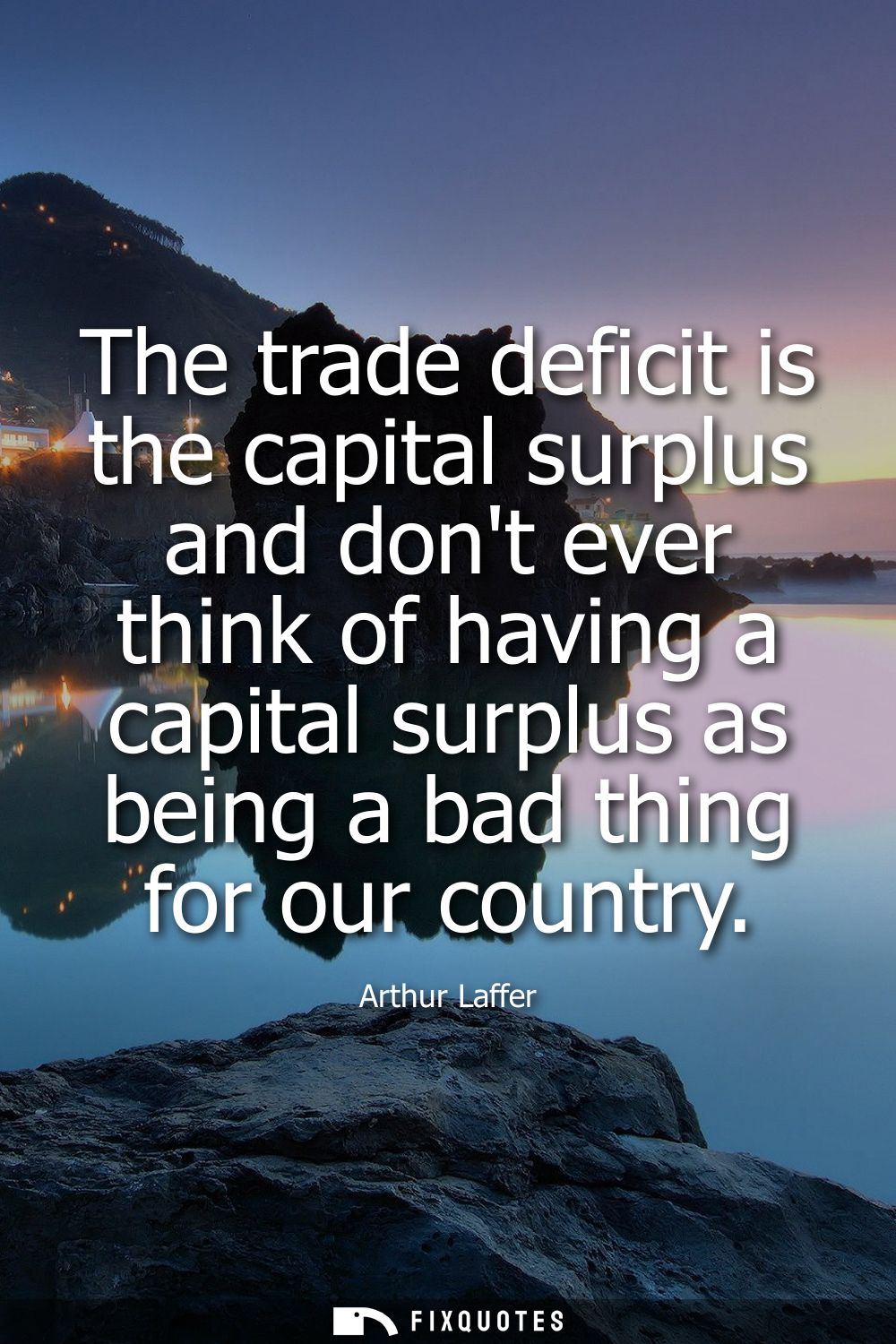
"The trade deficit is the capital surplus, and don't ever think of having a capital surplus as being a bad thing for our country"
About this Quote
The intent is to shift the conversation from goods to finance, from factories to flows. In the balance-of-payments logic, persistent trade deficits are matched by net capital inflows: foreigners buy U.S. assets, fund U.S. borrowing, and help keep interest rates lower than they’d otherwise be. Laffer leans on that relationship to imply that what critics call "losing" is actually global investors voting for U.S. stability.
The subtext is ideological. If the deficit is just the mirror image of capital inflows, then tariffs, industrial policy, and deficit hawkery start to look like nostalgic overreactions. It aligns with a free-market posture: let capital come, let consumers buy, stop treating trade like a zero-sum contest.
The context matters because this move also airbrushes the distributional and strategic anxieties that animate "trade deficit" politics: which sectors get hollowed out, who bears the adjustment costs, and what it means to finance consumption by selling claims on future income. Calling it a "capital surplus" is persuasive because it sounds like strength; it’s incomplete because it treats the nation as one balance sheet, not a country with winners, losers, and vulnerabilities.
Quote Details
| Topic | Money |
|---|---|
| Source | Help us find the source |
| Cite |
Citation Formats
APA Style (7th ed.)
Laffer, Arthur. (2026, February 16). The trade deficit is the capital surplus, and don't ever think of having a capital surplus as being a bad thing for our country. FixQuotes. https://fixquotes.com/quotes/the-trade-deficit-is-the-capital-surplus-and-dont-139075/
Chicago Style
Laffer, Arthur. "The trade deficit is the capital surplus, and don't ever think of having a capital surplus as being a bad thing for our country." FixQuotes. February 16, 2026. https://fixquotes.com/quotes/the-trade-deficit-is-the-capital-surplus-and-dont-139075/.
MLA Style (9th ed.)
"The trade deficit is the capital surplus, and don't ever think of having a capital surplus as being a bad thing for our country." FixQuotes, 16 Feb. 2026, https://fixquotes.com/quotes/the-trade-deficit-is-the-capital-surplus-and-dont-139075/. Accessed 2 Apr. 2026.