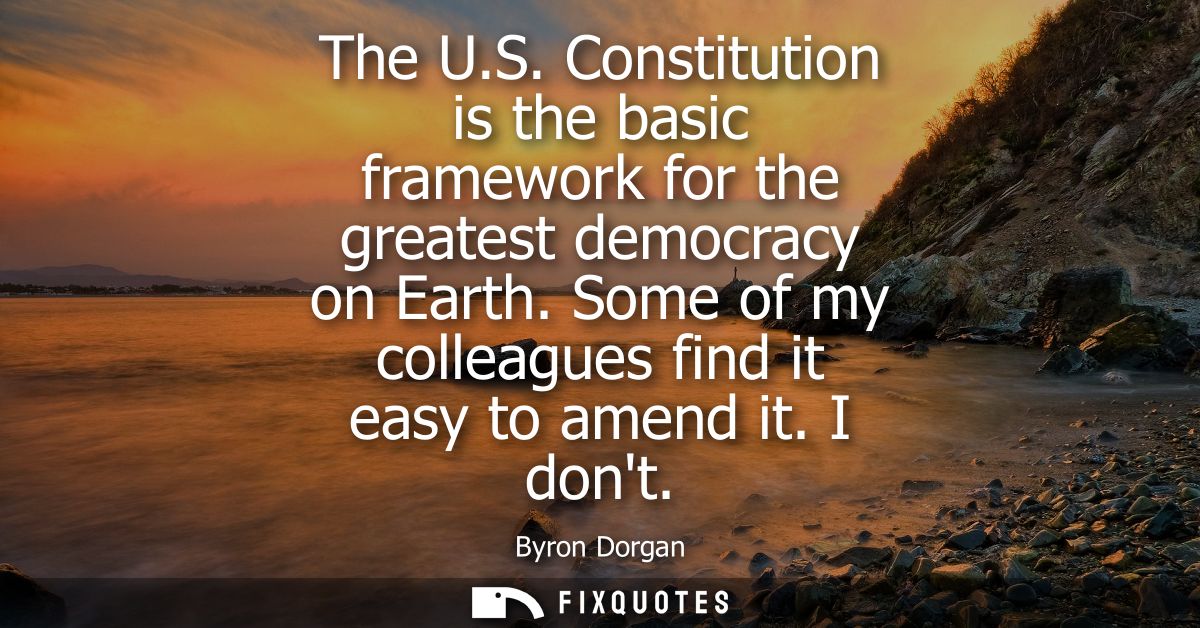
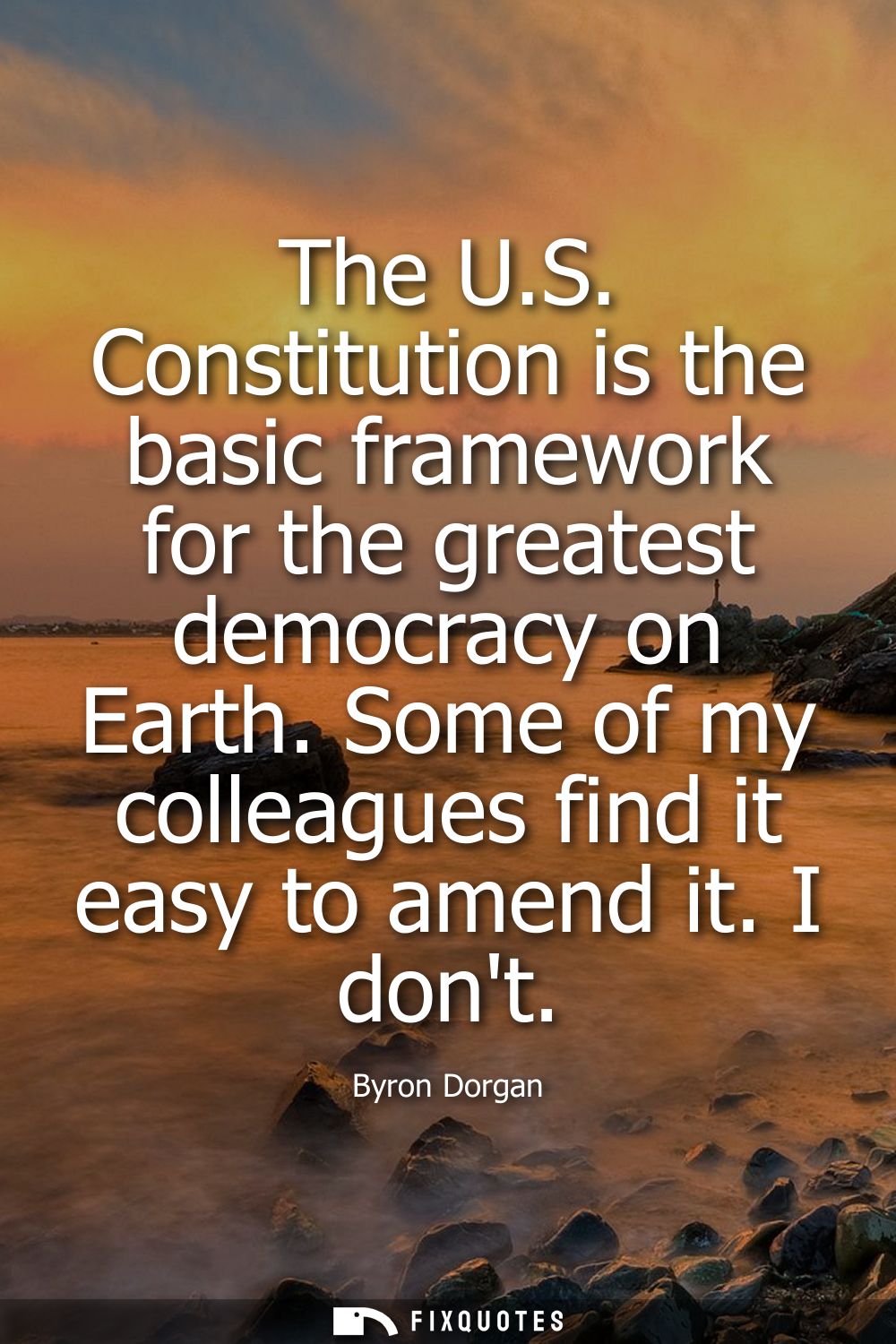
"The U.S. Constitution is the basic framework for the greatest democracy on Earth. Some of my colleagues find it easy to amend it. I don't"
About this Quote
The phrasing matters. "Easy" is doing the heavy lifting, suggesting laziness, opportunism, even constitutional illiteracy. Dorgan positions himself as the adult in the chamber, the custodian of institutional continuity. It's a political move, but not a cheap one: he invites voters to see constitutional change as gravity, not convenience. That posture works especially in an era when amendment talk often arrives as a proxy for culture-war goals (flag burning, same-sex marriage, balanced budget crusades) rather than a response to structural failure. He doesn't argue the merits of any one proposal; he questions the temperament behind proposing it.
There's also a subtle federalist humility in the last clause. "I don't" is almost stubbornly plain, signaling that restraint is a form of leadership. The intent is to make caution sound principled, and to make constitutional maximalism sound unserious. In a body addicted to symbolic messaging, Dorgan's line tries to shame performative tinkering by reminding everyone that the Constitution is supposed to outlast them.
Quote Details
| Topic | Freedom |
|---|---|
| Source | Help us find the source |
| Cite |
Citation Formats
APA Style (7th ed.)
Dorgan, Byron. (2026, January 17). The U.S. Constitution is the basic framework for the greatest democracy on Earth. Some of my colleagues find it easy to amend it. I don't. FixQuotes. https://fixquotes.com/quotes/the-us-constitution-is-the-basic-framework-for-45548/
Chicago Style
Dorgan, Byron. "The U.S. Constitution is the basic framework for the greatest democracy on Earth. Some of my colleagues find it easy to amend it. I don't." FixQuotes. January 17, 2026. https://fixquotes.com/quotes/the-us-constitution-is-the-basic-framework-for-45548/.
MLA Style (9th ed.)
"The U.S. Constitution is the basic framework for the greatest democracy on Earth. Some of my colleagues find it easy to amend it. I don't." FixQuotes, 17 Jan. 2026, https://fixquotes.com/quotes/the-us-constitution-is-the-basic-framework-for-45548/. Accessed 5 Apr. 2026.