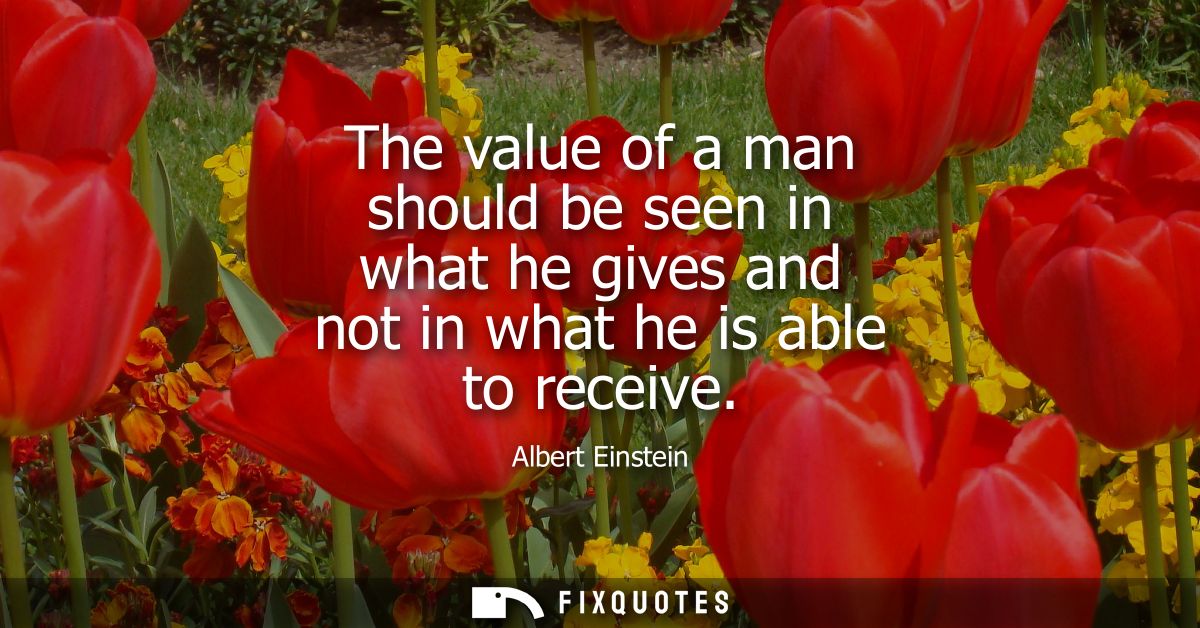
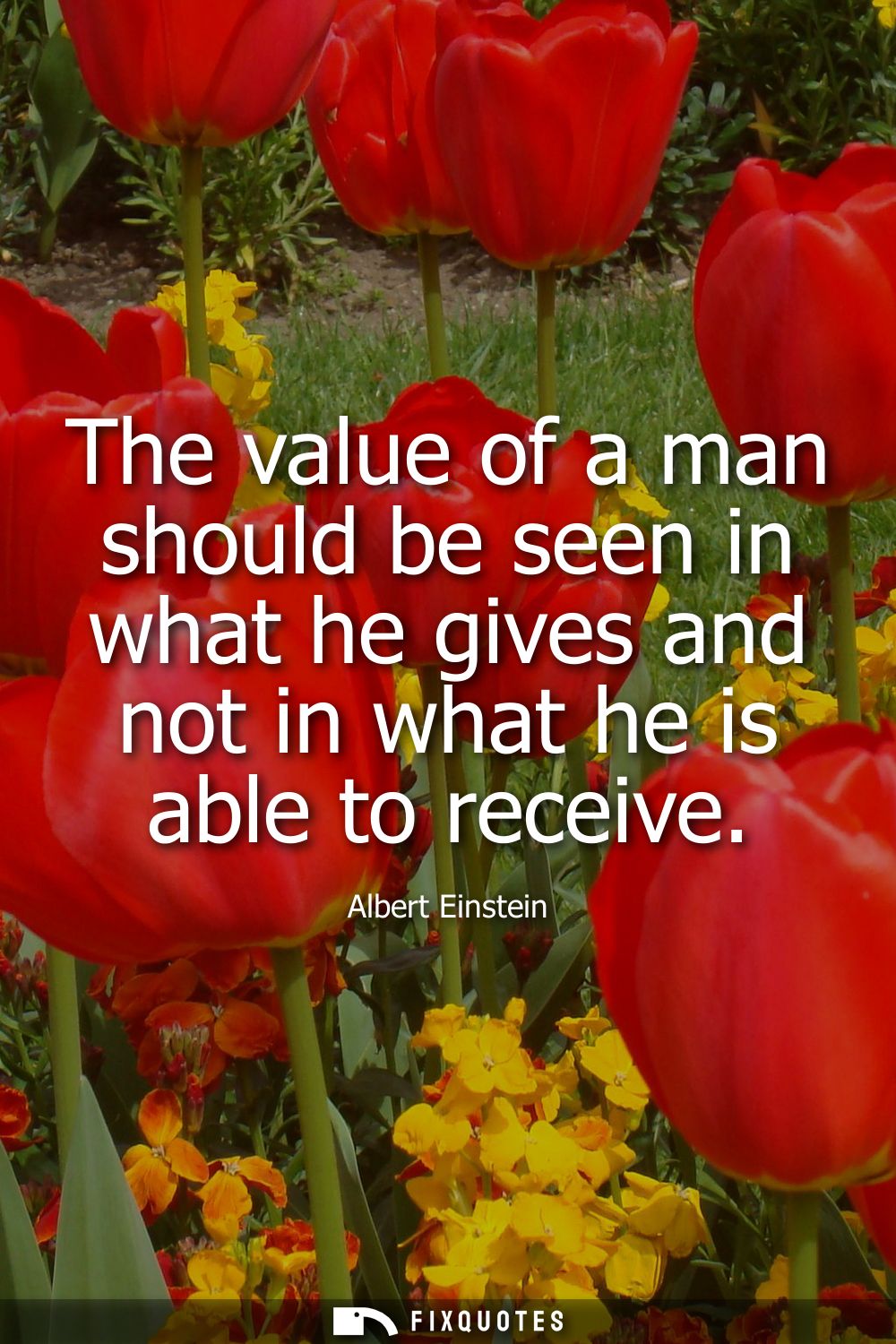
"The value of a man should be seen in what he gives and not in what he is able to receive"
About this Quote
The phrasing also dodges the usual traps of self-help piety. He doesn’t say “be generous” or “be kind”; he says the metric is wrong. “Should be seen” implies an audience complicit in misjudgment: society, institutions, maybe even the self. And “what he gives” isn’t limited to charity; it covers intellectual labor, civic engagement, mentorship, and the less glamorous act of making other people’s lives easier. In other words, contribution as orientation, not occasional virtue.
Context matters. Einstein lived through the rise of fascism, exile, world war, and the dawn of nuclear power - moments when “receiving” could mean safety, recognition, or national loyalty. He chose public commitments instead: warning about Hitler, advocating for refugees, speaking on peace, and wrestling openly with the ethical fallout of modern science. The line reads less like abstract ethics than a warning from someone who watched entire societies reward the wrong kind of “able to receive.”
Quote Details
| Topic | Kindness |
|---|---|
| Source | Help us find the source |
| Cite |
Citation Formats
APA Style (7th ed.)
Einstein, Albert. (2026, January 14). The value of a man should be seen in what he gives and not in what he is able to receive. FixQuotes. https://fixquotes.com/quotes/the-value-of-a-man-should-be-seen-in-what-he-40533/
Chicago Style
Einstein, Albert. "The value of a man should be seen in what he gives and not in what he is able to receive." FixQuotes. January 14, 2026. https://fixquotes.com/quotes/the-value-of-a-man-should-be-seen-in-what-he-40533/.
MLA Style (9th ed.)
"The value of a man should be seen in what he gives and not in what he is able to receive." FixQuotes, 14 Jan. 2026, https://fixquotes.com/quotes/the-value-of-a-man-should-be-seen-in-what-he-40533/. Accessed 13 Feb. 2026.